MCQ
The solar spectrum during a complete solar eclipse is
  • Continuous
  • B
    Emission line
  • C
    Dark line
  • D
    Dark band

Answer

Correct option: A.
Continuous
a
(a) At the time of solar eclipse light received from chromosphere.

The bright lines appear exactly at the places where dark lines were there.

Hence at the time of solar eclipse continuos spectrum is obtained.

Need a full question paper?

Generate a complete, print-ready paper with questions like this in minutes — across 16+ boards, with answer keys.
Start Generating Free

Similar questions

If the ratio of intensities of two waves is 1 : 25, then the ratio of their amplitudes will be
The electric potential inside a conducting sphere
In a Young's double slit experiment, the angular width of fringe formed on a distant screen is $0.1$ $radian$ . Find the distance between the two slits, if wavelength of light used is $6000\,\mathop A\limits^o $....$\mu m$
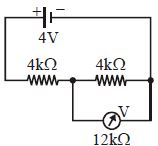
The percentage error in the reading of the voltmeter in the figure shown here is nearly ............ $\%$
In a Young’s double slit experiment, the path difference, at a certain point on the screen, between two interfering waves is $1/8^{th}$ of wavelength. The ratio of the intensity at this point to that at the centre of a bright fringe is close to
In the following atoms and moleculates for the transition from $n= 2$ to $n = 1,$ the spectral line of minimum wavelength will be produced by
In which radioactive disintegration, neutron dissociates into proton and electron
The magnitude of electric field on the surface of a uniformly charged metalic spherical shell is $E$. If a hole is made in it using a insulating device, then the magnitude of electric field in the hole will be
There is a uniform electric field of strength $10^3 \mathrm{~V} / \mathrm{m}$ along y-axis. A body of mass 1g and charge $10^{-6}$ C is projected into the field from origin along the positive x-axis with a velocity 10m/s. Its speed in m/s after 10s is (Neglect gravitation)
The size of the image of an object, which is at infinity, as formed by a convex lens of focal length $30\,cm$ is $2\, cm$. If a concave lens of focal length $20 cm$ is placed between the convex lens and the image at a distance of $26\, cm$ from the convex lens, calculate the new size of the image.....$cm$