MCQ
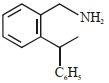
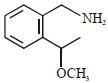
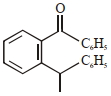
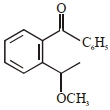
The structure of $X$ is :
  • A

  • B

  • C


Answer

Correct option: D.

d

Need a full question paper?

Generate a complete, print-ready paper with questions like this in minutes — across 16+ boards, with answer keys.

Start Generating Free

Similar questions

Which one of the following compounds will provide a tertiary alcohol on reaction with excess of $\mathrm{CH}_{3} \mathrm{MgBr}$ followed by hydrolysis?
The $IUPAC$ name of $\begin{array}{*{20}{c}}
  {C{H_2} - C = CH - C{H_2}OH} \\ 
  {|\,\,\,\,\,\,\,\,\,\,\,\,\,\,\,\,\,\,|\,\,\,\,\,\,\,\,\,\,\,\,\,\,\,\,\,\,\,\,\,\,\,\,\,\,\,\,\,\,\,\,\,\,\,\,\,\,\,\,\,\,\,\,\,\,\,\,} \\ 
  {\,\,\,\,Cl\,\,\,\,\,\,\,\,\,\,\,\,\,C{H_{3\,\,\,\,\,\,\,\,\,\,\,\,\,\,\,\,\,\,\,\,\,\,\,\,}}\,\,\,\,\,\,\,\,\,\,\,\,\,\,\,\,\,\,\,} 
\end{array}$ is
Which of the following pair cannot be distinguished by Tollen's reagent
Which of the following sets of atomic numbers corresponds to elements of group $16$ ?
$(i)\,\,\begin{matrix}
   CHO\,\,\,\,\,\,\,\,\,\,\,\,\,\,\,\,\,\,\,\,\,  \\
   |\,\,\,\,\,\,\,\,\,\,\,\,\,\,\,\,\,\,\,\,\,\,\,\,\,\,\,\,\,\,\,  \\
   {{(CH-OH)}_{3}}\,\,\,\,\,\,  \\
   |\,\,\,\,\,\,\,\,\,\,\,\,\,\,\,\,\,\,\,\,\,\,\,\,\,\,\,\,\,\,\,  \\
   \,\,C{{H}_{2}}-OH\,\,\,\,\,\,\,\,\,\,  \\
\end{matrix}\xrightarrow{4HI{{O}_{4}}} Product$ $(ii)\,\,\begin{matrix}
   C{{H}_{2}}OH\,\,\,\,\,\,\,\,\,\,\,\,\,\,\,\,  \\
   |\,\,\,\,\,\,\,\,\,\,\,\,\,\,\,\,\,\,\,\,\,\,\,\,\,\,\,\,\,\,\,  \\
   {{(CH-OH)}_{4}}\,\,\,\,\,\,  \\
   |\,\,\,\,\,\,\,\,\,\,\,\,\,\,\,\,\,\,\,\,\,\,\,\,\,\,\,\,\,\,\,  \\
   \,\,C{{H}_{2}}-OH\,\,\,\,\,\,\,\,\,\,  \\
\end{matrix}\xrightarrow{5HI{{O}_{4}}} Product$

Ratio of moles of formic acid obtained in reaction $(i)$ and reaction $(ii)$ is

The first ionization energy (in $\mathrm{kJ} / \mathrm{mol}$ ) of $Na, \;\mathrm{Mg}, \mathrm{Al}$ and $Si$ respectively, are
If the internal energy of an ideal gas decreases by the same amount as the work done by  the system, the process is
$\begin{matrix}
   \,\,\,\,\,\,\,Br  \\
   \,\,\,\,|  \\
   C{{H}_{3}}-C{{H}_{2}}-C-C{{H}_{2}}-Et  \\
   \,\,\,\,|  \\
   \,\,\,\,\,\,\,\,\,\,\,\,\,\,\,\,\,\,\,\,\,\,\,\,\,\,\,\,\,\,C{{H}_{2}}(n-\Pr )  \\
\end{matrix}\xrightarrow{alc.\,KOH}\underset{(major)}{\mathop{(A)}}\,$

$n - Pr = n -$ propyl
Product' $(A)$ is

The example of a protein is
When two atomic orbitals combine they form