MCQ
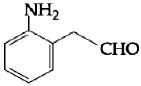
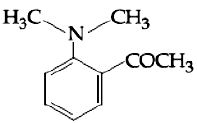
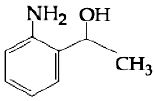
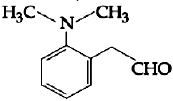
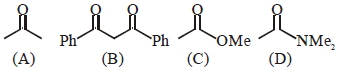
The tests performed on compound $X$ and their inferences are

Test Interference
$(a)$ $2, 4-DNP$ test Colorued precipitate
$(b)$ Iodoform test Yellow precipitate
$(c)$ Azo-dye test No dye formation

Compound $‘X’$ is

  • A


  • C

  • D

Answer

Correct option: B.

b
$\because  \,\,-COCH_3$ is present it will show both $2, 4-DNP$ and iodoform test. Due to steric inhibition of resonance. $I.P$ of $‘N’$ is not involved in delocalization so coupling reaction will not take place.

Need a full question paper?

Generate a complete, print-ready paper with questions like this in minutes — across 16+ boards, with answer keys.

Start Generating Free

Similar questions

Consider the cell

$Pt _{( s )}\left| H _2( g , 1\,atm )\right| H ^{+}( aq , 1 M )|| Fe ^{3+}( aq ), Fe ^{2+}( aq ) \mid Pt ( s )$

When the potential of the cell is $0.712\,V$ at $298\,K$, the ratio $\left[ Fe ^{2+}\right] /\left[ Fe ^{3+}\right]$ is $.......$(Nearest integer)

Given: $Fe ^{3+}+ e ^{-}= Fe ^{2+}, E ^{\circ} Fe ^{3+}, Fe ^{2+} \mid Pt =0.771$

$\frac{2.303 RT }{ F }=0.06\,V$

The electrolytic conductance is a direct measure of
A study of chemical kinetics of the reaction $A + B \to$  Products, gave the following data at $25\,^oC$.

Exp. No. [A] [B] Rate
$1.$ $1.0$ $0.15$ $4.2 × 10^{-6}$
$2.$ $2.0$ $0.15$ $8.4 × 10^{-6}$
$3.$ $1.0$ $0.20$ $5.6 × 10^{-6}$

Find out rate law

In a catalytic conversion of ${N_2}$ to $N{H_3}$ by Haber's process, the rate of reaction was expressed as change in the concentration of ammonia per time is $40 \times {10^{ - 3}}\,mol\,litr{e^{ - 1}}{s^{ - 1}}$. If there are no side reaction, the rate of the reaction as expressed in terms of hydrogen is (in mol $litr{e^{ - 1}}{s^{ - 1}}$)
For gold plating, the electrolyte used is
Correct order of decreasing acid strength of the following compound is :
The increasing order of the acidity of the $\alpha$$-$hydrogen of the following compounds is :
Arrange the following in decreasing order of $BP$

$CH_3CHO$ $( I )$, $CH_3CH_2OH$ $( II )$

$CH_3OCH_3$ $( III )$, $CH_3CH_2CH_3$ $( IV )$

$\mathrm{C}_4 \mathrm{H}_{11} \mathrm{\sim N}(\mathrm{X})+\mathrm{HNO}_2 \rightarrow \mathrm{C}_4 \mathrm{H}_{10} \mathrm{O}\left(3^{\circ}\right.$ alcohol$)$ Hence$, X$ will not give:
Sodium chromate, $Na_2CrO_4$ is made commercially by