Question
The unit of dipole moment is:

Answer

(d)coulomb- meter

Need a full question paper?

Generate a complete, print-ready paper with questions like this in minutes — across 16+ boards, with answer keys.
Start Generating Free

Similar questions

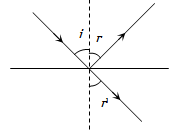
A ray of light is incident at an angle i from denser to rare medium. The reflected and the refracted rays are mutually perpendicular. The angle of reflection and the angle of refraction are respectively $r$ and $r\ ’,$ then the critical angle will be
Whenever a hydrogen atom emits a photon in the Balmer series(a) It need not emit any more photon(b) It may emit another photon in the Paschen series(c) It must emit another photon in the Lyman series(d) It may emit another photon in the Balmer series


What is the net electrostatic field in the interior of a conductor?
The expression for magnetic induction inside a solenoid of length $L$ carrying a current $l$ and having $N$ number of turns is
The electrostatic potential on the surface of a charged conducting sphere is $100V$. Two statments are made in this regard:
$S_1$ : At any point inside the sphere, electric intensity is zero.
$S_2$ : At any point inside the sphere, the electrostatic potential is $100V$.
Which of the following is a correct statement?
Cutoff wavelength of $X-$rays coming from a Coolidge tube depends on the:
The valence of an impurity added to germanium crystal in order to convert it into a P-type semi conductor is(a) 6 (b) 5(c) 4  (d) 3
       
In a fission reaction ${ }_{92}^{236} \mathrm{U} \rightarrow 117_{\mathrm{X}}+117_{\mathrm{Y}}+\mathrm{n}+\mathrm{n}$, the binding energy per nucleon of $X$ and $Y$ is $8.5\ \text{MeV}$ whereas of $236_{\mathrm{U}}$ is $7.6\ \text{MeV}$ The total energy liberated will be about
If a charged particle projected in a gravity-free room deflects:
The molar heat capacity of oxygen gas at STP is nearly 2.5R. As the temperature is increased, it gradually increases and approaches 3.5R. The most appropriate reason for this behaviour is that at high temperatures:
  1. Oxygen does not behave as an ideal gas.
  2. Oxygen molecules dissociate in atoms.
  3. The molecules collide more frequently.
  4. Molecular vibrations gradually become effective.