MCQ
The value of $\int\limits_{ - \pi /2}^{\pi /2} {\frac{{{{\sin }^2}\,x}}{{1 + {2^x}}}dx} $ is
  • A
    $ \pi $
  • B
    $\frac{\pi}{2}$
  • C
    $4 \pi $
  • $\frac{\pi}{4}$

Answer

Correct option: D.
$\frac{\pi}{4}$
d
(d) $I = \int\limits_{\pi /2}^{\pi /2} {\frac{{{{\sin }^2}x}}{{1 + {2^x}}}dx} $ $......(1)$

$ \Rightarrow I = \int\limits_{ - \pi /2}^{\pi /2} {\frac{{{{\sin }^2}x}}{{1 - {2^{ - x}}}}dx} $ by replacing $x$ by

$\left(\frac{\pi}{2}-\frac{\pi}{2}-x\right)$

$ \Rightarrow I = \int\limits_{ - \pi /2}^{\pi /2} {\frac{{{2^x}.{{\sin }^2}x}}{{1 + {2^x}}}dx} $

Adding equations $(i)$ and $(ii),$ we get

$2I = \int\limits_{ - \pi /2}^{\pi /2} {{{\sin }^2}xdx} $

$ = \frac{1}{2}\int\limits_{ - \pi /2}^{\pi /2} {\left( {1 - \cos 2x} \right)dx} $

$\Rightarrow \quad \mathrm{I}=\frac{1}{4}\left[x+\frac{\sin 2 x}{2}\right]_{-\pi / 2}^{\pi / 2}$

$=\frac{1}{4}\left[\left(\frac{\pi}{2}+\frac{\sin \pi}{2}\right)-\left(-\frac{\pi}{2}+\frac{\sin (-\pi)}{2}\right)\right]$

$\Rightarrow \quad 1=\frac{1}{4}\left[\frac{\pi}{2}+\frac{\pi}{2}\right]=\frac{\pi}{4}$

Need a full question paper?

Generate a complete, print-ready paper with questions like this in minutes — across 16+ boards, with answer keys.

Start Generating Free

Similar questions

A circle in inscribed in an equilateral triangle of side of length $12$. If the area and perimeter of any square inscribed in this circle are $\mathrm{m}$ and $\mathrm{n}$, respectively, then $m+n^2$ is equal to
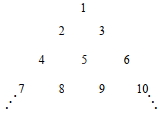
Let the positive integers be written in the form :

$Image$

If the $\mathrm{k}^{\text {th }}$ row contains exactly $\mathrm{k}$ numbers for every natural number $\mathrm{k}$, then the row in which the number $5310$ will be, is.........
The position vectors of the vertices of a quadrilateral $ABCD $ are $a,b,c$ and $d$ respectively. Area of the quadrilateral formed by joining the middle points of its sides is
Let $\int_\alpha^{\log _e^4} \frac{\mathrm{dx}}{\sqrt{\mathrm{e}^{\mathrm{x}}-1}}=\frac{\pi}{6}$. Then $\mathrm{e}^\alpha$ and $\mathrm{e}^{-\alpha}$ are the roots of the equation :
$f(x) = {x^2} - 3x$, then the points at which $f(x) = f'(x)$ are
The parabolas ${y^2} = 4x$ and ${x^2} = 4y$ divide the square region bounded by the lines $x = 4$, $y = 4$ and the coordinate axes. If ${S_1},{S_2},{S_3}$ are respectively the areas of these parts numbered from top to bottom, then ${S_1}:{S_2}:{S_3}$ is
If $c$ is any arbitrary constant, then the general solution of the differential equation $ydx - xdy = xy\,dx$ is given by
Let the vectors $\overrightarrow{ u }_1=\hat{ i }+\hat{ j }+ a \hat{ k }, \overrightarrow{ u }_2=\hat{ i }+ b \hat{ j }+\hat{ k }$ and $\overrightarrow{ u }_3=c \hat{ i }+\hat{ j }+\hat{ k }$ be coplanar. If the vectors $\overrightarrow{ v }_1=(a+b) \hat{i}+c \hat{j}+c \hat{k}, \quad \overrightarrow{ v }_2=a \hat{i}+(b+c) \hat{j}+a \hat{k} \quad$ and $\overrightarrow{ v }_3=b \hat{ i }+ b \hat{ j }+( c + a ) \hat{ k }$ are also coplanar, then $6( a +$ $b + c )$ is equal to $..............$.
Suppose $\left| {\begin{array}{*{20}{c}}
  {f'\left( x \right)}&{f\left( x \right)} \\ 
  {f''\left( x \right)}&{f'\left( x \right)} 
\end{array}} \right| = 0$ where $f(x)$ is continuously differentiable function with $f'(x) \ne  0$ and satisfy $f(0) = 1$ and $f'(0) = 2$ , then the number of solution $(s)$ of equation $f(x) = x^2$ is equal to 
How many triangles can be formed by joining four points on a circle