MCQ
The value of photoelectric current depends :
- AOnly on the intensity of light
- ✓On both the frequency of light and the distance between the source and the metal.
- COn the work function of metal
- DAll of the above
Generate a complete, print-ready paper with questions like this in minutes — across 16+ boards, with answer keys.
An electron enters a region where electrostatic field is 20N/C and magnetic field is 5T. If electron passes undeflected through the region, then velocity of electron will be
|
(a) |
(b) |
(c) |
(d) |
Comparing real and virtual images, we may say that:
A moving coil galvanometer has 150 equal divisions. Its current sensitivity is 10 divisions per milliampere and voltage sensitivity is 2 divisions per millivolt. In order that each division reads 1 volt, the resistance in ohms needed to be connected in series with the coil will be
|
(a) 99995 |
(b) 9995 |
(c) |
(d) |
There is an electric field E in X-direction. If the work done on moving a charge 0.2 C through a distance of 2 m along a line making an angle 60° with the X-axis is 4.0, what is the value of E
|
(a) |
(b) 4 N/C |
(c) 5 N/C |
(d) None of these |
In good conductors of electricity, the type of bonding that exists is
|
(a) Ionic |
(b) Vander Waals |
(c) Covalent |
(d) Metallic |
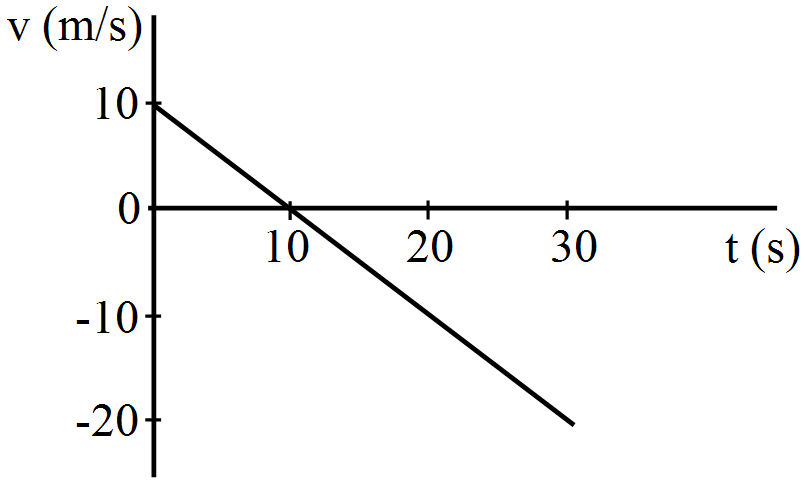
An electromagnetic wave of frequency v = 3.0MHz passes from vacuum into a dielectric medium with permittivity ε = 4.0 . Then
|
(a) Wavelength is doubled and the frequency remains unchanged |
|
(b) Wavelength is doubled and frequency becomes half |
|
(c) Wavelength is halved and frequency remains unchanged |
|
(d) Wavelength and frequency both remain unchanged |
The voltage gain of the following amplifier is

|
(a) 10 |
(b) 100 |
(c) 1000 |
(d) 9.9 |


