MCQ
The value of $\sum\limits_{n = 1}^\infty {\frac{{^n{C_0} + ...{ + ^n}{C_n}}}{{^n{P_n}}}} $ is
  • A
    ${e^2}$
  • B
    $e$
  • ${e^2} - 1$
  • D
    $e - 1$

Answer

Correct option: C.
${e^2} - 1$
c
(c) $\sum\limits_{n = 1}^\infty {\frac{{^n{C_0} + ....... + {\,^n}{C_n}}}{{{\,^n}{P_n}}}} $

$ = \frac{{{\,^1}{C_0} + {\,^1}{C_1}}}{{{\,^1}{P_1}}} + \frac{{{\,^2}{C_0} + {\,^2}{C_1} + {\,^2}{C_2}}}{{{\,^2}{P_2}}} + \frac{{^3{C_0} + {\,^3}{C_1} + {\,^3}{C_2} + {\,^3}{C_3}}}{{{\,^3}{P_3}}}$+...

$ = \frac{{{2^1}}}{{1!}} + \frac{{{2^2}}}{{2!}} + \frac{{{2^3}}}{{3!}} + .......$ $\left( {1 + \frac{2}{{1!}} + \frac{{{2^2}}}{{2!}} + \frac{{{2^3}}}{{3!}} + .......} \right) - 1$

$ = {e^2} - 1$.

Need a full question paper?

Generate a complete, print-ready paper with questions like this in minutes — across 16+ boards, with answer keys.

Start Generating Free

Similar questions

Let $\mathrm{x}_1, \mathrm{x}_2, \ldots, \mathrm{x}_{\mathrm{n}}$ be n observations. Let $\mathrm{y}_{\mathrm{i}}=\mathrm{a} \mathrm{x}_{\mathrm{i}}+\mathrm{b} \mathrm{y}_{\mathrm{i}}+\mathrm{b}$ for $\mathrm{i}=1,2,3, \ldots, \mathrm{n}$, where a and b are constants. If the mean of $x_i^{\prime} s$ is 48 and their standard deviation is 12 , the mean of $y_i$ 's 55 and standard deviation of $y_i$ 's is 15 , the values of a and b are:
If $^n{P_r}$=$ 720$.$^n{C_r},$ then $r$ is equal to
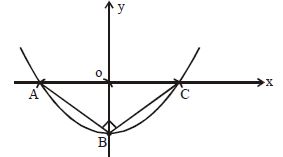
If graph of $y = ax^2 + bx + c$ as follows

$\Delta ABC$ is right angled osceles triangle with hypotenuse $AC = 4\sqrt 2\ units$ then minimum value of $ax^2 + bx + c$ is
The domain of definition of the function $\text{f(x)}=\sqrt{\frac{\text{x}-2}{\text{x}+2}}+\sqrt{\frac{1-\text{x}}{1+\text{x}}}$ is:
If $y = x - {x^2} + {x^3} - {x^4} + ......\infty $, then value of $x$ will be
A hyperbola has its centre at the origin, passes through the point $(4, 2)$ and has transverse axis of length $4$ along the $x -$ axis. Then the eccentricity of the hyperbola is
There are $m$ points on a straight line $AB$ and $n$ points on another line $AC$, none of them being the point $A$. Triangles are formed from these points as vertices when $(i)$ $A$is excluded $(ii)$ $A$ is included. Then the ratio of the number of triangles in the two cases is
The value of $x$ that satisfies the relation $x = 1 - x + x^2 - x^3 + x^4 - x^5 + ......... \infty$
A solution of the equation $\cos^2\text{x}+\sin\text{x}+1=0,$ lies in the interval:
The value of $\mathop {\lim }\limits_{n\, \to \,\infty } \frac{{1 - {n^2}}}{{\sum n}}$ will be