Question
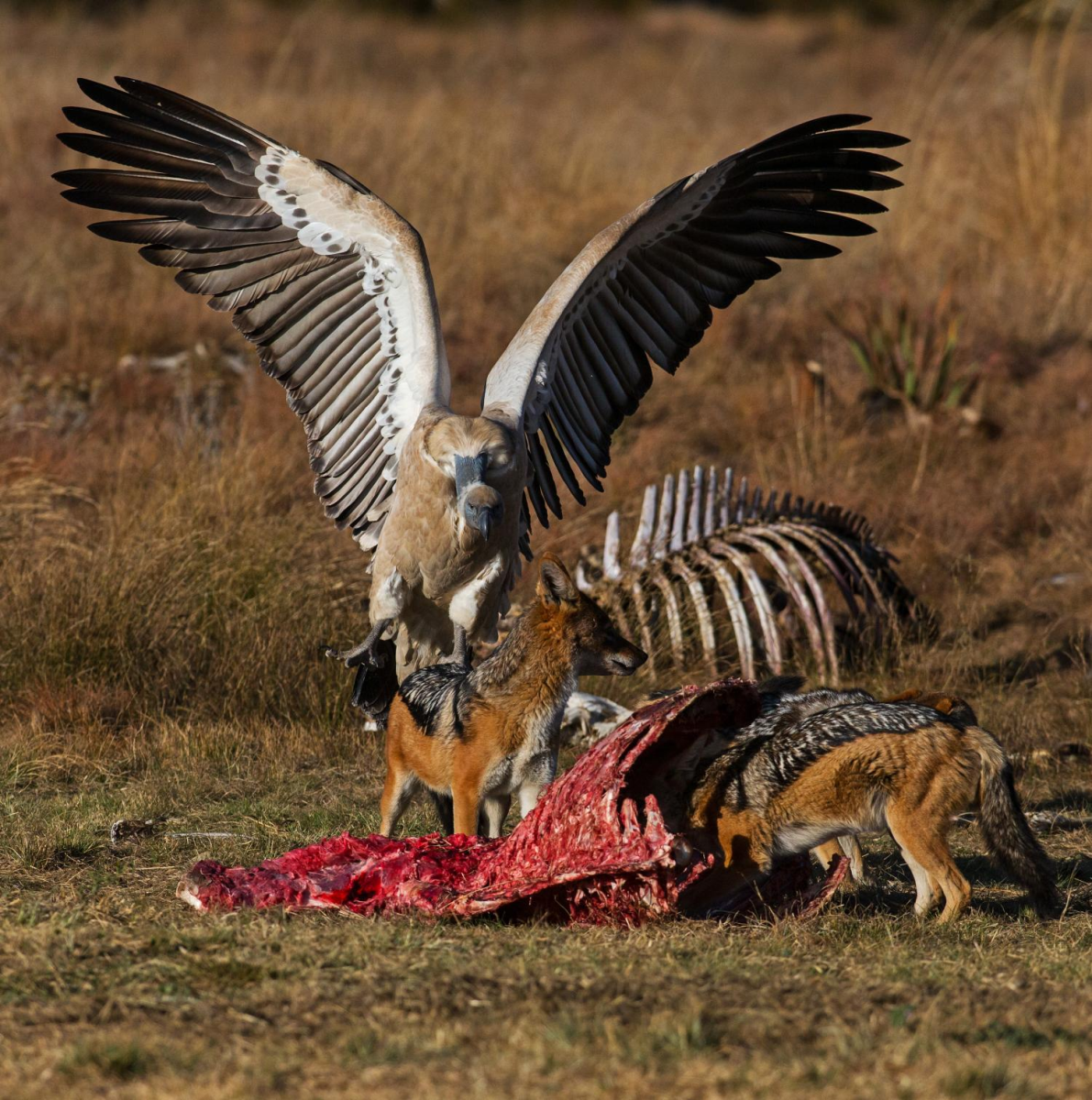
The vultures are important to maintain ecological balance. How?

Answer

Yes, vultures are important in maintaining ecological balance. Each organism on this earth plays its role and is important for maintaining ecological balance. Vultures act like scavengers as they feed upon dead bodies of various animals, cattle. They feed upon them and thus prevent different diseases which can take place due to presence of dead bodies. More broadly we can say that they help in keeping environment clean. But as they are very few in number now, degradation of dead bodies of animal is a huge problem and is creating various problems in the environment. Causing of diseases and increase in infections are the main problems. If the vultures were good in number we won’t be suffering from the same problem and the balance of the environment remains maintained.

Need a full question paper?

Generate a complete, print-ready paper with questions like this in minutes — across 16+ boards, with answer keys.

Start Generating Free

Similar questions

Explain how, deforestation leads to reduced rainfall.
Draw a diagram to show the reflection of light from a plane mirror. Label the following on the diagram:
$a.$ Plane mirror.
$b.$ Incident ray.
$c.$ Reflected ray.
$d.$ Point of incidence.
$e.$ Angle of reflection.
$f.$ Normal.
$g.$ Angle of incidence.
Explain how you can locate the Pole Star with the help of Ursa Major.
What do you mean by the term crop? Explain briefly the types of crops.
What are the major products $($or fractions$)$ of petroleum refining? Give one use of each petroleum product.
Where are chromosomes found in a cell? State their function.
How does the pressure of a liquid depend on its depth? Draw a labelled diagram to show that the pressure of a liquid (say, water) depends on its depth.
Why are children given vaccination?
State the conditions necessary to maintain good reproductive health during adolescence.
Aanandi took two test tubes and marked them A and B. She put two spoonfuls of sugar solution in each of the test tubes. In test tube B, she added a spoonful of yeast. Then she attached two incompletely inflated balloons to the mouth of each test tube. She kept the setup in a warm place, away from sunlight.

Image
(i) What do you predict will happen after 3-4 days? She observed that the balloon attached to test tube B was inflated. What can be a possible explanation for this?
(a) Water evaporated in test tube B and filled the balloon with the water vapour.
(b) The warm atmosphere expanded the air inside test tube B, which inflated the balloon.
(c) Yeast produced a gas inside test tube B, which inflated the balloon.
(d) Sugar reacted with warm air, which produced gas, eventually inflating the balloon.
(ii) She took another test tube, 1/4 filled with lime water. She removed the balloon from test tube B in such a manner that the gas inside the balloon did not escape. She attached the balloon to the test tube with lime water and shook it well. What do you think she wants to find out?