MCQ
The work function is called:
  • A
    The energy required to taken out the electron from its orbit.
  • B
    The incident energy at the unit area, which can emit electron from the metal surface.
  • The minimum energy per nucleon to emit an electron from the metal surface.
  • D
    Incident energy to emit the electron from the metal surface.
Answer

Correct option: C.
The minimum energy per nucleon to emit an electron from the metal surface.
(C) - The minimum energy per nucleon to emit an electron from the metal surface.

Need a full question paper?

Generate a complete, print-ready paper with questions like this in minutes — across 16+ boards, with answer keys.

Start Generating Free

Similar questions

A wheel of radius 20cm is pushed to move it on a rough horizontal surface. It is found to move through a distance of 60cm on they road during the time it completes one revolution about the centre. Assume that the linear and the angular accelerations are uniform. The frictional force acting on the wheel by the surface is:
  1. Along the velocity of the wheel.
  2. Opposite to the velocity of the wheel.
  3. Perpendicular to the velocity of the wheel.
  4. Zero.

At a certain distance from a point charge the electric field is 500 V/m  and the potential is 3000 V. What is this distance

(a) 6 m

(b) 12 m

(c) 36 m  

(d) 144 m

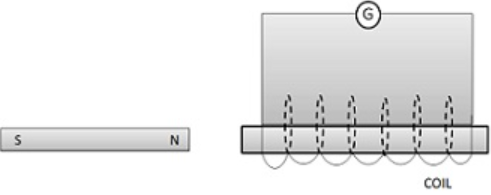
Refer to the figure. When does the the galvanometer (G) deflect?
Image

The earth's magnetic induction at a certain point is 7 × .  This is to be annulled by the magnetic induction at the centre of a circular conducting loop of radius 5 cm. The required current in the loop is

(a) 0.56 A

(b) 5.6 A

(c) 0.28 A  

(d) 2.8 A

The wavelength of a photon needed to remove a proton from a nucleus which is bound to the nucleus with 1MeV energy is nearly:

A conducting ring of radius 1 meter is placed in an uniform magnetic field B of 0.01Telsa oscillating with frequency 100Hz with its plane at right angles to B. What will be the induced electric field

(a) π volt/m

(b) 2 volt/m

(c) 10 volt/m

(d) 62 volt/m

A sonometer wire of length l vibrates in fundamental mode when excited by a tuning fork of frequency 416Hz. If the length is doubled keeping other things same, the string will:
  1. Vibrate with a frequency of 416Hz
  2. Vibrate with a frequency of 208Hz
  3. Vibrate with a frequency of 832Hz
  4. Stop vibrating.
The temperature of a solid object is observed to be constant during a period. In this period:
  1. Heat may have been supplied to the body.
  2. Heat may have been extracted from the body.
  3. No heat is supplied to the body.
  4. No heat ia ertracted from the body.
Specific resistance of a semiconductor on increasing temperature :
The ratio of kinetic energy to the total energy of an electron in a Bohr orbit of the hydrogen atom is: