MCQ
The work function of a metal is:
  • A
    The energy for the electron to enter into the metal
  • B
    The energy for producing $X−$ray
  • The energy for the electron to come out from metal surface
  • D
    None of these

Answer

Correct option: C.
The energy for the electron to come out from metal surface

The work function of a metal is the energy for the electron to come out from metal surface.

Need a full question paper?

Generate a complete, print-ready paper with questions like this in minutes — across 16+ boards, with answer keys.
Start Generating Free

Similar questions

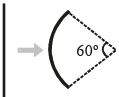
A magnetised wire of moment $M$ is bent into an arc of a circle subtending an angle of $60^o$ at the centre; then the new magnetic moment is
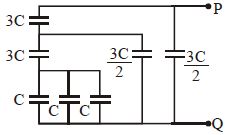
The value of equivalent capacitance of the combination shown in figure between the points $P$ and $Q$ is
From a point charge, there is a fixed point A. At A, there is an electric field of $500V/ m$ and potential difference of $3000V$. Distance between point charge and $A$ will be:
A charge of $4.0 \mu \mathrm{C}$ is moving with a velocity of $4.0 \times 10^6 \mathrm{~ms}^{-1}$ along the positive $\mathrm{y}$-axis under a magnetic field $\vec{B}$ of strength $(2 \hat{k})\  T$. The force acting on the charge is $x \hat{i} N$. The value of $x$ is__________.
A solenoid of radius $R$ and length $L$ has a Current $I = I_0\,sin\,\omega t$ . The value of induced electric field at a distance of $r$ inside the solenoid is 
In Young’s double-slit experiment the fringe width is $\beta$. If entire arrangement is placed in a liquid of refractive index $n,$  the fringe width becomes
Two different loops are concentric and lie in the same plane. The current in the outer loop is clockwise and increasing with time. The induced current in the inner loop then, is
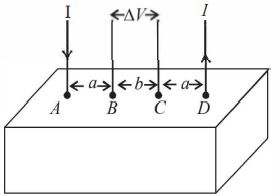
Consider a block of conducting material ofresistivity '$\rho$' shown in the figure. Current '$I$' enters at '$A$' and leaves from '$D$'. We apply superp osition principle to find voltage '$\Delta  V$ ' developed between '$B$' and '$C$'. The calculation is done in the following steps:
$(i)$ Take current '$I$' entering from '$A$' and assume it to spread over a hemispherical surface in the block.
$(ii)$ Calculatefield $E(r)$ at distance '$r$' from $A$ by using Ohm's law $E = \rho  j$, where j is the current per unit area at '$r$'.
(iii) From the '$r$' dependence of $E(r)$, obtain the potential $V(r)$ at $r$.
(iv) Repeat $(i), (ii)$ and $(iii)$ for current '$I$' leaving '$D$' and superpose results for '$A$' and '$D$'.

$\Delta V$ measured between $B$ and $C$ is
The reactance of a coil when used in the domestic $ac$ power supply $(220\, volt,\, 50\, cycles)$ is $100\, ohm$. The self inductance of the coil is nearly........$henry$
Suppose the drift velocity $v_d$ in a material varied with the applied electric field $E$ as ${v_d}\, \propto \,\sqrt E $ .Then $V - I$ graph for a wire made of such a material is best given by