MCQ
The $X-$ray beam emerging from an $X-$ray tube:
  • A
    Is monochromatic.
  • B
    Has all wavelengths smaller than a certain maximum wavelength.
  • Has all wavelengths greater than a certain minimum wavelength.
  • D
    Has all wavelengths lying between a minimum and a maximum wavelength.

Answer

Correct option: C.
Has all wavelengths greater than a certain minimum wavelength.

The $X-$ray beam emerging from an $X-$ray tube consists of wavelengths greater than a certain minimum wavelength called cutoff wavelength.

Need a full question paper?

Generate a complete, print-ready paper with questions like this in minutes — across 16+ boards, with answer keys.

Start Generating Free

Similar questions

A galvanometer of resistance $50\, \Omega$ is connected to a battery of $3\, V$ along with a resistance of $2950\, \Omega$ in series. A full scale deflection of $30$ divisions is obtained in the galvanometer. In order to reduce this deflection to $20$ divisions, the resistance in series should be.......$Ω$
The circular boundary of the concave mirror subtends a cone of half angle $\theta$ at its centre of curvature. The minimum value of $\theta$ for which ray incident on this mirror parallel to the principle axis suffers reflection more than one is......$^o$
The potential difference applied to an $X-$ ray tube is increased. As a result, in the emitted radiation
The mutual characteristic of triode is
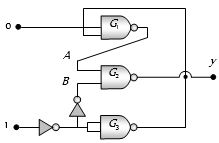
In circuit in following fig. the value of $Y$ is
An alternating power supply of $220 \,V$ is applied across a series circuit of resistance $10 \sqrt{3} \,\Omega$, capacitive reactance $40 \,\Omega$ and inductive reactance $30 \,\Omega$. The respective currents in the circuit for zero and infinite frequencies are
In a good conductor the energy gap between the conduction band and the valence band is
An electric dipole when placed in a uniform electric field $E$ will have minimum potential energy, when the angle made by dipole moment with field $E$ is
The focal length of the objective and the eyepiece of a telescope are $50\,cm$ and $5\,cm$ respectively. If the telescope is focussed for distinct vision on a scale distant $2\,m$ from its objective, then its magnifying power will be
A point object O is placed on the principal axis of a convex lens of focal length 20 cm at a distance of 40 cm to the left of it. The diameter of the lens is 10 cm. If the eye is placed 60 cm to the right of the lens at a distance h below the principal axis, then the maximum value of h to see the image will be