MCQ
Three capacitors of capacitances $6\mu\text{F}$ each are available. The minimum and maximum capacitances, which may be obtained are:
  • A
    $6\mu\text{F},\ 18\mu\text{F}$
  • B
    $3\mu\text{F},\ 12\mu\text{F}$
  • C
    $2\mu\text{F},\ 12\mu\text{F}$
  • D
    $2\mu\text{F},\ 18\mu\text{F}$

Answer

  1. $2\mu\text{F},\ 18\mu\text{F}$

Explanation:

The minimum capacitance can be obtained by connecting all capacitors in series. It can be calculated as follows:

$\frac{1}{\text{C}}=\frac{1}{6}+\frac{1}{6}+\frac{1}{6}=\frac{1}{2}$

$\Rightarrow\text{C}=2\mu\text{F}$

The maximum capacitance can be obtained by connecting all capacitors in parallel. It can be calculated as follows:

$\text{C}=6+6+6=18\mu\text{F}$

Need a full question paper?

Generate a complete, print-ready paper with questions like this in minutes — across 16+ boards, with answer keys.

Start Generating Free

Similar questions

The 6563 Å line emitted by hydrogen atom in a star is found to be red shifted by 5 Å. The speed with which the star is receding from the earth is

(a) 17.29  × 109 m/s

(b) 4.29 × 10⁷ m/s 

(c) 3.39  × 105 m/s

(d) 2.29 ×  105 m/s

The ratio of the energy of a photon with   to that with   is

(a) 2 

(b) 1/4

(c) 4  

(d) 1/2

The particles which can be added to the nucleus of an atom without changing its chemical properties are called

(a) Electrons

(b) Protons

(c) Neutrons

(d) None of the above

If frequency of the incident photon on the metal surface is made double, then kinetic energy of the emitted photoelectron will become :
If the apertature of a telescope is decreased the resolving power will:
50% of the X-ray coming from a Coolidge tube is able to pass through a 0.1mm thick aluminium foil. The potential difference between the target and the filament is increased. The thickness of the aluminium foil that will allow 50% of the X-ray to pass through will be:
  1. zero
  2. < 0.1mm
  3. 0.1mm
  4. > 0.1mm

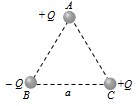
Three charges are placed at the vertices of an equilateral triangle of side ‘a’ as shown in the following figure. The force experienced by the charge placed at the vertex A in a direction normal to BC is

(a)  

(b)  

(c) Zero  

(d)

The wavefronts of light coming from a distant source of unknown shape are nearly:

A uniform electric field and a uniform magnetic field are produced, pointed in the same direction. An electron is projected with its velocity pointing in the same direction

(a) The electron will turn to its right

(b) The electron will turn to its left

(c) The electron velocity will increase in magnitude

(d) The electron velocity will decrease in magnitude

The work done in turning a magnet of magnetic moment 'M' by an angle of 90° from the meridian is 'n' times the corresponding work done to turn it through an angle of 60°, where 'n' is given by

(a) 1/2

(b) 2

(c) 1/4

(d) 1