MCQ
Threshold frequency is the frequency :
  • A
    Below which, the value of photoelectric current remains constant.
  • B
    Below which, the photoelectric current increases with the potential difference.
  • C
    At frequencies higher than this the photo-electric current becomes saturated.
  • Photo-electrons are not emitted at frequencies lower than this.
Answer

Correct option: D.
Photo-electrons are not emitted at frequencies lower than this.
(D) - Photo-electrons are not emitted at frequencies lower than this.

Need a full question paper?

Generate a complete, print-ready paper with questions like this in minutes — across 16+ boards, with answer keys.

Start Generating Free

Similar questions

Dimensions of coefficient of self-inductance is :

Young's experiment establishes that

(a) Light consists of waves

(b) Light consists of particles

(c) Light consists of neither particles nor waves

(d) Light consists of both particles and waves

Two circuits have coefficient of mutual induction of 0.09 henry. Average e.m.f. induced in the secondary by a change of current from 0 to 20 ampere in 0.006 second in the primary will be

(a) 120 V

(b) 80 V

(c) 200 V 

(d) 300 V

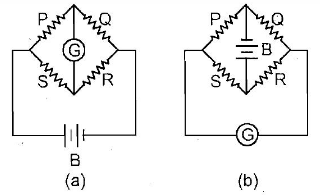
Figure (a) below shows a Wheatstone bridge in which P, Q, R, S are fixed resistances, G is a galvanometer and B is a battery. For this particular case the galvanometer shows zero deflection. Now, only the positions of B and G are interchanged,. as shown in figure (b). The new deflection of the galvanometer.

An ideal transformer has 100 turns in the primary and 250 turns in the secondary. The peak value of the ac is 28 V. The r.m.s. secondary voltage is nearest to

(a) 50 V

(b) 70 V

(c) 100 V 

(d) 40 V

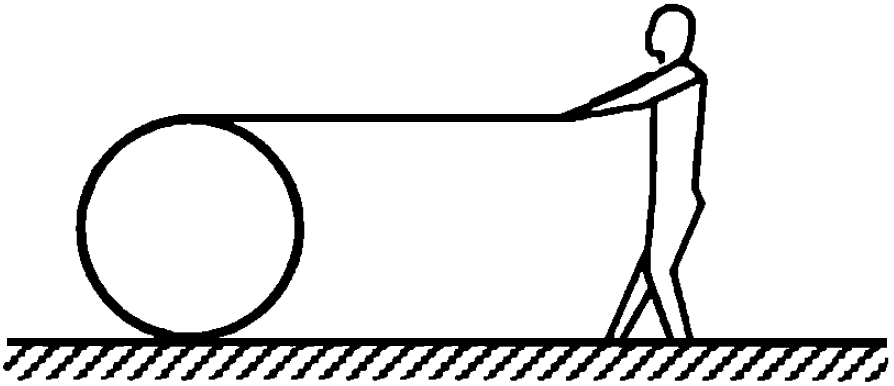
A string of negligible thickness is wrapped several times around a cylinder kept on a rough horizontal surface. A man standing at a distance 1 from the cylinder holds one end of the string and pulls the cylinder towards him. There is no slipping anywhere. The length of the string passed through the hand of the man while the cylinder reaches his hands is:
  1. l
  2. 2l
  3. 3l
  4. 4l

A convex lens has a focal length f.  It is cut into two parts along the dotted line as shown in the figure.  The focal length of each part will be

(a)  

(b) f

(c)  

(d) 2f

In Boolean algebra, Y = A + B implies that:

Lux is equal to

(a) 1 lumen/m2

(b) 1 lumen/cm2

(c) 1 candela/m2

(d) 1 candela/cm2

The formation of a dipole is due to two equal and dissimilar point charges placed at a: