MCQ
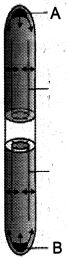
Tissue which seen in mature tissue is......
- ASecondary tissue
- ✓Intercalary meristem
- CXylem
- DApical meristem
Generate a complete, print-ready paper with questions like this in minutes — across 16+ boards, with answer keys.
$I$. Species diversity provides stability to the ecosystem
$II$. Communities with more species tends to be more stable than those with less species
$III$. Ecosystem with higher biodiversity are more productive than the ecosystem with lower biodiversity
$IV$. Biodiversity is not essential for the maintenance and health of ecosystem
Choose the correct option
$II.$ Cell division
$III.$ Cell differentiation
Among the above mentioned, what is/are the function(s) of auxin?
$(i)$ It is ten enzymatic reactions that convert a six-carbon molecule to a three carbon pyruvate and result in a net gain of $2\, ATP$ molecules.
$(ii)$ Glucose undergoes partial oxidation to form one molecule of pyruvic acid.
$(iii)$ Glucose is phosphorylated to give rise to glucose $- 6 -$ phosphate by the activity of the enzyme phosphofructokinase.
$(iv)$ The scheme of glycolysis was given by Gustav Embden, Otto Morrison, and $J$. Parnas and is often referred to as the $EMP$ pathway.
$(v)$ $ATP$ is utilized at two steps: first in the conversion of glucose into glucose $6-$ phosphate and second in the conversion of fructose $- 6-$ phosphate to fructose $1, 6-$ disphosphate