Question

To demonstrate the phenomenon of interference, we require two sources which emit radiation

(a) Of the same frequency and having a define phase relationship

(b) Of nearly the same frequency

(c) Of the same frequency

(d) Of different wavelengths

Answer

(a) Of the same frequency and having a define phase relationship

Need a full question paper?

Generate a complete, print-ready paper with questions like this in minutes — across 16+ boards, with answer keys.

Start Generating Free

Similar questions

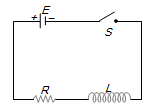
Switch S of the circuit shown in figure. is closed at t = 0. If e denotes the induced

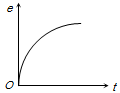
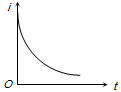
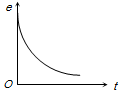
emf in L and i, the current flowing through the circuit at time t, which of the following graphs is correct

(a)

(b)

(c)

(d)

When does a magnetic dipole possess maximum potential energy inside a magnetic field?

The energy liberated on complete fission of 1 kg of  is (Assume 200 MeV energy is liberated on fission of 1 nucleus)

(a) 8.2  

(b) 8.2  

(c) 8.2  

(d) 8.2  

The sensitiveness of a moving coil galvanometer can be increased by decreasing

(a) The number of turns in the coil

(b) The area of the coil

(c) The magnetic field

(d) The couple per unit twist of the suspension

By corpuscular theory of light, the phenomenon which can be explained is ____________.

A thin plano-convex lens acts like a concave mirror of focal length 0.2 m when silvered from its plane surface. The refractive index of the material of the lens is 1.5. The radius of curvature of the convex surface of the lens will be

(a) 0.4 m             

(b) 0.2 m

(c) 0.1 m 

(d) 0.75 m

A light bulb is rated at 100W for a 220V supply. Find the peak voltage of the source:
The phase angle between current and voltage in a purely inductive circuit is:
In the process of forming helium from hydrogen, the mass defect is $0.5 \%$. Wha is the energy produced when helium is formed from 1 kg hydrogen?
( $1 kWh =36 \times 10^5 J$ )

An electron is projected along the axis of a circular conductor carrying some current. Electron will experience force

(a) Along the axis

(b) Perpendicular to the axis

(c) At an angle of 4o with axis

(d) No force experienced