MCQ
Two identical solid copper spheres of radius $R$ placed in contact with each other. The gravitational attracton between them is proportional to
  • A
    $R^2$
  • B
    $R^{-2}$
  • $R^4$
  • D
    $R^{-4}$

Answer

Correct option: C.
$R^4$
c
(c)  $F = \frac{{G \times m \times m}}{{{{(2R)}^2}}}$=$\frac{{G \times {{\left( {\frac{4}{3}\pi {R^3}\rho } \right)}^2}}}{{4{R^2}}}$$ = \frac{4}{9}{\pi ^2}{\rho ^2}{R^4}$

 $F \propto {R^4}$

Need a full question paper?

Generate a complete, print-ready paper with questions like this in minutes — across 16+ boards, with answer keys.
Start Generating Free

Similar questions

A flywheel can rotate in order to store kinetic energy. The flywheel is a uniform disk made of a material with a density $\rho $ and tensile strength $\sigma $ (measured in Pascals), a radius $r$ , and a thickness $h$ . The flywheel is rotating at the maximum possible angular velocity so that it does not break. Which of the following expression correctly gives the maximum kinetic energy per kilogram that can be stored in the flywheel ? Assume that $\alpha $ is a dimensionless constant
The respective number of significant figures for the numbers $23.023, 0.0003 $ and $2.1 \times 10^3$ are 
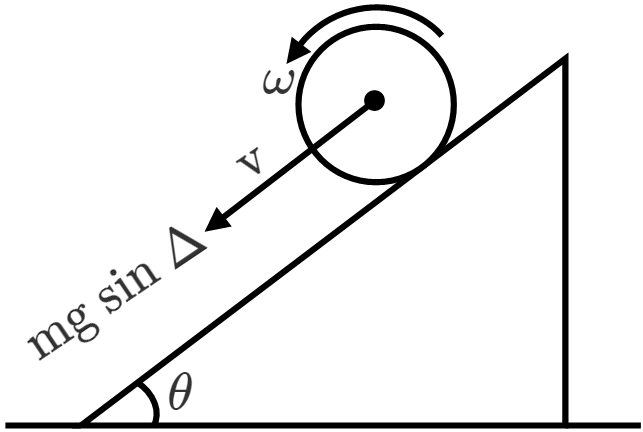
Sphere is in pure accelerated rolling motion in the figure shown,

Choose the correct option:
A body starts rolling down an inclined plane of length $L$ and height $h$. This body reaches the bottom of the plane in time $t$. The relation between $L$ and $t$ is 
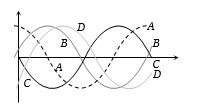
Which of the following curves represents correctly the oscillation given by $y = {y_0}\sin (\omega \,t - \phi )$, where $0 < \phi < 90$
A particle starts from rest, accelerates at $2 \,ms^{-2}$ for $10\,s$ and then goes for constant speed for $30\,s$ and then decelerates at $ 4\, ms^{-2}$ till it stops. What is the distance travelled by it.........$m$
A gas behaves more closely as an ideal gas at:
  1. Low pressure and low temperature.
  2. Low pressure and high temperature.
  3. High pressure and low temperature.
  4. High pressure and high temperature.
In an electric circuit containing a battery, the charge (assumed positive) inside the battery:
  1. Always goes from the positive terminal to the negative terminal.
  2. May go from the positive terminal to the negative terminal.
  3. Always goes from the negative terminal to the positive terminal
  4. Does not move.
A copper pipe of length $10 \,m$ carries steam at temperature $110^{\circ} C$. The outer surface of the pipe is maintained at a temperature $10^{\circ} C$. The inner and outer radii of the pipe are $2 \,cm$ and $4 \,cm$, respectively. The thermal conductivity of copper is $0.38 kW / m /{ }^{\circ} C$. In the steady state, the rate at which heat flows radially outward through the pipe is closest to ............. $\,kW$
The equation of motion of a particle is $x = a\,cos (\alpha\, t)$ . The motion is