MCQ
Two satellites $A$ and $B$ having masses in the ratio $4: 3$ are revolving in circular orbits of radii $3\,r$ and $4\,r$ respectively around the earth. The ratio of total mechanical energy of $A$ to $B$ is.
  • A
    $9: 16$
  • $16: 9$
  • C
    $1: 1$
  • D
    $4: 3$

Answer

Correct option: B.
$16: 9$
b
Given that $\frac{m_{1}}{m_{2}}=\frac{4}{3}, \frac{r_{1}}{r_{2}}=\frac{3}{4}$

Now $T E=\frac{1}{2} mv ^{2}+\left(\frac{- GMm }{ r }\right)$

but $\frac{ mv ^{2}}{ r }=\frac{ GMm }{ r ^{2}} \Rightarrow mv ^{2}=\frac{ GMm }{ r }$

$\Rightarrow TE =-\frac{ GMm }{2 r } \propto \frac{ m }{ r }$

$\frac{T E_{1}}{T_{2}}=\frac{m_{1}}{m_{2}} \cdot \frac{r_{2}}{r_{1}}=\frac{4}{3} \times \frac{4}{3}=\frac{16}{9}$

Need a full question paper?

Generate a complete, print-ready paper with questions like this in minutes — across 16+ boards, with answer keys.
Start Generating Free

Similar questions

A body of mass $m$ is thrown upwards at an angle $\theta$ with the horizontal with velocity $v$. While rising up the velocity of the mass after $ t$ seconds will be
From a balloon moving upwards with a velocity of $12\,ms^{-1}$, a packet is released when it is at a height of $65\, m$ from the ground. The time taken by it to reach the ground is...........$s$ $(g = 10\,ms^{-1})$,
Which of the following quantities remains constant during uniform circular motion?
A tuning fork of frequency $340Hz$ is vibrated just above the tube of $120 cm$ height. Water is poured slowly in the tube. What is the minimum height of water necessary for the resonance .... $cm$ (speed of sound in the air $= 340 m/sec$)
A blackbody does not:
It is found that an increase in pressure of $100\, kPa$ causes a certain volume of water to decrease by $5 × 10^{-3}$ percent of its original volume. Then the speed of sound in the water is about .... $m/s$ (density of water $10^3 \,kg/m^3$)
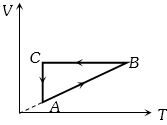
A cyclic process $ABCA$ is shown in the $V-T $ diagram. Process on the $P-V$ diagram is
According to the kinetic theory of gases the $r.m.s.$ velocity of gas molecules is directly proportional to
An asteroid is moving directly towards the centre of the earth. When at a distance of $10 \mathrm{R}$ ($R$ is the radius of the earth) from the earths centre, it has a speed of $12 \;\mathrm{km} / \mathrm{s}$. Neglecting the effect of earths atmosphere, what will be the speed of the asteroid when it hits the surface of the earth (escape velocity from the earth is $11.2 \;\mathrm{km} / \mathrm{s}$ ) $?$

Give your answer to the nearest integer in $km/s$

A tuning fork vibrates with $2$ beats in $0.04$ second. The frequency of the fork is .... $Hz$