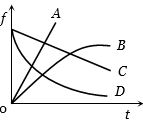
Two waves of same frequency and intensity superimpose with each other in opposite phases, then after superposition the
Easy
Download our app for free and get startedPlay store
(d) This is a case of destructive interference.
art

Download our app
and get started for free

Experience the future of education. Simply download our apps or reach out to us for more information. Let's shape the future of learning together!No signup needed.*

Similar Questions

  • 1
    The figure represents the instantaneous picture of a longitudinal harmonic wave travelling along the negative $x$-axis. Identify the correct statement $(s)$ related to the movement of the points shown in the figure. The points of maximum rarefaction are
    View Solution
  • 2
    Standing waves can be produced
    View Solution
  • 3
    Standing waves are generated on a sonometer string loaded with a cylindrical body. If the cylinder is completely immersed in water, the length of the loops changes by a factor of $2.2$ . The specific gravity of the material of the cylinder is 
    View Solution
  • 4
    When a longitudinal wave propagates through a medium, the particles of the medium execute simple harmonic oscillations about their mean positions. These oscillations of a particle are characterised by an invariant
    View Solution
  • 5
    A train is moving on a straight track with speed $20\ ms^{-1}$. It is blowing its whistle at the frequency of $1000\ Hz$. The percentage change in the frequency heard by a person standing near the track as the train passes him is ( speed of sound $=320$ $ms^{-1}$ ) close to .... $\%$
    View Solution
  • 6
    A trianguler pulse moving at $2\ cm/s$ on a rope approches an end at which it is free to slide on vertical pole. What is the particle speed at the free end at $\frac{3}{4}\  sec$  from the instant shown ...... $cm/s$
    View Solution
  • 7
    Figure, shows a stationary wave between two fixed points $P$ and $Q$. Which point$(s)$ of $1, 2$ and $3$ are in phase with the point $X?$
    View Solution
  • 8
    The equation of wave is given by $Y=10^{-2} \sin 2 \pi\left(160 t-0.5 x+\frac{\pi}{4}\right)$ Where $x$ and $Y$ are in $m$ and $t$ in $s$. The speed of the wave is $.....\,km h ^{-1}$
    View Solution
  • 9
    $Assertion :$ Sound waves cannot travel in vacuum but light can travel in vacuum.
    $Reason :$ Sound waves are longitudinal waves and they cannot be polarised but electromagentic waves are transverse and they can be polarised.
    View Solution
  • 10
    Statement$-1:$ Two longitudinal waves given by equations $y _{1}( x , t )=2 a \sin (\omega t - kx )$ and $y _{2}( x , t )= a \sin (2 \omega t -2 kx )$ will have equal intensity.

    Statement$-2:$ Intensity of waves of given frequency in same medium is proportional to square of amplitude only.

    View Solution