Question
Use the proper geometrical instruments to construct the following angles. Use the compass and the ruler to bisect them:
(1) 50°
(2) 115°
(3) 80°
(4) 90°

Answer

Get the step-by-step solution for this question inside the Vidyadip app.

Get the answer in the app

Need a full question paper?

Generate a complete, print-ready paper with questions like this in minutes — across 16+ boards, with answer keys.
Start Generating Free

Similar questions

Draw a circle with centre at point O and radius 5cm. Draw its chord AB, draw the perpendicular bisector of line segment AB. Does it pass through the centre of the circle?
Solve the following equation and verify the answer:
6(1 - 4x) + 7(2 + 5x) = 53
Arrange the following fractions in descending order:$\frac{5}{7},\frac{9}{14},\frac{17}{21}\ \text{and}\ \frac{31}{42}$
Virendra bought 18 bags of rice, each bag weighing 5.250 kg. How much rice did he buy altogether? If the rice costs Rs 42 per kg, how much did he pay for it?
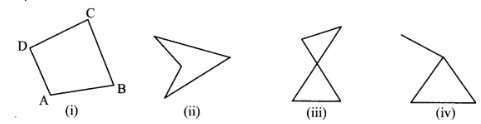
Observe the figures given below and say which of them are quadrilaterals.

Image

From your compass boxes, collect set squares of the same shapes and place them side by side in all possible different ways. What figures do you get? Write their names.
a. Two set squares
b. Three set squares
c. four set squares
Given below are the temperatures in some cities. Write them using the proper signs.
PlaceShimlaLehDelhiNagpur
Temperature7 °C below 0°12 °C below 0°22 °C above 0°31 °C above 0°
Kaprekar Number.
i. Take any 4-digit number in which all the digits are not the same.
ii. Obtain a new 4-digit number by arranging the digits in descending order.
iii. Obtain another 4-digit number by arranging the digits of the new number in ascending order.
iv. Subtract the smaller of these two new numbers from the bigger number. The difference obtained will be a 4-digit number. If it is a 3-digit number, put a 0 in the thousands place. Repeat the above steps with the difference obtained as a result of the subtraction.
v. After some repetitions, you will get the number 6174. If you continue to repeat the same steps you will get the number 6174 every time. Let us begin with the number 8531.
8531 → 7173 → 6354 → 3087 → 8352 → 6174 → 6174
This discovery was made by the mathematician, Dattatreya Ramchandra Kaprekar. That is why the number 6174 was named the Kaprekar number.
Carry out the following divisions.
i. 4.8÷2
ii. 17.5÷5
iii. 20.6÷2
iv. 32.5÷25
Draw a line segment of length 8.6cm. Bisect it and measure the length of each part.