Question
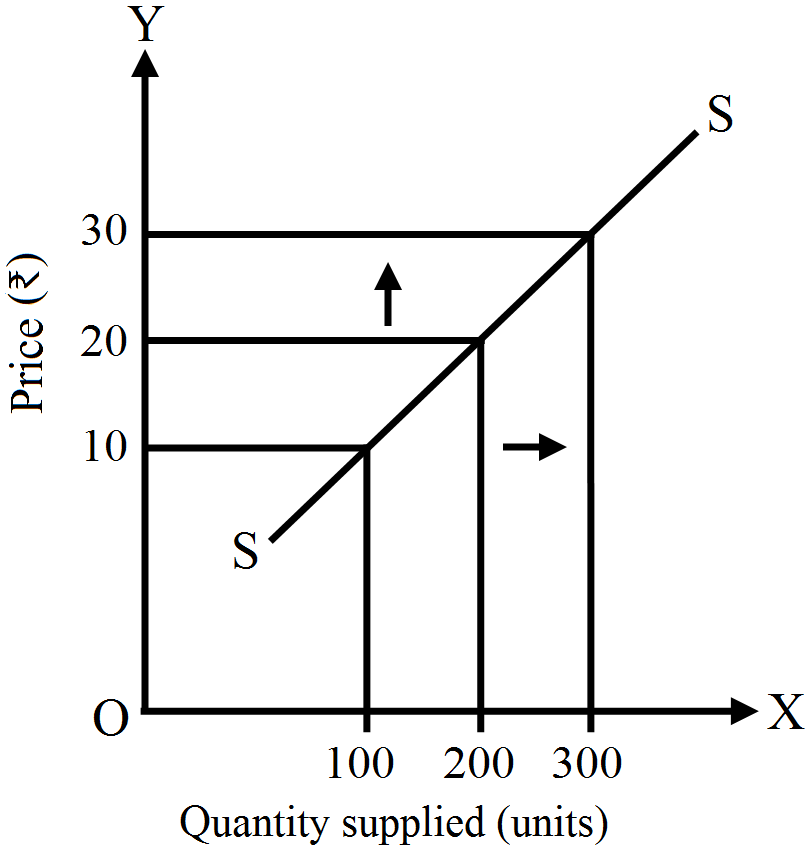
Using diagram and schedule, explain the Law of Supply
| S. No. | Price (₹) | Quantity supplied (units) |
| i. | 10 | 100 |
| ii. | 20 | 200 |
| iii. | 30 | 300 |
Generate a complete, print-ready paper with questions like this in minutes — across 16+ boards, with answer keys.
| (Units) | (Total Utility) | (Marginal Utility) |
| 1 | 12 | 12 |
| 2 | 18 | 6 |
| 3 | 22 | 4 |
| 4 | 24 | 2 |
| 5 | 24 | 0 |
| 6 | 22 | -2 |
| Rs. (crore) | ||
| (a) | Net Domestic Product at factor cost | 8,000 |
| (b) | Net Factor Income from abroad | 200 |
| (c) | Undisbursed Profit | 1,000 |
| (d) | Corporate Tax | 500 |
| (e) | Interest Received by Households | 1,500 |
| (f) | Interest Paid by Households | 1,200 |
| (g) | Transfer Income | 300 |
| (h) | Personal Tax | 500 |
OR
Explain the three properties of indifference curve.OR
Explain the three properties of indifference curve.OR
State and explain three properties of indifference curves.| Output (Units) | 1 | 2 | 3 |
| Total Cost (₹) | 23 | 27 | 30 |
| (Rs. in Lakhs) | |
| 560 |
| 60 |
| (-) 30 |
| 1000 |
| 200 |
| 60 |