Question
Using second law of motion, derive the relation between force and acceleration. A bullet of 10g strikes a sand-bag at a speed of $103m s^{-1}$ and gets embedded after travelling $5\ cm.$ Calculate
  1. The resistive force exerted by the sand on the bullet.
  2. The time taken by the bullet to come to rest.
Answer

If a body of mass $( m ),$ moving at velocity $( u )$ accelerates uniformly at $(a)$ for time $T$,
so that its velocity changes to $v$, then initial momentum $p _1= mu$ and final momentum $p _2= mv$
$ \therefore$ Change in momentum $= p _2- p _1= mv - mu = m (v -u)$ According to the second law of mation,force
$\text{F}\propto\frac{\text{Change in momentum}}{\text{Time}}$
$\Rightarrow\text{F}\propto\frac{\text{p}_2-\text{p}_1}{\text{t}}$
$\Rightarrow\text{F}\propto\frac{\text{m(v}-\text{u})}{\text{t}}$
$\Rightarrow\text{F}\propto\text{ma}$
$\Big[\text{where},\frac{\text{v}-\text{u}}{\text{t}}=\text{a}\Big]$
$\Rightarrow\text{F}=\text{kma}$ Here, $\text{k}=1$
$\therefore \text{F}=\text{ma}$ Given, $\text{m}=10\text{g}=\frac{10}{1000}\text{kg}=0.01\text{kg},\text{u}=10^3\text{m/s},\text{v}=0 [\because 1kg = 1000g] $ and $\text{s}=5\text{cm}=\frac{5}{100}\text{m}=0.05\text{m}[\because 1m = 100cm]$
  1. From thrid equation of motion, $\text{v}^2=\text{u}^2+2 \text {as}$
$\Rightarrow\text{v}^2-\text{u}^2+2\text{as}$
$\Rightarrow\text{a}=\frac{\text{v}^2-\text{u}^2}{2\text{s}}=\frac{(0)^2-(10^3)^2}{2\times0.05}$
$\text{a}=\frac{-10^6}{0.1}=-10^7\text{m/s}^2$
Now, force applied by the bullet,
F = ma
$= 0.01 \times 10^7 = -10^5 N$ [negative sing show against the direction of motion]
The resistive force exerted by the sand on the bullet $= 10^5 N$
  1. From first equation of motion, $\text{v = u + at}$
$\Rightarrow\text{at = v}-\text{u}$
Now, time taken by bullet to come to rest, $\text{t}=\frac{\text{v}-\text{u}}{\text{a}}$
$\Rightarrow\text{t}=\frac{0-10^3}{-10^7}$
$\Rightarrow\text{t}=\frac{-10^3}{-10^7}=10^3\times10^{-7}$
$\Rightarrow\text{t}=10^{-4}\text{s}$
Hence, force $(F) = 10^5 N$ and time $(t) = 10^{-4} s.$

Need a full question paper?

Generate a complete, print-ready paper with questions like this in minutes — across 16+ boards, with answer keys.

Start Generating Free

Similar questions

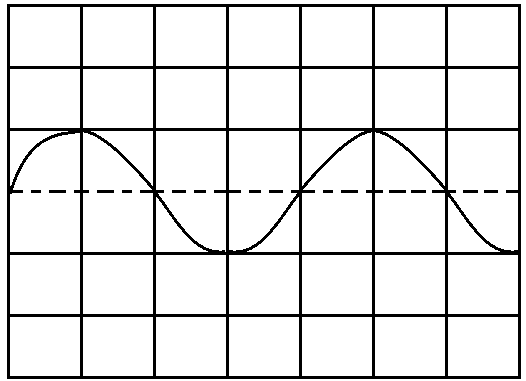
Figure $X$ showa a trace of a sound wave produced by a particular tuning fork:


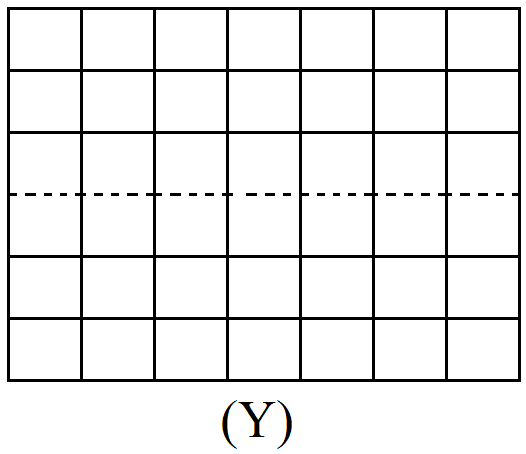
  1. On the graph paper given in Figure $Y,$ draw a trace of the sound wave which has higher frequency than that shown in Figure $X.$
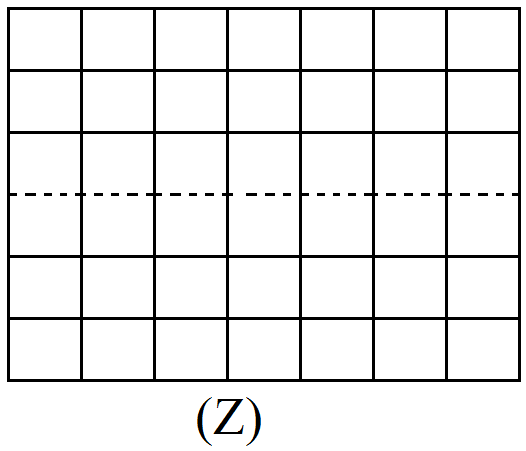
  2. On the graph paper shoen in Figure $Z,$ draw a trace of the sound wave which has a larger amplitude than that shown in Figure $X.$
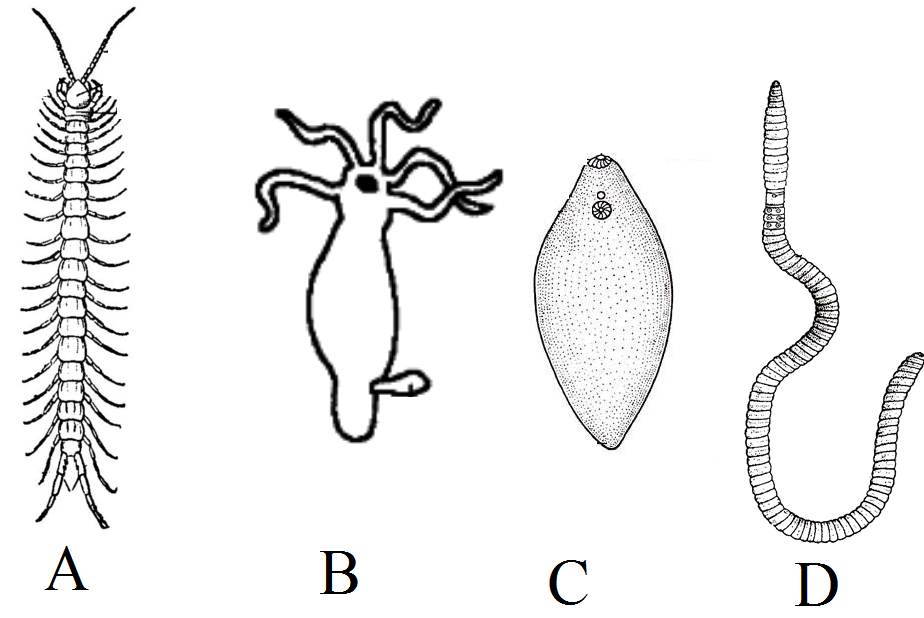
  1. Identify figure A to D.
  2. Which one of them is (i) diplobalstic; (ii) Coelomate?
  3. Which triplobalstic animal is (i) Acoelomate; (ii) Coelomate?
  4. Which one belong to phylum (i) Cnidaria; (ii) Platyhelminthes; (iii) Annelids; (iv) Arthropoda?
  5. Which one of them has (i) Organ level organization? (ii) Organ system level organization?
  6. Which one of them has excretory organs in the form of (i) Flame cells; (ii) Nephridia?
  7. Which one of them has trachea as the respiratory organ? 
i. A steel needle sinks in water but a steel ship floats. Explain, how?
ii. Why do you prefer a broad and thick handle of your suitcase?
How many grams of magnesium will have the same number of atoms as $6$ grams of carbon? $( Mg =24 u ; C =12 u )$
An electron moving with a velocity of $5 \times 104m s^{-1}$ enters into a uniform electric field and acquires a uniform acceleration of $104m s^{–2}$ in the direction of its initial motion. Calculate the time in which the electron would acquire a velocity double of its initial velocity. How much distance the electron would cover in this time?
The mass of a planet is $6 \times 10^{24}\ kg$ and its diameter is $12.8 \times 10^3\ km.$ If the value of gravitational constant be $6.7 \times 10^{-11}\ Nm^2/\ kg^2,$ calculate the value of acceleration due to gravity on the surface of the planet. What planet could this be$?$
How will you separate a mixture of iron filings, chalk powder an common salt?
How many grams of magnesium will have the same number of atoms as $6$ grams of carbon$?$
$(Mg = 24u; C = 12u)$
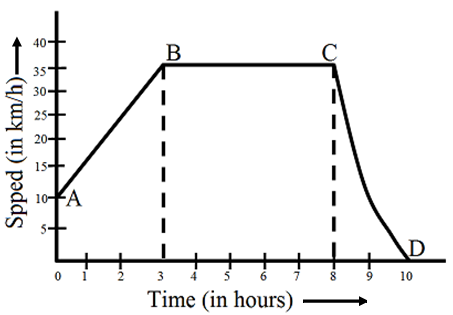
The graph given alongside shows how the speed of a car changes with time:


  1. What is the initial speed of the car?
  2. What is the maximum speed attained by the car?
  3. Which part of the graph shows zero acceleration
  4. Which part of the graph shows varying retardation?
  5. Find the distance travelled in first 8 hours.
Discuss why pesticides are used in very accurate concentration and in very appropriate manner$?$