Question
Using the formula $\overrightarrow{\text{F}}=\text{q}\overrightarrow{\text{v}}\times\overrightarrow{\text{B}}$ and $\text{B}=\frac{\mu_0\text{i}}{2\pi\text{r}},$ show that the SI units of the magnetic field B and the permeability constant $\mu_0$ may be written as N/A-m and $NA^2$ respectively.
Answer

$\overrightarrow{\text{F}}=\text{q}\overrightarrow{\text{v}}\times\overrightarrow{\text{B}}$$\text{B}=\frac{\text{F}}{\text{qv}}=\frac{\text{F}}{\text{ITv}}=\frac{\text{N}}{\text{A.sec}/\text{sec}.}=\frac{\text{N}}{\text{A-m}}$
$\text{B}=\frac{\mu_0\text{I}}{2\pi\text{r}}$
$\mu_0=\frac{2\pi\text{rB}}{\text{I}}=\frac{\text{m}\times\text{N}}{\text{A-m}\times\text{A}}=\frac{\text{N}}{\text{A}^2}$

Need a full question paper?

Generate a complete, print-ready paper with questions like this in minutes — across 16+ boards, with answer keys.

Start Generating Free

Similar questions

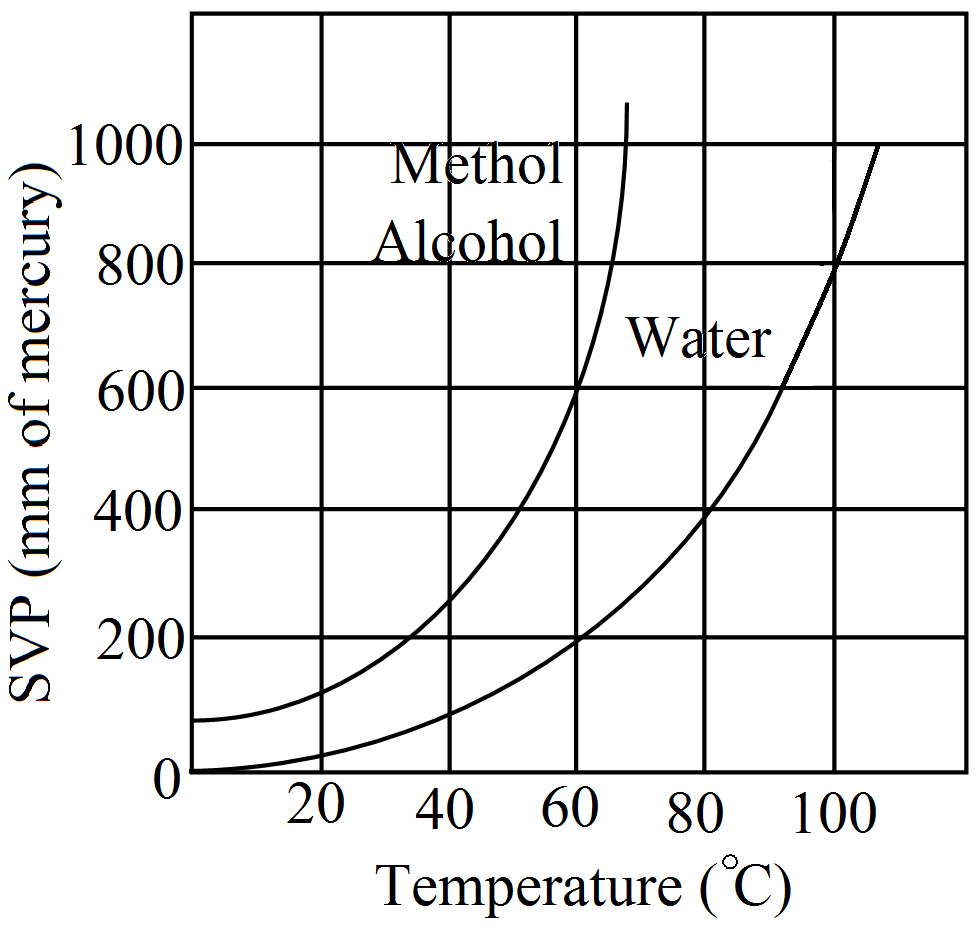
Using figure. of the text, find the boiling point of methyl alcohol at 1atm (760mm of mercury) and at 0.5atm.
State Wien's law. Write the S.I. unit of Wien's constant.
Find the ratio of the mean speed of hydrogen molecules to the mean speed of nitrogen molecules in a sample contammg a mixture of the two gases.
Does the phrase "direction of zero vector" have physical significance? Discuss in terms of velocity, force etc.
Rain is falling vertically. A man running on the road keeps his umbrella tilted but a man standing on the street keeps his umbrella vertical to protect himself from the rain. But both of them keep their umbrella vertical to avoid the vertical sun-rays. Explain.
A transverse harmonic wave on a string is described by
$\text{y}(\text{x, t})=3.0\sin\big(36\text{t}+0.018\text{x}+\frac{\pi}{4}\big)$
where x and y are in cm and t in s. The positive direction of x is from left to right.
What are its amplitude and frequency?
Show graphically, the intensity variation of beats formation?
If $\text{Y}=3\sin(36\text{t}+.018\text{x}+\frac{\pi}{4})\text{cm}$ find the amplitude and velocity of the wave.
Give the geometrical meaning of $(i)$ scalar product $(ii)$ cross product of two vectors.
In Ampere's $\oint\overrightarrow{\text{B}}.\text{d}\overrightarrow{\text{l}}=\mu_0\text{i},$ the current outside the curve is not included on the right hand side. Does it mean that the magnetic field B calculated by using Ampere's law, gives the contribution of only the currents crossing the area bounded by the curve?