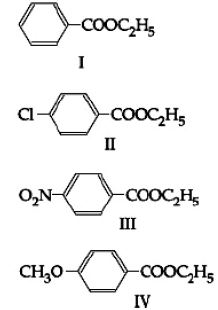
MCQ
Visible light will be absorbed by
- A$[Sc(H_2O)_3(NH_3)_{3}]^{3+}$
- B$[Ti(en)_2(NH_3)_2]^{4+}$
- ✓$[Cr(NH_3)_6]^{3+}$
- D$[Zn(NH_3)_6]^{2+}$
Also, when an electron can go from lower energy orbital to higher energy orbital, then they can absorb visible light.
In $\left[ Cr \left( NH _3\right)_6\right]^{3+}, Cr$ is present as $Cr ^{+3}$
Electronic configuration of $Cr { }^3=[A r] 3 d^3 4 s^0$
Now, since the complex has 3 unpaired electrons, excitation of electrons is possible \& therefore, it will absorb visible light.
Generate a complete, print-ready paper with questions like this in minutes — across 16+ boards, with answer keys.
$R, S$ and $\mu$ respectively are

| $[R]$ (molar) | $1.0$ | $0.75$ | $0.40$ | $0.10$ |
| $\mathrm{t}$ (min.) | $0.0$ | $0.05$ | $0.12$ | $0.18$ |
The order of the reaction is
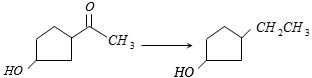
(At. No. $Cr = 24, Mn = 25, $$Fe = 26, Ni = 28$)