MCQ
Water falls from a tap, down the streamline
  • Area decreases
  • B
    Area increases
  • C
    Velocity remains same
  • D
    Area remains same

Answer

Correct option: A.
Area decreases
a
(a) When water falls from a tap, down the streamline area decreases due to increase in velocity of liquid as it experiences gravity, i.e. by equation of continuuity.

$A_{1} v_{1}=A_{2} v_{2}$

Need a full question paper?

Generate a complete, print-ready paper with questions like this in minutes — across 16+ boards, with answer keys.
Start Generating Free

Similar questions

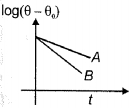
Two bodies $A$ and $B$ of equal masses, area and emissivity cooling under Newton's law of cooling from same temperature are represented by the graph. If $\theta$ is the instantaneous temperature of the body and $\theta_0$ is the temperature of surroundings, then relationship between their specific heats is ..........
The moment of inertia of a disc of mass $M$ and radius $R$ about an axis, which is tangential to circumference of disc and parallel to its diameter is:
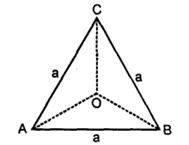
$ABC$ is an equilateral triangle. Length of each side is $a$ and centroid is point $O$. Find $\overrightarrow{A B}+\overrightarrow{B C}+\overrightarrow{C A}=.......$
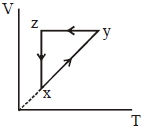
A thermodynamic cycle $xyzx$ is shown on a $V-T$ diagram.

The $P-V$ diagram that best describes this cycle is

(Diagrams are schematic and not to scale)
A block starts moving up an inclined plane of inclination $30^{\circ}$ with an initial velocity of $v_{0}$. It comes back to its initial position with velocity $\frac{v_{0}}{2} .$ The value of the coefficient of kinetic friction between the block and the inclined plane is close to $\frac{ I }{1000},$ The nearest integer to $I$ is......
The acceleration due to gravity near the surface of a planet of radius $R$ and density $d$ is proportional to
A block of mass $5$ kg lies on a rough horizontal table. A force of $19.6\, N$ is enough to keep the body sliding at uniform velocity. The coefficient of sliding friction is
An object of mass $1 \,kg$ moving on a horizontal surface with initial velocity $8 \,m / s$ comes to rest after $10 \,s$. If one wants to keep the object moving on the same surface with velocity $8 \,m / s$ the force required is ...... $N$
Three coherent waves of equal frequencies having amplitude $10 \,\, \mu m$, $4\,\,\mu m$ and $7 \,\,\mu m$ respectively, arrive at a given point with successive phase difference of $\pi /2$. The amplitude of the resulting wave in $mm$ is given by
What is common in the thermal equilibrium of two systems?