MCQ
Water in our tap comes from a:
  • A
    River.
  • B
    Lake.
  • C
    Well.
  • River, lake or well.

Answer

Correct option: D.
River, lake or well.
Water in our tap comes from river, lake or well.

Need a full question paper?

Generate a complete, print-ready paper with questions like this in minutes — across 16+ boards, with answer keys.
Start Generating Free

Similar questions

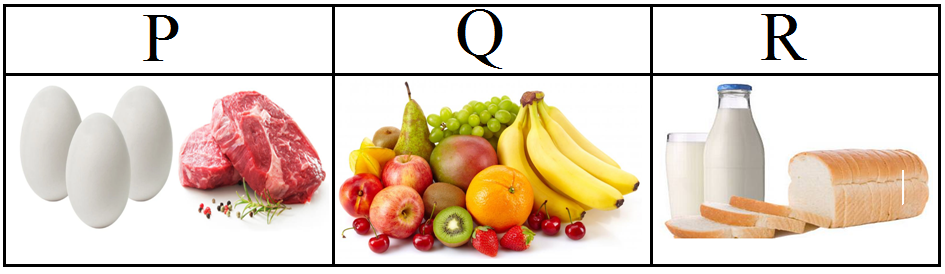
Which of the following labelled boxes contain protective food?
Boojho took an empty plastic bottle, turned it upside down and dipped its open mouth into a bucket filled with water. He then tilted the bottle slightly and made the following observations.
  1. Bubbles of air came out from the bottle.
  2. Some water entered the bottle.
  3. Nitrogen gas came out in the form of bubbles and oxygen got dissolved in water.
  4. No bubbles formed, only water entered the bottle.
Which observations is/are correct?
Which of the following statements is true?
Which of the following is a natural magnet?
Direction: Read the passages given below and answer the questions that follow Passage Mohan was boiling water in a pan for making tea. His brother Ram came there and observed that during boiling of water some bubbles are formed. He told his brother Mohan that boiling of water is a chemical change as gas is evolved in this process. But Mohan argued that this is not a chemical change. What kind of change takes place after formation of tea?
Fabrics made from which of the following is not suited to be used in cold and dry places?
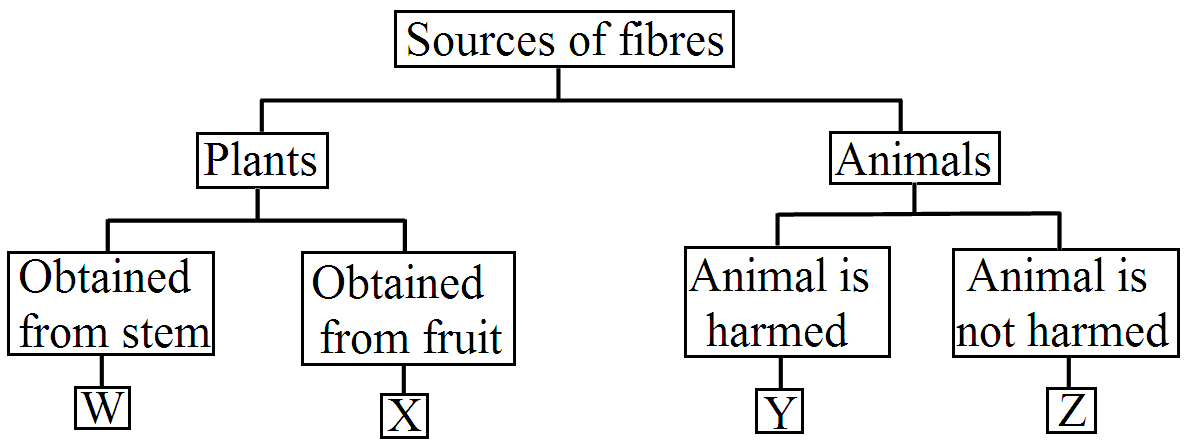
Refer to the given flow chart and select the correct option.
DIRECTIONS: Read the passage $(s)$ given below and answer the questions that follow. Passage - You are asked to add two spoons of solid salt to some liquid water taken in a beaker. On stirring it you find that whole of the salt has disappeared and only liquid can be seen in beaker. Which of the following processes will be useful to get salt from this solution?
Which of the following can be thrown in blue bins?
Which one of the following sets is not correct?