MCQ
Wave front formed by the collimator of a spectrometer:
- APlane
- BSpherical
- CCylindrical
- DParaboloidal
Explanation:
Wave front formed by the collimator of a spectrometer is a plane wave front, when r lit is in the focus.
Generate a complete, print-ready paper with questions like this in minutes — across 16+ boards, with answer keys.
A galvanometer of resistance 20 W is to be converted into an ammeter of range 1 A. If a current of 1 mA produces full scale deflection, the shunt required for the purpose is
|
(a) 0.01 W |
(b) 0.05 W |
(c) 0.02 W |
(d) 0.04 W |
The electric potential at a point on the axis of an electric dipole depends on the distance r of the point from the dipole as
|
(a) ∝ |
(b) ∝ |
(c) ∝ r |
(d) ∝ |
Three charges each of magnitude q are placed at the corners of an equilateral triangle, the electrostatic force on the charge placed at the center is (each side of triangle is L)
|
(a) Zero |
(b) |
(c) |
(d) |
Assertion : The electric bulbs glows immediately when switch is on.
Reason : The drift velocity of electrons in a metallic wire is very high.
|
(a) If both assertion and reason are true and the reason is the correct explanation of the assertion. |
|
(b) If both assertion and reason are true but reason is not the correct explanation of the assertion. |
|
(c) If assertion is true but reason is false. |
|
(d) If the assertion and reason both are false. |
When a PN junction diode is reverse biased
|
(a) Electrons and holes are attracted towards each other and move towards the depletion region |
|
(b) Electrons and holes move away from the junction depletion region |
|
(c) Height of the potential barrier decreases |
|
(d) No change in the current takes place |
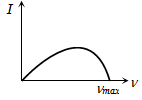
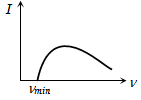
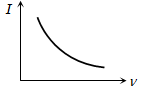
The continuous x-ray spectrum obtained from a Coolidge tube is of the form
|
(a)
|
(b)
|
(b)
|
(d)
|