Question
What are called pathogens? Give information about it? (with example).

Answer

Many organisms like bacteria, viruses, fungi, parasites, worms are responsible for causing diseases in humans. Such disease causing organisms are called pathogens.
All parasites are pathogenic because they harm the host by staying in or on it. Pathogens enter our body in many ways, multiply, disturb our essential functions.
As a result, external and functional impairment occurs.
Pathogen has to adapt its life according to the internal environment of the host.
Shows ability to survive in pH (<7) and resist various digestive enzymes.
Examples:
 DiseasePathogens
1TyphoidSalmonella typhi
2PneumoniaStreptococcus pneumoniae, Haemophilus influenzae
3Common coldRhino viruse
4MalariaPlasmodium species
5AscariasisAscaris lumbricoid
6Elephantiasis/ FilariasisWuchereria bancrofti
7Ringwormmicrosporum, trichophyton & Epidermophyton
 

Need a full question paper?

Generate a complete, print-ready paper with questions like this in minutes — across 16+ boards, with answer keys.

Start Generating Free

Similar questions

Name the blank spaces a, b, c and d given in the following table:
Type of microbe Name Commercial product
Bacterium a Lactic acid
Fungus b Cyclosporin A
c Monascus purpureus Statins
Fungus Penicillium notatum d
Fertilisation is essential for production of seed, but in some angiosperms, seeds develop without fertilisation.
  1. Give an example of an angiosperm that produces seeds without fertilisation Name the process.
  2. Explain the two ways by which seeds develop without fertilisation.
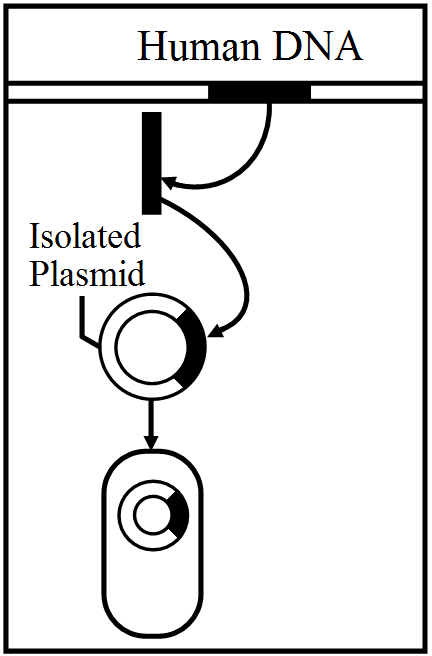
Name the particular technique whose steps are shown in the following figure. Use the figure to summarise the technique in three steps:

For an organ transplant, it is an advantage to have an identical twin. Why?
Explain the inheritance of Sickle Cell anaemia.
The base sequence in one of the strands of DNA is TAGCATGAT
  1. Give the base sequence of its complementary strand.
  2. How are these base pairs held together in a DNA molecule?
  3. Explain the base complementarity rules. Name the scientist who framed this rule.
Why both the strands of DNA are not copied during transcription? Explain.
  1. Differentiate between unambiguous and degenerate codons.
  2. Write two functions of the codon AUG.
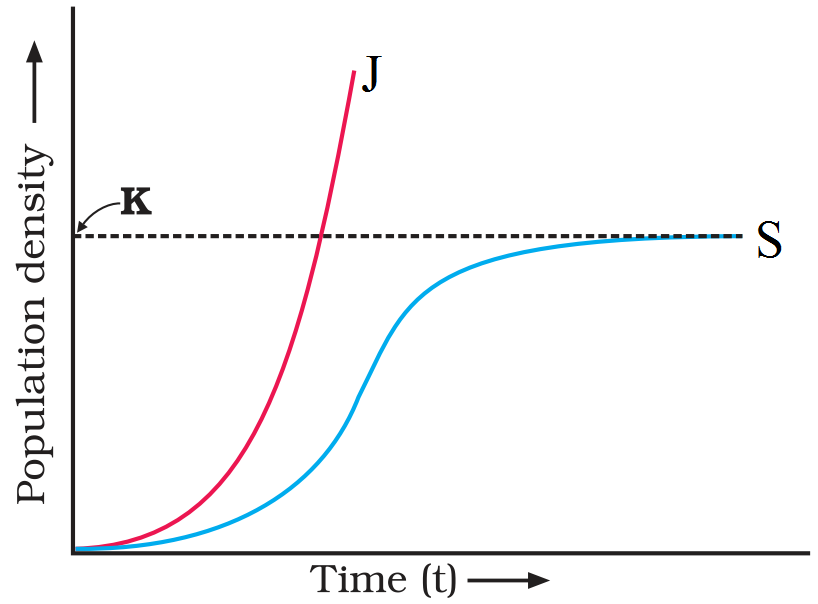
A forest hardly has any carnivores. Census of herbivorous mammals was taken and plotted as a graph shown below:

Identify the curve that will explain the population growth of herbivores. Give reasons for your answer.
Can you think and answer how a reporter enzyme can be used to monitor transformation of host cells by foreign DNA in addition to a selectable marker?