Question

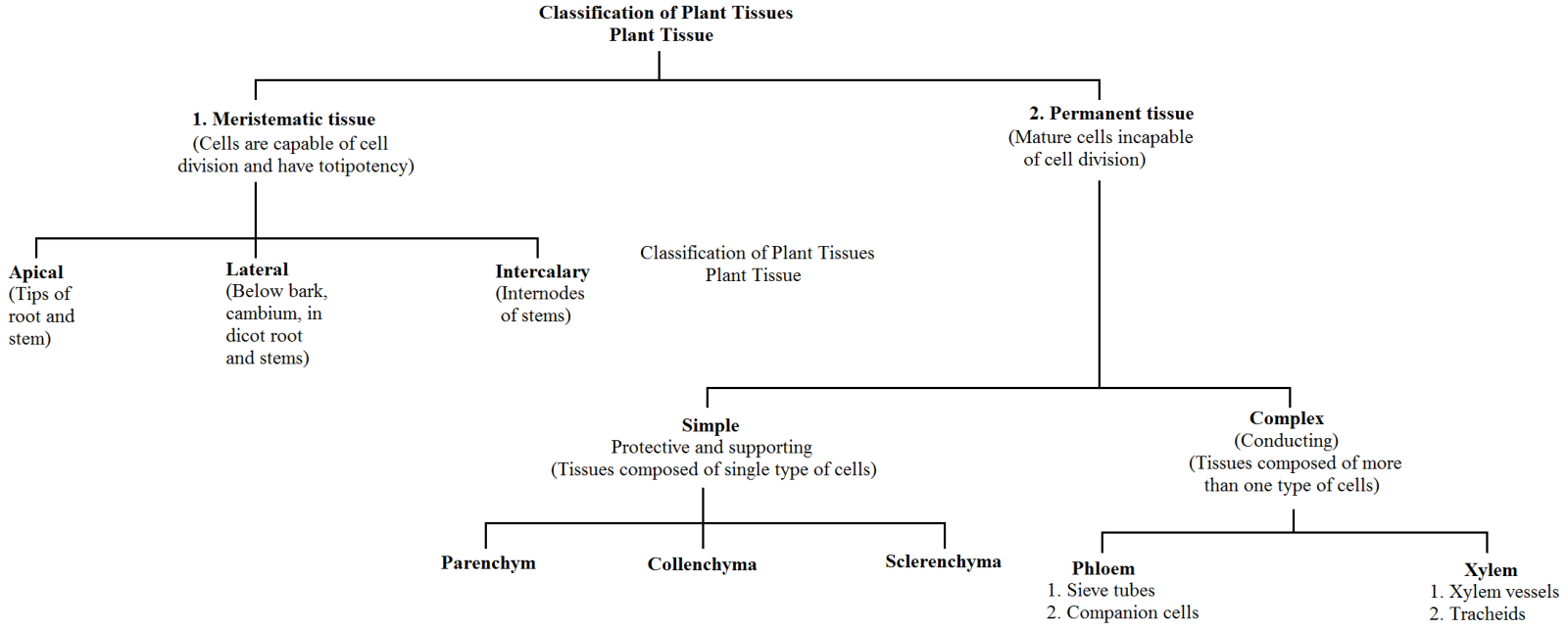
What are different types of tissues in plants? Describe simple tissues.
Answer

Simple tissues: These tissues are composed of cells which are structurally and functionally similar.

There are three types of simple tissues:

  1. Parenchyma: Parenchyma cells are living and posses the power of division. The cell wall is thin and encloses a dense cytoplasm which contains a small nucleus and surrounds a large central vacuole.

  2. Collenchyma: It tissues also consists of living cells. It is characterized by the deposition of extra cellulose at the corners of the cells. In collenchymas, intercellular spaces are generally absent. Collenchyma cells are elongated in shape. They often contain a few chloroplasts.

  3. Sclerenchyma: Sclerenchyma cells are dead cells and they are devoid of protoplasm. The cells walls of Sclerenchyma are greatly thickened by the deposition of lignin. The cells of sclerenchyma are closely packed without intercellular spaces.

Need a full question paper?

Generate a complete, print-ready paper with questions like this in minutes — across 16+ boards, with answer keys.

Start Generating Free

Similar questions

Compare the structure of striated, smooth and cardiac muscles on the basis of their shape, number of nuclei and position of nuclei within the cell.
What will happen if:
Excess amount of fertilisers is added to a green lawn?
Which method is commonly used for improving cattle breeds and why?
How would you obtain sodium chloride from a mixture of sodium chloride and sulphur without using water?

Explain various steps in hybridization of crop plants.

The speed-time graph of an ascending passenger lift is given alongside.

What is the acceleration of the lift:
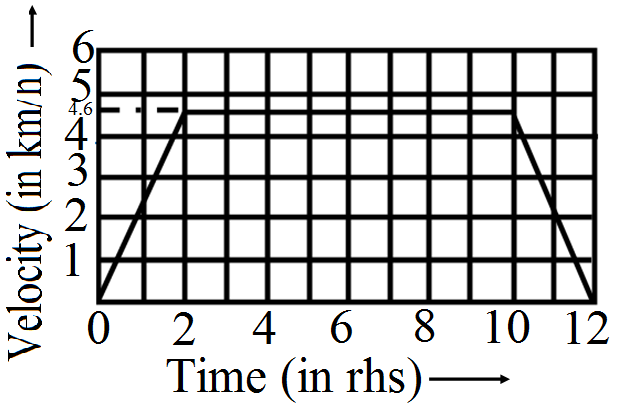
  1. During the first two seconds?
  2. Detween second and tenth second?
  3. During the last two seconds?
The scientists now say that there are actually five states of matter A, B, C, D and E. The state A has a fixed volume but no fixed shape. The state B can be compressed very easily by applying pressure and state C has a fixed shape as well as a fixed volume. The state D is mixture of free electrons and ions whereas state E is named after an Indian scientist and a famous physicist.
  1. Name the physical states (i) A (ii) B (iii) C (iv) D, and (v) E.
  2. Name one substance belonging to state C which can directly change into vapours on heating. What is this process known as?
  3. Name one substance which normally belongs to state B but whose solid form changes directly into gaseous state.
  4. Name the most common substance belonging to state A.
  5. Which state of matter makes the sum and other stars to glow.
When a gas jar containing air is inverted over a gas jar containing bromine vapour, the red-brown bromine vapour diffuse into air. Explain how bromine vapour diffuse into air.
A certain species X has 17 protons, 18 electrons and 20 neutrons.
  1. What is such a particle called?
  2. What is the mass number of X?
  3. What is the atomic number of X?
Differentiate between the function of Xylem and Phloem.