Question
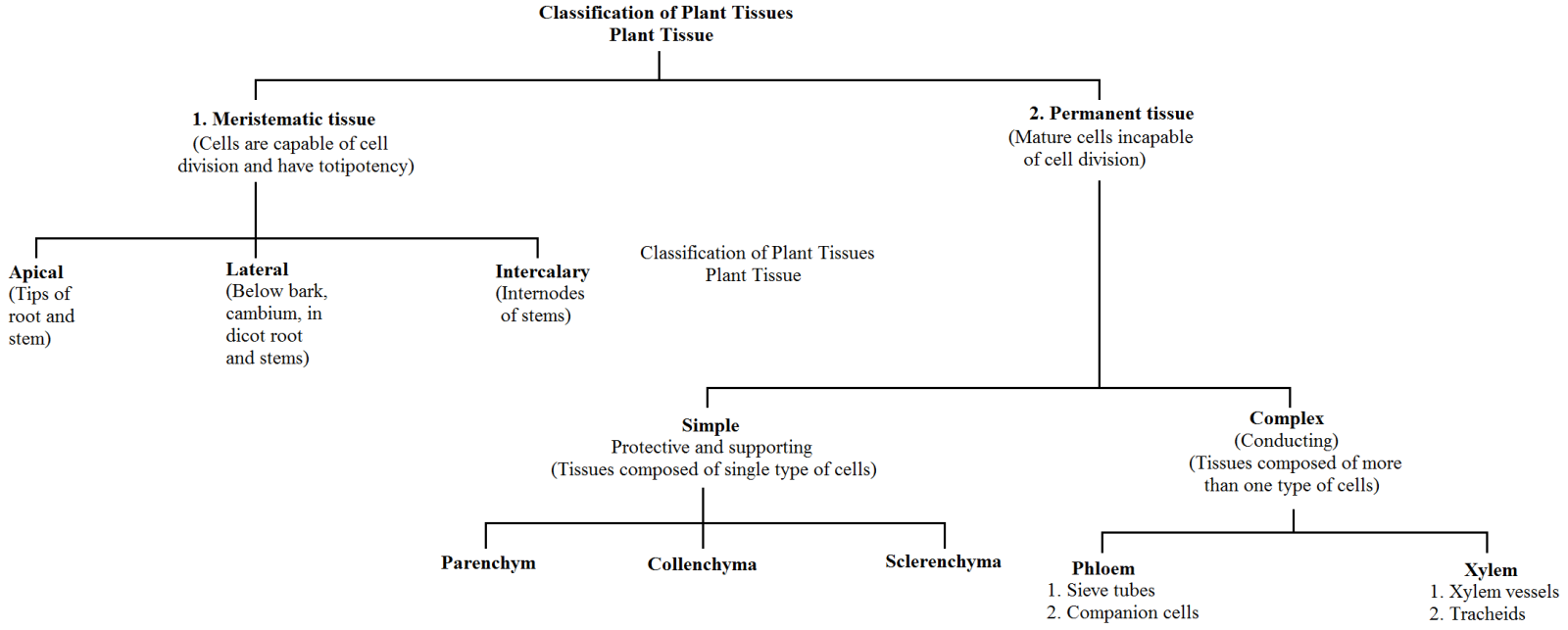
What are different types of tissues in plants? Describe simple tissues.

Answer


Simple tissues: These tissues are composed of cells which are structurally and functionally similar.
There are three types of simple tissues:
  1. Parenchyma: Parenchyma cells are living and posses the power of division. The cell wall is thin and encloses a dense cytoplasm which contains a small nucleus and surrounds a large central vacuole.
  2. Collenchyma: It tissues also consists of living cells. It is characterized by the deposition of extra cellulose at the corners of the cells. In collenchymas, intercellular spaces are generally absent. Collenchyma cells are elongated in shape. They often contain a few chloroplasts.
  3. Sclerenchyma: Sclerenchyma cells are dead cells and they are devoid of protoplasm. The cells walls of Sclerenchyma are greatly thickened by the deposition of lignin. The cells of sclerenchyma are closely packed without intercellular spaces.

Need a full question paper?

Generate a complete, print-ready paper with questions like this in minutes — across 16+ boards, with answer keys.
Start Generating Free

Similar questions

If the back of your hand is moistened with alcohol, you will find that it rapidly becomes dry. Why is it that while it is drying, your hand feels cool?
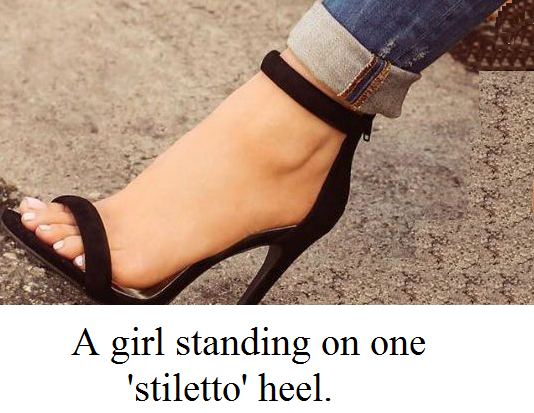
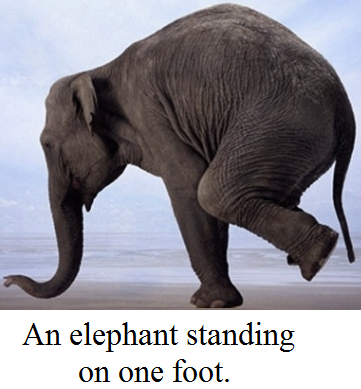
An elephant weighing $40,000N$ stands on one foot of area $1000cm^2$ whereas a girl weighing $400N$ is standing on one ‘stiletto’ heel of are

a $1cm^2.$
  1. Which of the two, elephant or girl, exerts a larger force on the ground and by how much?
  2. What pressure is exerted on the ground by the elephant standing on one foot?
  3. What pressure is exerted on the ground by the girl standing on one heel?
  4. Which of the two exerts larger pressure on the ground: elephant or girl?
  5. What is the ratio of pressure exerted by the girl to the pressure exerted by the elephant?
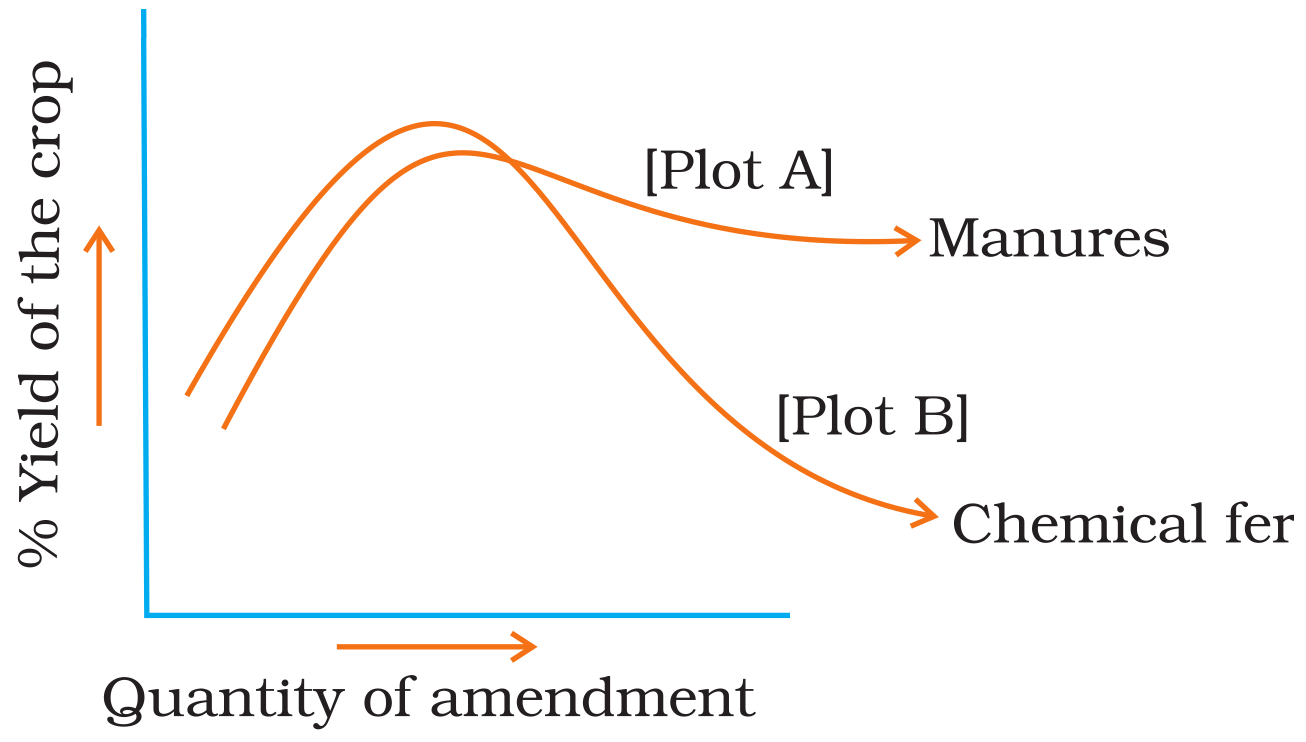
Figure shows the two crop fields $[$Plots $A$ and $B]$ have been treated by manures and chemical fertilizers respectively, keeping other environmental factors same. Observe the graph and answer the following questions.
  1. Why does plot $B$ show sudden increase and then gradual decrease in yield$?$
  2. Why is the highest peak in plot $A$ graph slightly delayed$?$
  3. What is the reason for the different pattern of the two graphs$?$
i. A cube of side 5 cm is immersed in water and then in saturated salt solution. In which case, will it experience a greater buoyant force? If each side of the cube is reduced to 4 cm and then immersed in water, what will be the effect on the buoyant force experienced by the cube as compared to the first case for water. Give the reason for each case.
ii. A ball weight 4 kg of density $4000 kg m ^{-3}$ is completely immersed in water of density $10^3 kg m ^{-3}$. Find the force of buoyancy on it. (Given g $=10 ms^{-2}$.)
Classify the following as chemical or physical changes:
  • Cutting of trees.
  • Melting of butter in a pan.
  • Rusting of almirah.
  • Boiling of water to form steam.
  • Passing of electric current, through water and the water breaking down into hydrogen and oxygen gases.
  • Dissolving common salt in water.
  • Making a fruit salad with raw fruits.
  • Burning of paper and wood.
A gun of mass $3\ kg$ fires a bullet of mass $30\ g.$ The bullet takes $0.003\ s$ to move through the barrel of the gun and acquires a velocity of $100\ m/s$. Calculate:
  1. The velocity with which the gun recoils.
  2. The force exerted on gunman due to recoil of the gun.
Raunak took $5$ moles of carbon atoms in a container and Krish also took $5$ moles of sodium atoms in another container of same weight.
  1. Whose container is heavier?
  2. Whose container has more number of atoms?
Define diarrhoea. Give an account of occurrence, symptoms, prevention and control of this ailment.
A stone is dropped from a $100 m$ high tower. How long does it take to fall?
$a.$ the first $50 m$ and
$b.$ the second $50 m .$
What is epithelial tissue? Give its characteristics and functions.