Question
What are the fundamental difference between In-situ and Ex-situ conservation.
| S.No. | In-situ Conservation | Ex-situ Comervation |
| 1 | It means onsite conservation. | It means offsite conservation. |
| 2 | It is the conservation of wild species in their natural habitates in order to maintain and recover endangered species. | It is conservation of species in the man-made habitat hut imitate the natural habitats of species. |
| 3 | It is more dynamic as it involves natural habitats of organisms. | It is less dynamic as it involves man-made hubitats. |
| 4 | It provides protection to endangered species against predators. | It provides protection against all hostile factors. |
| 5 | It is suitable for animals that are found in abundance | It is suitable for animals that are not found in abundance. |
| 6 | It is not suitable in the event of a rapid decline in the number of a species due to environmental genetic or any other factor. | It is an ideal option in case of rapid decline in the number of a species due to environmental or any other reason. |
| 7 | Wildlife and livestock conservation involve in in-situ conservation. | It can be used to conserve crops and their wild relatives. |
| 8 | Examples include national parks, wildlife sanctuaries, biospheres reserve etc. | Examples include zoo, aquarium and botanical garden. |
| 9 | It involves designation, management and monitoring of the target species in their natural habitat. | It involves sampling, storage and transfer of target species from their natural habitats to man-made habitats. |
| 10 | It helps maintain the ongoing process of evolution and adaptation within the natural environment of the species. | It separates the animals from the ongoing process of evolution and adaptation within their natural environment. |
Generate a complete, print-ready paper with questions like this in minutes — across 16+ boards, with answer keys.
Do the above statements mean one and the same thing. If your answer is yes, give reasons. And if your answer is ‘no’ explain the meaning of each expression.
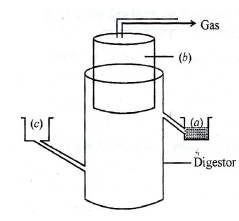 The diagram above is that of a typical biogas plant.Explain the sequence of events occurring in a biogas plant. Identify a, b and c.