Question
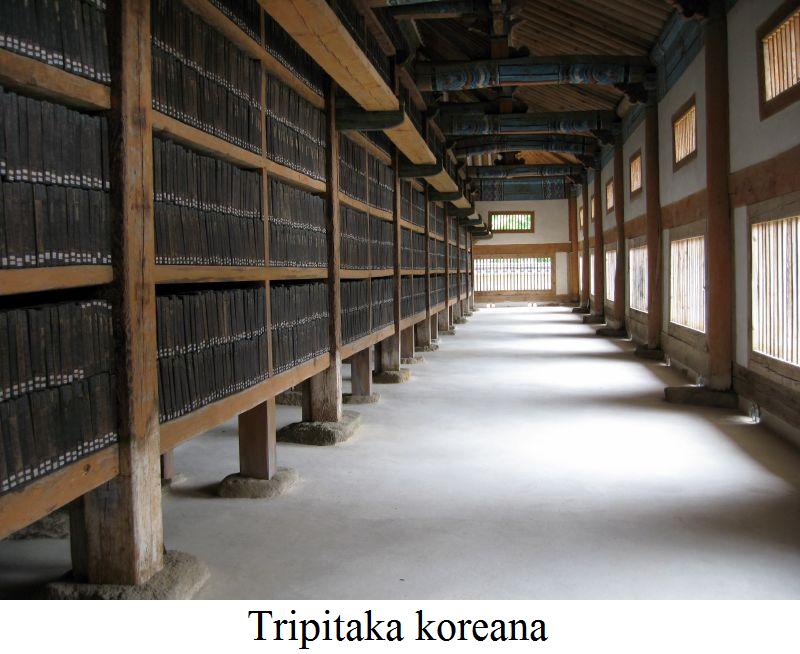
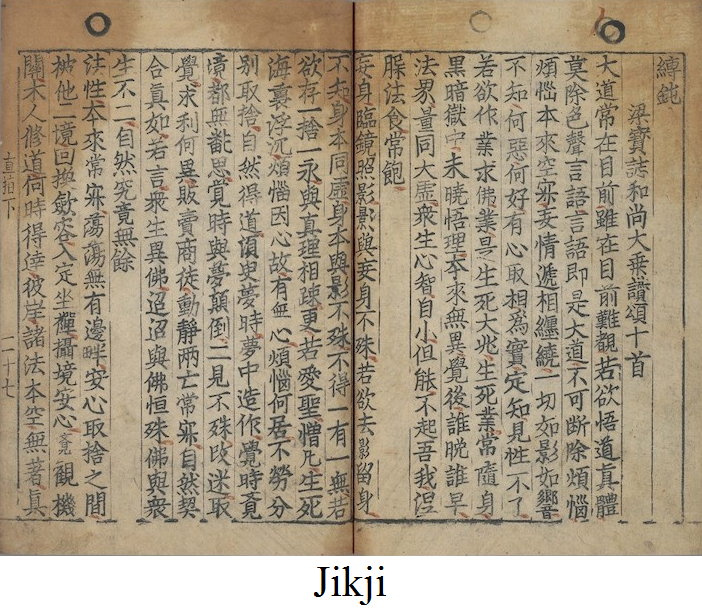
What are Tripitika Koreana and Jikji? Write about them in brief.
Answer

Tripitika Koreana is a Korean collection of Buddhist scriptures, carved onto about 81,258 wooden printing blocks in the 13$^{th}$ century. It is kept in Haeinsa, a Buddhist temple in South Korea.

It was inscribed in the UNESCO memory of the World Register in 2007.
Jikji is one of the oldest books of the world printed with movable metal type. It describes major characteristics of Zen Buddhism including about 150 Buddhist monks of India, China and Korea. The first part of this book is not available, the second part has been stored in the national library of France. UNESCO confirmed that Jikji is the world's oldest metalloid type and included it in the memory of the World Register in 2001.

Need a full question paper?

Generate a complete, print-ready paper with questions like this in minutes — across 16+ boards, with answer keys.

Start Generating Free

Similar questions

Read the passage below and answer the questions that follow:
Rural local government is popularly known by the name panchayati raj. Each village, or a group of villages in some States, has a gram panchayat. This is a council consisting of several ward members, often called panch, and a president or sarpanch. They are directly elected by all the adult population living in that ward or village. It is the decision-making body for the entire village. The panchayat works under the overall supervision of the gram sabha. All the voters in the village are its members. It has to meet at least twice or thrice in a year to approve the annual budget of the gram panchayat and to review the performance of the gram panchayat.
The local government structure goes right up to the district level. A few gram panchayats are grouped together to form what is usually called a panchayat samiti or block or mandal. The members of this representative body are elected by all the panchyat members in that area. All the panchayat samitis or mandals in a district together constitute the zilla parishad. Most members of the zilla parishad are elected. Members of the Lok Sabha and MLAs of that district and some other officials of other district level bodies are also its members. Zilla parishad chairperson is the political head of the zilla parishad.
  1. What is the third tier of government in India known as?
  1. Village Panchayat.
  2. State government.
  3. Local self-government.
  4. Zila Parishad.
  1. Which statement is true about Panchayati Raj?
  1. The Panchayat samiti and Zila Parishad should be constituted with directly elected member.
  2. Minimum age should be 18 year to contest the election at the panchayat level.
  3. For the financial review of Panchayats, the state finance commission is established.
  4. Election of Panchayati Raj institution is conducted under the guidance of the State Election Commission.
  1. Which government works at district level?
  1. Panchayat Samiti.
  2. Zila Parishad.
  3. Village Panchayat.
  4. Gram Panchayat.
  1. What was the main purpose behind bringing the Panchayati Raj system in India?
  1. To Prevent Criminalization of Politics.
  2. Decentralization of the political power to the general public.
  3. To reduce election Expences.
  4. Development of Villages.
Read the following text carefully and answer the questions that follow:
In his book, Mahatma Gandhi declared that British rule was established in India with the cooperation of Indians, and had survived only because of this cooperation. If Indians refused to cooperate, British rule in India would collapse within a year, and swaraj would come. Non-cooperation became a movement. Gandhiji proposed that the movement should unfold in stages. It should begin with the surrender of titles that the government awarded, and a boycott of civil services, army, police, courts and legislative councils, schools, and foreign goods. Then, in case the government used repression, a full civil disobedience campaign would be launched. Through the summer of 1920, Mahatma Gandhi and Shaukat Ali toured extensively, mobilising popular support for the movement. Many within the Congress were, however, concerned about the proposals. They were reluctant to boycott the council elections scheduled for November 1920. In the months between September and December, there was an intense tussle within Congress. For a while, there seemed no meeting point between the supporters and the opponents of the movement. Finally, at the Congress session at Nagpur in December 1920, a compromise was worked out.
i. What compromise chalked out in the Congress session of December 1920? (1)
ii. In which book did Mahatma Gandhi write that the British rule was established because of Indian's cooperation? (1)
iii. Why were some members of Congress reluctant to boycott the council elections? (2)
Read the source given below and answer the questions that follow:
In 1848, Frédéric Sorrieu, a French artist, prepared a series of four prints visualising his dream of a world made up of ‘democratic and social Republics’, as he called them. As you would recall, artists of the time of the French Revolution personified Liberty as a female figure-here you can recognise the torch of Enlightenment she bears in one hand and the Charter of the Rights of Man in the other. On the earth in the foreground of the image lie the shattered remains of the symbols of absolutist institutions. In Sorrieu’s utopian vision, the peoples of the world are grouped as distinct nations, identified through their flags and national costume. Leading the procession, way past the statue of Liberty, are the United States and Switzerland, which by this time were already nation-states. France, identifiable by the revolutionary tricolour, has just reached the statue. The concept and practices of a modern state, in which a centralised power exercised sovereign control over a clearly defined territory, had been developing over a long period of time in Europe. But a nation-state was one in which the majority of its citizens, and not only its rulers, came to develop a sense of common identity and shared history or descent.
Answer the following MCQs by choosing the most appropriate options:
  1. What was the theme of painting made by French artist?
  1. Constitutional Monarchy.
  2. Absolute Monarchy.
  3. Democratic and Social Republic.
  4. True democracy.
  1. The utopian vision of French artist Frédéric Sorrieu was.
  1. The peoples of the world are grouped as distinct nations, identified through their flags and national costume.
  2. The concepts and practices of a modern state, in which a centralised power exercised sovereign control over a clearly defined territory.
  3. Leading the procession, way past the statue of Liberty, as the United States and Switzerland, which by this time were already nation-states.
  4. France, identifiable by the revolutionary tricolour, has just reached the statue.
  1. French Revolution personified Liberty as a female figure, she bears the torch of Enlighten- ment in one hand and ......... in the other.
  1. Constitution.
  2. Charter of Rights of Man.
  3. Charter of Rights of Woman.
  4. Bible.
  1. Which of the following pairs represent two nation states?
  1. Spain and Portugal.
  2. United States and Switzerland.
  3. Britain and Italy.
  4. Japan and Turkey.
Read the source given below and answer the questions that follow :
Exhaustion of Natural Resources Look at the following data for crude oil:
Region/countryReserve (2017)
(Thousand Million Barrels)
Number of Years Reserves
will last
Middle East80870
United States of America5010.5
World169750.2

The table above gives an estimate of reserves of crude oil (column1). More important, it also tells us for how many years the stock of crude oil will last if people continue to extract it at the present rate. The reserves would last only 50 years for the world. However, different countries face different situations. Countries like India depend on importing oil from abroad because they do not have enough stocks of their own. There are countries like USA which have low reserves and hence want to secure oil through military or economic power. The question of sustainability of development raises many fundamentally new issues about the nature and process of development.
Q.1. Is crude oil essential for the development process in a country? Discuss.
Q.2. India has to import crude oil. What problems do you anticipate for the country looking at the above situation?
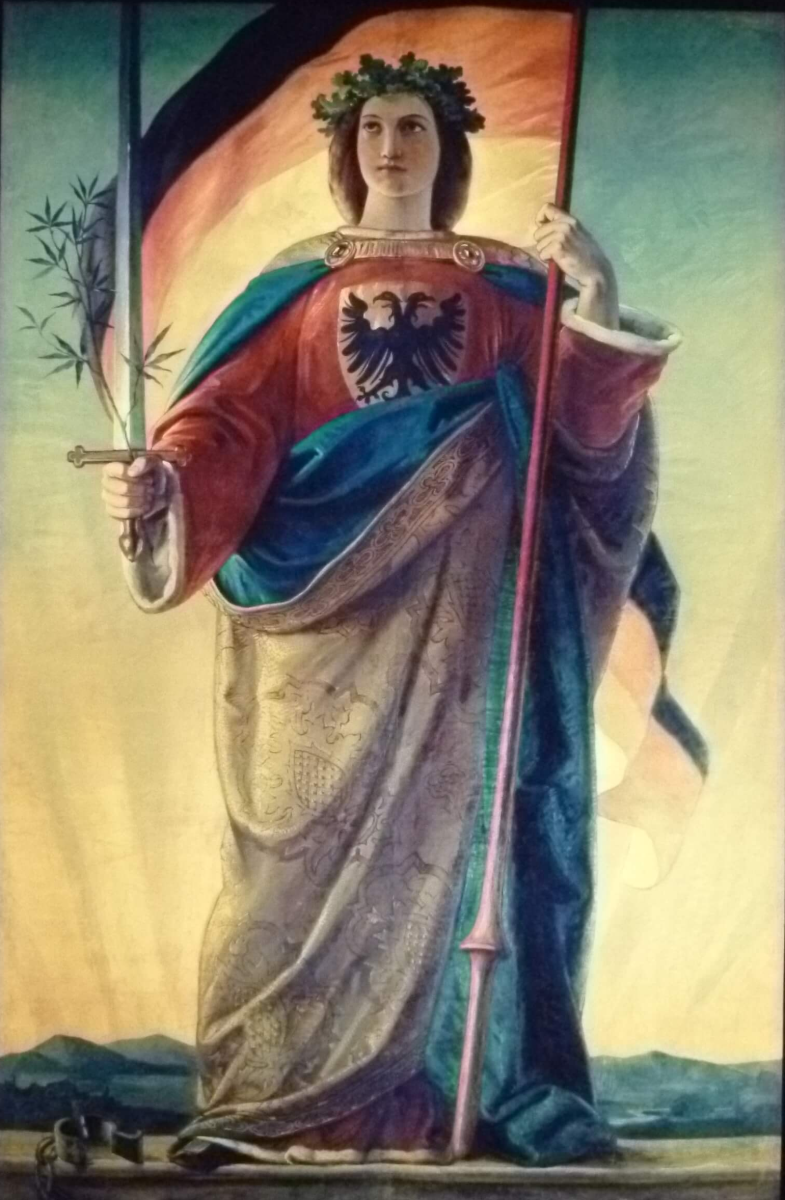
Recognise the picture below and answer the following questions:
  1. Whose painting is it? Who painted it and when?
  2. What does it signify
Read the source given below and answer the questions that follow:
During the 1830s, Giuseppe Mazzini had sought to put together a coherent programme for a unitary Italian Republic. He had also formed a secret society called Young Italy for the dissemination of his goals. The failure of revolutionary uprisings both in 1831 and 1848 meant that the mantle now fell on Sardinia-Piedmont under its ruler King Victor Emmanuel II to unify the Italian states through war. In the eyes of the ruling elites of this region, a unified Italy offered them the possibility of economic development and political dominance.
Answer the following MCQs by choosing the most appropriate options:
  1. What was the name of the secret society formed by Giuseppe Mazzini?
  1. Giuseppe Mazzini formed a secret society called Young Italy.
  2. Giuseppe Mazzini formed a secret society called Old Italy.
  3. Giuseppe Mazzini formed a secret society called Traditional Italy.
  4. Giuseppe Mazzini formed a secret society called Old France.
  1. When did Giuseppe Mazzini seek to put together a coherent programme for a unitary Italian Republic?
  1. During the 1860s, Giuseppe Mazzini had sought to put together a coherent programme for a unitary Italian Republic.
  2. During the 1730s, Giuseppe Mazzini had sought to put together a coherent programme for a unitary Italian Republic.
  3. During the 1930s, Giuseppe Mazzini had sought to put together a coherent programme for a unitary Italian Republic.
  4. During the 1830s, Giuseppe Mazzini had sought to put together a coherent programme for a unitary Italian Republic.
  1. Who was the ruler of Sardinia-Piedmont?
  1. King Victor David I was the ruler of Sardinia-Piedmont.
  2. King Victor Davis II was the ruler of Sardinia-Piedmont.
  3. King Victor Emmanuel II was the ruler of Sardinia-Piedmont.
  4. King Victor Emmanuel III was the ruler of Sardinia-Piedmont.
  1. What did a unified Italy offer the ruling elites of this region?
  1. A unified Italy offered them the possibility of underdevelopment and political dominance.
  2. A unified Italy offered them the possibility of economic development and political dominance.
  3. A unified Italy offered them the possibility of underdevelopment and political failure.
  4. A unified Italy offered them the possibility of social breakdown and political failure.
The movement started with middle-class participation in the cities. Thousands of students left governmentcontrolled schools and colleges, headmasters and teachers resigned, and lawyers gave up their legal practices. The council elections were boycotted in most provinces except Madras, where the Justice Party, the party of the non-Brahmans, felt that entering the council was one way of gaining some power - something that usually only Brahmans had access to. The effects of non-cooperation on the economic front were more dramatic. Foreign goods were boycotted, liquor shops picketed, and foreign cloth burnt in huge bonfires. The import of foreign cloth halved between 1921 and 1922, its value dropping from ₹ 102 crore to ₹ 57 crore. In many places, merchants and traders refused to trade in foreign goods or finance foreign trade. As the boycott movement spread, and people began discarding imported clothes and wearing only Indian ones, the production of Indian textile mills and handlooms went up.
i. Explain the meaning of picketing liquor shops.
ii. When did the Non-Cooperation-Khilafat Movement begin?
iii. Why did the movement in the cities gradually slow down?
Read the extract given below and answer the questions that follow:
Some comparative data on Kerala, Haryana and Bihar
State
Infant mortality rate per 1,000 live births (2017)
Literacy rate %
Net attendance ratio (per 100 per persons) secondary stage (age 14 and 15 years) 2013-2014
2011
Haryana
30
82
61
Kerala
10
94
83
Bihar
35
62
43
Kerala, out of 1000 children born, 10died before completing one year of age but in Haryana the proportion of children dying within one year of birth was 30, which is two times more than that of Kerala. On the other hand, the per capita income of Haryana is more than that of Kerala. Just think of how dear you are toy our parents, think of how every one is so happy when a child is born. Now, try to think of parents whose children die before they even celebrate their first birthday. How painful it must be to these parents? Next, note the year to which this data pertains. It is 2017. So we are not talking of old times; it is70 years after independence when our metro cities are full of high rise buildings and shopping malls. The problem does not end with Infant Mortality Rate. The last column of table 1.4 shows around half of the children aged 14-15 in Bihar are not attending school beyond Class 8. This means that if you went to school in Bihar nearly half of your elementary class would be missing. Those who could have been in school are not there. If this had happened to you, you would not be able to read what you are reading now. How is it that the average person in Haryana has more income than the average person in Kerala but lags behind in these crucial areas? The reason is money in your pocket cannot buy all the goods and services that you may need to live well. So, income by itself is not a completely adequate indicator of material goods and services that citizens are able to use. For example, normally, your money cannot buy you a pollution-free environment or ensure that you get unadulterated medicines, unless you can afford to shift to a community that already has all these things. Money may also not be able to protect you from infectious diseases, unless the whole of your community takes preventive steps. Even now, in many areas, children, particularly girls, are not able to go to high school because the government/ society has not provided adequate facilities. Kerala has a low Infant Mortality Rate because it has adequate provision of basic health and educational facilities. Similarly, in some states, the Public Distribution System (PDS)functions well. Health and nutritional status of people of such states is certainly likely to be better.
  1. Identify the IMR of Haryana in 2017 and the literacy rate of Haryana in 2011 from the following options.
  1. 30%, 82%
  2. 94%, 62%
  3. 40%, 94%
  4. None of these.
  1. From the above passage, identify the reason behind the low infant mortality rate of kerala.
  1. Status of people.
  2. Adequate provision of basic health and educational facilities.
  3. The per capita income is more.
  4. All of these.
  1. Identify the things that we cannot buy with money.
  1. Pollution free environment.
  2. Protect us from infectious diseases.
  3. Clothes and cars.
  4. Both A and B.
  1. The passage given above is related to which of the following options?
  1. Exhaustion of natural resources.
  2. Tax.
  3. Income and public facilities.
  4. All of these.
For centuries, silk and spices from China flowed into Europe through the silk route. In the eleventh century, Chinese paper reached Europe via the same route. Paper made possible the production of manuscripts, carefully written by scribes. Then, in 1295, Marco Polo, a great explorer, returned to Italy after many years of exploration in China.
China already had the technology of woodblock printing. Marco Polo brought this knowledge back with him. Now Italians began producing books with woodblocks, and soon the technology spread to other parts of Europe. Luxury editions were still handwritten on very expensive vellum, meant for aristocratic circles and rich monastic libraries which scoffed at printed books as cheap vulgarities. Merchants and students in the university towns bought the cheaper printed copies.
The production of handwritten manuscripts could not satisfy the ever-increasing demand for books. Copying was an expensive, laborious and time-consuming business. Manuscripts were fragile, awkward to handle, and could not be carried around or read easily. Their circulation, therefore, remained limited. With the growing demand for books, woodblock printing gradually became more and more popular.
i. Despite the introduction of print-culture, why were luxurious edition still handwritten?
ii. Describe any two drawbacks of handwritten manuscripts in comparison to printed material.
iii. What was Marco Polo's contribution to print culture?