Question
What do you mean by significant figures?

Answer

Significant figures are meaningful digits which are known with certainty including the last digit whose value is uncertain.
For example,
In 11.2546g, there is 6 significant figures but here 11.254 are certain and 6 is uncertain and the uncertainty would be ±1 in the last digit.
Hence last uncertain digit is also included in Significant figures.

Need a full question paper?

Generate a complete, print-ready paper with questions like this in minutes — across 16+ boards, with answer keys.
Start Generating Free

Similar questions

Give the name and atomic number of the inert gas tom in which total number of d-electrons is equal to difference in number of total 'p' and s-electrons.
Why $PCl _5$ exist and $NCl _5$ do not?
In a reaction
$\mathrm{A}+\mathrm{B}_2 \rightarrow \mathrm{AB}_2$
Identify the limiting reagent, if any, in the following reaction mixtures.
100 atoms of A + 100 molecules of B.
Explain why $\mathrm{BCl}_3$ is monomer but $\mathrm{BH}_3$ exists as $\mathrm{B}_2 \mathrm{H}_6$.
Heat of hydration of $\mathrm{Na}+($ size 102 pm$)=-397 \mathrm{~kJ} \mathrm{~mol}^{-1}$ whereas $\mathrm{Ca}^{2+}($ size 100 pm$)=-1656 \mathrm{kj} \mathrm{~mol}^{-1}$ Explain the difference.
Write the properties of $d$-block element.
Which element do you think would have been named by:
1. Lawrence Berkeley Laboratory
2. Seaborg's group?
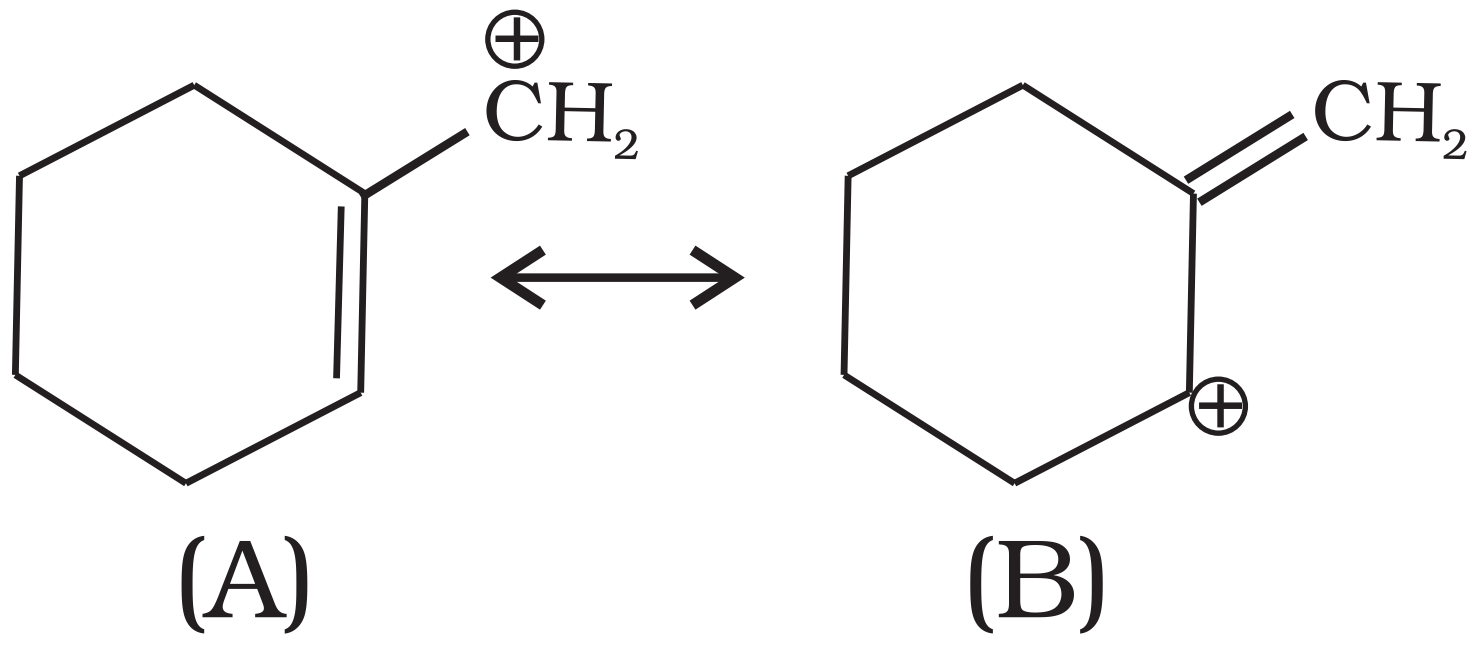
“Stability of carbocations depends upon the electron releasing inductive effect of groups adjacent to positively charged carbon atom involvement of neighbouring groups in hyperconjugation and resonance.”
Which of the following ions is more stable? Use resonance to explain your answer.
Calculate the standard enthalpy of formation of $\mathrm{C}_2 \mathrm{H}_4(\mathrm{~g})$ from the following thermochemical equation.
$\mathrm{C}_4 \mathrm{H}_8(\mathrm{~g})+6 \mathrm{O}_2(\mathrm{~g}) \rightarrow 4 \mathrm{CO}_2+4 \mathrm{H}_2 \mathrm{O}$
Given that $\Delta_{\mathrm{f}} \mathrm{H}^{\ominus}$ of $\mathrm{CO}_2(\mathrm{~g}), \mathrm{H}_2 \mathrm{O}(\mathrm{g})$ as -393.5 and $-249 \mathrm{~kJ} \mathrm{~mol}^{-1}$ respectively.
What do you understand by isoelectronic species? Name a species that will be isoelectronic with each of the following atoms or ions.
$\text{F}^{-}$