Question
What do you understand by biological control? How do micro-organisms act as biological control agents ?

Answer

Biological Control: It refers to the use of biological methods for controlling plant diseases and pests instead of using chemicals like insecticides and pesticides.
How Micro-organisms act as Biological Control Agents:
Bacillus thuringiensis (Bt): It is used to control butterfly caterpillars. The spores are mixed with water and sprayed onto plants. When larvae eat these, the toxin is released in their gut, killing them.
2. Trichoderma: These are free-living fungi found in the root ecosystems. They are very effective biocontrol agents against several soil-borne plant pathogens.
3. Baculoviruses (Nucleopolyhedrovirus): These viruses attack insects and other arthropods. They are species-specific and have a narrow spectrum, meaning they do not harm non-target organisms like plants, birds, or mammals.
Need a full question paper?

Generate a complete, print-ready paper with questions like this in minutes — across 16+ boards, with answer keys.

Start Generating Free

Similar questions

A pea plant with purple flowers was crossed with white flowers producing 50 plants with only purple flowers. On selfing, these plants produced 482 plants with purple flowers and 162 with white flowers. What genetic mechanism accounts for these results? Explain.
  1. State how the constant internal environment is beneficial to organisms
  2. Explain any two alternatives by which organisms can overcome stressful external conditions.
Both Haemophilia and Thalassemia are blood related disorders in humans. Write their causes and the difference between the two. Name the category of genetic disorder they both come under.
What does an interaction between pollen grain and its compatible stigma result in, after pollination? List two steps in sequence that follow after the process.

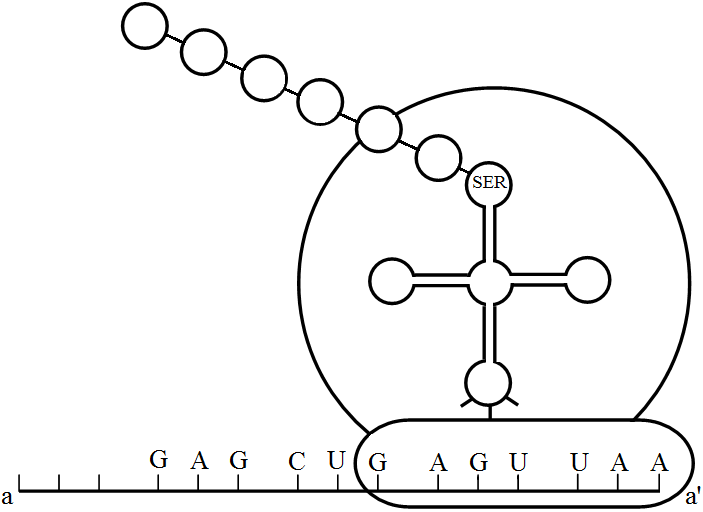
  1. Identify the polarity from a to a', in the above diagram and mention how many more amino acids are expected to be added to this polypeptide chain.
  2. Mention the DNA sequence coding for serine and the anticodon of tRNA for the same amino acid.
  3. Why are some untranslated sequence of bases seen in mRNA coding for a polypeptide? Where exactly are they present on mRNA?
Explain divergent evolution in detail. What is the driving force behind it?
Draw a transverse sectional view of an apple and label the following parts along with their technical names:
  1. Edible part.
  2. Encloses the embryo.
  3. Forms the fruit wall.
  1. Expand MTP.
  2. Give two situations, when MTP is advised.
  3. Write when amniocentesis and MTP can be misused.
Fertilisation is essential for production of seed, but in some angiosperms, seeds develop without fertilisation.
  1. Give an example of an angiosperm that produces seeds without fertilisation Name the process.
  2. Explain the two ways by which seeds develop without fertilisation.
  1. Write the palindromic nucleotide sequence for the following DNA segment:

5' - GAATTC - 3'

  1. Name the restriction endonuclease that recognises this sequence.
  2. How are 'sticky ends' produced? Mention their role.