Question
What do you understand by the terms “balanced forces” and “unbalanced forces”? Explain with examples.

Answer

  • Balanced forces: If the resultant of all the forces acting on a body is zero, the forces are called balanced forces. These forces do not change the state of rest or of uniform motion of a body but can change the shape of the body.
For example: when a balloon is pressed between hands, then balanced forces (equal and opposite forces) act on the balloon due to which the shape of the balloon changes.
  • Unbalanced forces: If the resultant of all the forces acting on a body is not zero, the forces are called unbalanced forces. These forces change the state of rest or of uniform motion of a body.
For example: if we push a toy car lying on the ground, it starts moving due to the unbalanced force exerted by our hands.

Need a full question paper?

Generate a complete, print-ready paper with questions like this in minutes — across 16+ boards, with answer keys.
Start Generating Free

Similar questions

The electronic configuration of an element Z is 2, 8, 8.
  1. What is the atomic number of the element?
  2. State whether element Z is a metal or a non-metal.
  3. What type of ion (if any) will be formed by an atom of element Z? Why?
  4. What is special about the outermost electron shell or the atom of this element?
  5. Give the name and symbol of element Z.
  6. Name the group of elements to which Z belongs.
Describe a simple experiment to show that the prongs of a sound producing tuning fork are vibrating.
Describe the various steps involved in the separation of iodine, iron filings and salt from a mixture.
A liquid compound X of molecular mass 18u can be obtained from a number of natural sources. All the animals and plants need liquid X for their survival. When an electric current is passed through 200 grams of pure liquid X under suitable conditions, then 178 grams of gas Y and 22 grams of gas Z are produced. Gas Y is produced at the positive electrode whereas gas Z is obtained at the negative electrode. Moreover, gas Y supports combustion whereas gas Z burns itself causing explosions.
  1. Name (i) liquid X (ii) gas Y, and (iii) gas Z
  2. What is the ratio to the mass of element Z to the mass of element Y in the liquid X?
  3. Which law of chemical combination is illustrated by this example?
  4. Name two sources of liquid X.
  5. Gate an important use of Y in our life.
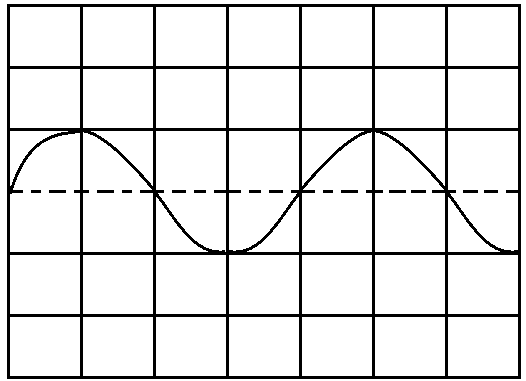
Figure X showa a trace of a sound wave produced by a particular tuning fork:


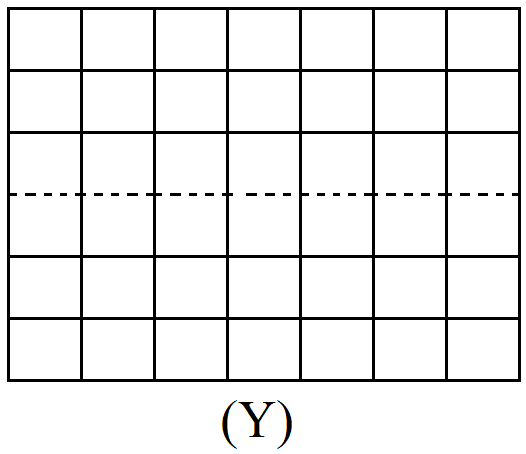
  1. On the graph paper given in Figure Y, draw a trace of the sound wave which has higher frequency than that shown in Figure X.
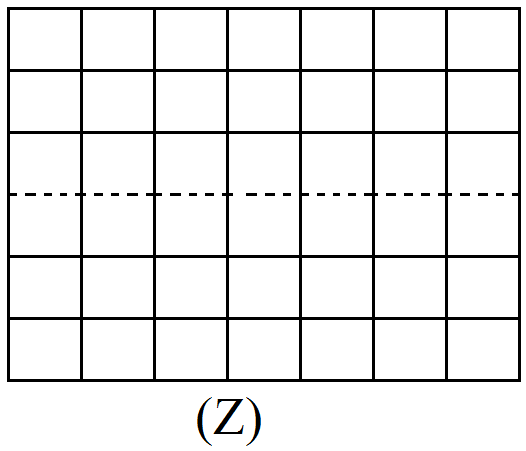
  2. On the graph paper shoen in Figure Z, draw a trace of the sound wave which has a larger amplitude than that shown in Figure X.
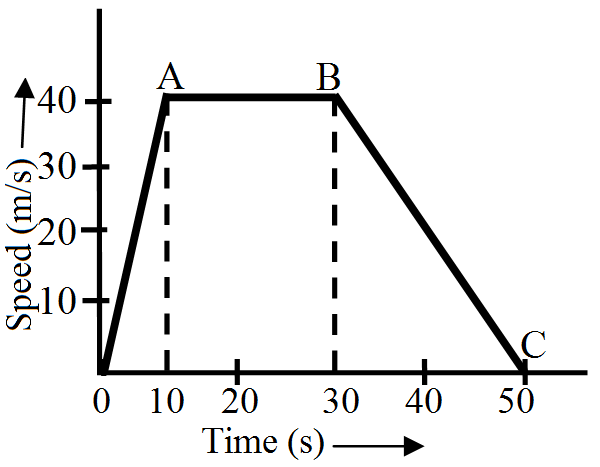
Study the speed-time graph of a car given alongside and answer the following questions:
  1. What type of motion is represented by OA?
  2. What type of motion is represented by AB?
  3. What type of motion is represented by BC?
  4. What is the acceleration of car from O to A?
  5. What is the acceleration of car from A to B?
  6. What is the retardation of car from B to C?
Which has more atoms, $50\ g$ of aluminium or $50\ g$ of iron? Illustrate your answer with the help of calculations.
(Atomic masses: $Al =27 u ; Fe =56 u$ )
Differentiate between a saturated and an unsaturated solution. How will you test whether a given solution is saturated or not?
Name the following compounds. Also write the symbols/ formulae of the ions present in them:
$CuSO_4$
$(NH_4)_2SO_4$
$Na_2O$
$Na_2CO_3$
$CaCl_2$
Describe Bohr’s model of the atom. How did Neils Bohr explain the stability of atom?