Question
What is (1) an electric generator (2) an AC generator (3) a DC generator?

Answer

(1) A device which converts mechanical energy into electric energy is called an electric generator.
(2) A generator which converts mechanical energy into electric energy in the form of an alternating current (AC) is called an AC generator.
(3) A generator which converts mechanical energy into electric energy in the form of a direct current (DC) is called a DC generator.

Need a full question paper?

Generate a complete, print-ready paper with questions like this in minutes — across 16+ boards, with answer keys.
Start Generating Free

Similar questions

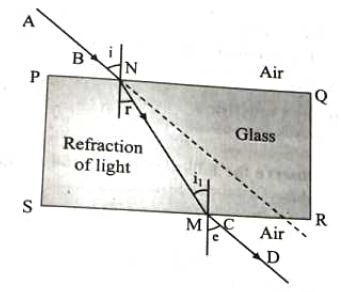
Observe the given diagram and answer the following questions:
Image
i. What is refraction of light?
ii. Name the emergent ray.
iii. Which two angles are equal?
Saturated hydrocarbons and Unsaturated hydrocarbons.
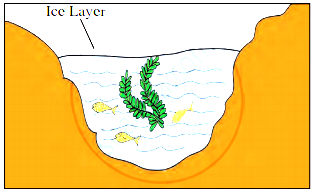
Observe the given picture and answer the following questions.
  1. Which property do you understand in this picture?
  2. What is the temperature of the water at the surface?
  3. What is the temperature below the layer of ice on the surface?
Distinguish between the following: Groups and periods
Which fuels are obtained from biomass?
Column IColumn IIColumn IIIColumn IV
(1) EthylenePolyethyleneTetrafluoroethylene—————–
(2) Poly­propylenePropylenePolystyrene—————–
(3) Poly­saccharideGlucoseProteins—————–
(4) RubberIsopreneD.N.A.—————–
(5) WoodCelluloseChromosomes of plants—————–
The non - metal A is an important constituent of our food and most of the fuels around us. A forms two oxides B and C. The oxide B is poisonous whereas oxide C causes global warming.
  1. Identify A, B and C.
  2. To which group of periodic table does A belong?
  3. Name another element which is placed in the same group as A.
What will you do? Why?
i. Child of your neighbour is addicted to tobacco chewing.
ii. Your friend has developed the hobby of snapping selfies.
iii. Your sister has become incommunicative. She prefers to remain alone.
(gamete, crossing over, haploid, Meiosis-II, meiosis-I, diploid)
……….. is just like mitosis. In this stage, the two haploid daughter cells formed in ……… undergo division by separation of recombined sister chromatids and four ……….. daughter cells are formed. Process of …………… production and spore formation occurs by meiosis. In this type of cell division, four haploid (n) daughter cells are formed from one ……….. cell. During this cell division, ………… occurs between, the homologous chromosomes.
Obtain the relation between the refractive index of the second medium with respect to the first medium and the refractive index of the first medium with respect to the second medium.