Question
What is a homologous series? Explain with an example.

Answer

Homologous series is a group of organic compounds having similar structures and similar chemical properties in which the successive compounds differ by CH 2 group.
Example of Homologous series: All the alkanes have similar structures with single covalent bonds and show similar chemical properties, so they can be grouped together in the form of a homologous series.
Homologous series of alkanes: Methane- $CH _4$, Ethane- $C _2 H _6$, Propane- $C _3 H _8$, Butane- $C _4 H _{10}$, Pentane- $C _5 H _{12}$.

Need a full question paper?

Generate a complete, print-ready paper with questions like this in minutes — across 16+ boards, with answer keys.
Start Generating Free

Similar questions

Ferrous sulphate decomposes with the evolution of a gas having a characteristic odour of burning sulphur. Write the chemical reaction involved and identify the type of reaction.
Under what conditions permanent electromagnet is obtained if a current carrying solenoid is used? Support your answer with the help of a labelled circuit diagram.
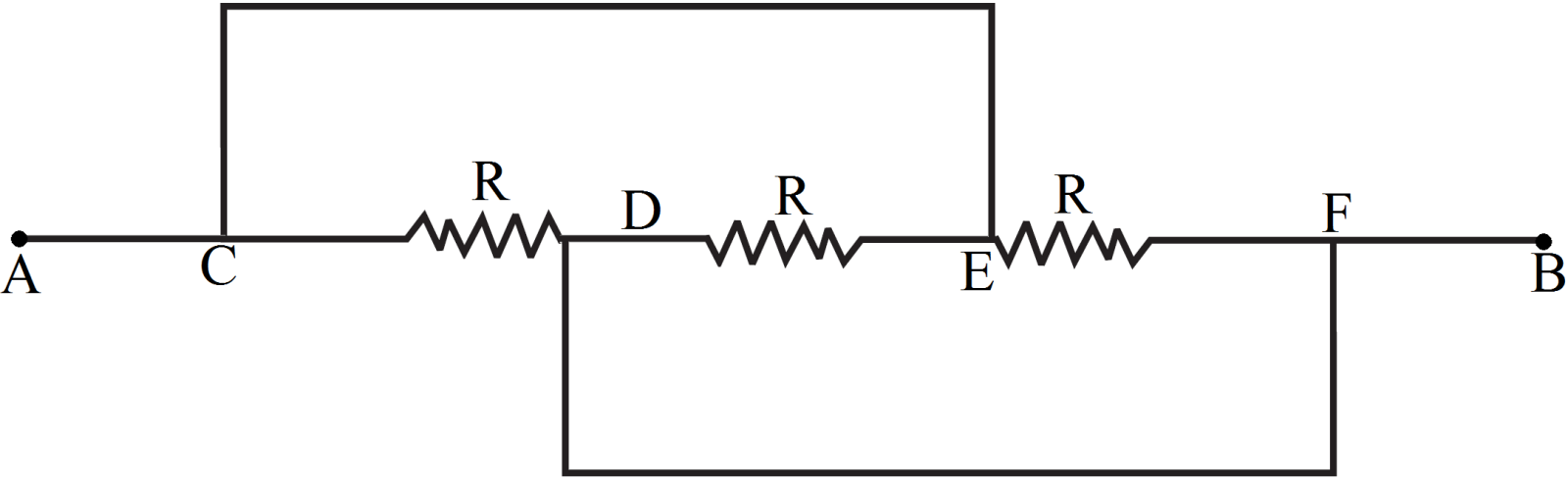
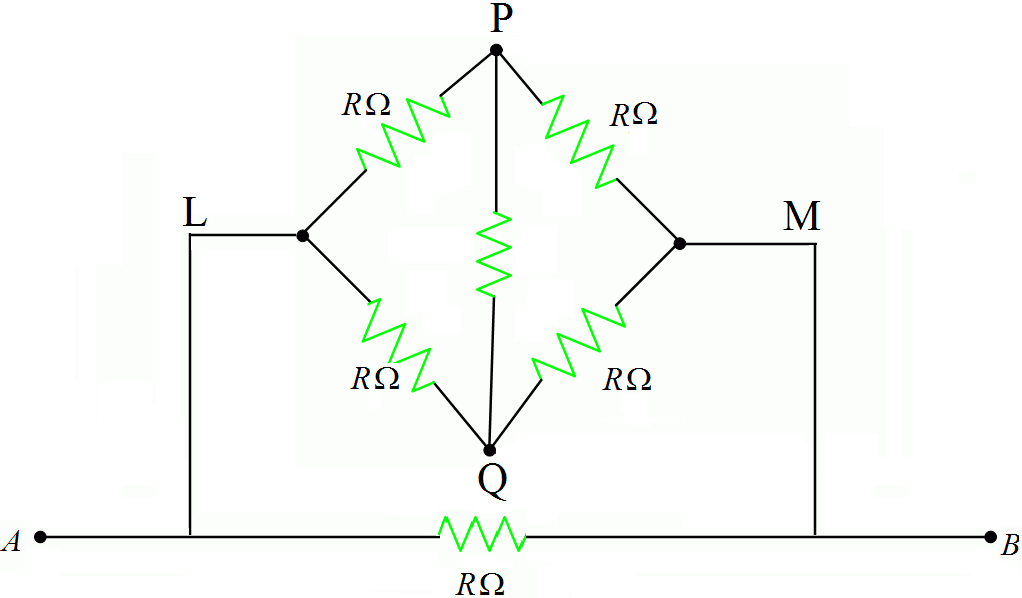
Find the equivalent resistance across the two ends A and B of the following circuits.
A forest ecosystem having a lot of green plants has some foxes, lions and rabbits in it.
  1. Write a food chain comprising all the four organisms mentioned above.
  2. Name (i) one herbivore, and (ii) two carnivores, in this food chain.
  3. Name the link which is a predator as well as a prey.
  4. Name (i) second trophic level, and (ii) third trophic level.
  5. Which link of this food chain can feed on second trophic level as well as third trophic level, independently?
  6. If the sun provides 1000 J of energy to the plants, then how much energy will be transferred to fox through the food chain.
How far should an object be placed from the pole of a converging mirror of focal length 20cm to form a real image of the size exactly$\frac{1}{4}$ th the size of the object?
A current of 1 ampere flows in a series circuit containing an electric lamp and a conductor of 5Ω when connected to a 10V battery. Calculate the resistance of the electric lamp.
Now if a resistance of 10Ω is connected in parallel with this series combination, what change (if any) in current flowing through 5Ω conductor and potential difference across the lamp will take place? Give reason.
Explain how deoxygenated blood travels from body to lung for purification. Draw well-labelled diagram in support of your answer.
What is periodicity in properties of elements with reference to the Modern Periodic Table? Why do all the elements of the same group have similar properties? How does the tendency of elements to gain electrons change as we move from left to right in a period? State the reason of this change.
State any three limitations of Mendeleev’s classification of elements.
Determine how far an object must be placed in front of a converging lens of focal length 10cm in order to produce an erect (upright) image of linear magnification 4.