Question
What is a shadow? How is it formed? How does the colour of an opaque object affect the colour of the shadow?

Answer

A shadow is a dark outline or image cast by an opaque object that blocks light coming from a source of light. It is formed when light hits the opaque object which does not let the light pass through. Everywhere else around the opaque object, the light continues in a straight path until it bounces off the ground or wall behind the object. The wall or ground behind the opaque object is the screen. On this screen is a dark patch, or shadow, with the same outline as the object surrounded by light. The colour of the opaque object does not affect the colour of the shadow that is formed.

Need a full question paper?

Generate a complete, print-ready paper with questions like this in minutes — across 16+ boards, with answer keys.

Start Generating Free

Similar questions

Explain various paths by which water that falls on land as rain goes back to oceans.
Comment on the mode of locomotion in following animals:
  1. Snake.
  2. Cockroach.
  3. Snail.
  4. Earthworm.
Put a tick $(✓)$ against the garbage items given in Table which could be converted into manure. Put a cross $(×)$ against the others.
  Garbage Items Make manure or not
$(i)$ Egg shells $✓$
$(ii)$ Straw $✓$
$(iii)$ Dry flowers $✓$
$(iv)$ Pebbles $×$
$(v)$ Broken pieces of glass $×$
$(vi)$ Nails and screws $×$
$(vii)$ Plastic bangles $×$
$(viii)$ Left over food $✓$
$(ix)$ Steel broken vessel $×$
$(x)$ Dead animals $✓$
Activity.
Collect samples of some solid substances such as sugar, salt, chalk powder, sand and ; sawdust. Take five glasses or beakers. Fill each one of them about two-thirds with water. Add a small amount (spoonful) of sugar to the first glass, salt to the second and similarly, add small amounts of the other susbtances into the other glasses. Stir the contents of each of them with a spoon. Wait for a few minutes. Observe what happens to the substances added to water. Note your observations as shown in Table.
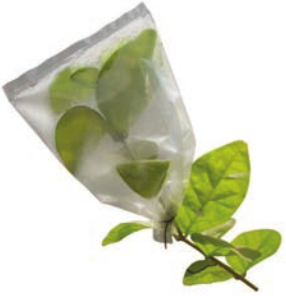
Observe the picture of an activity given as Fig carried out with leaves of plants and polythene bag.

Now answer the following:
  1. Which process is demonstrated in the activity?
  2. When will this activity show better results–on a bright sunny day or a cloudy day?
  3. What will you observe in the polythene bag after a few hours of setting up the activity?
  4. Mention any one precaution you must take while performing this activity.
What are the uses of air?
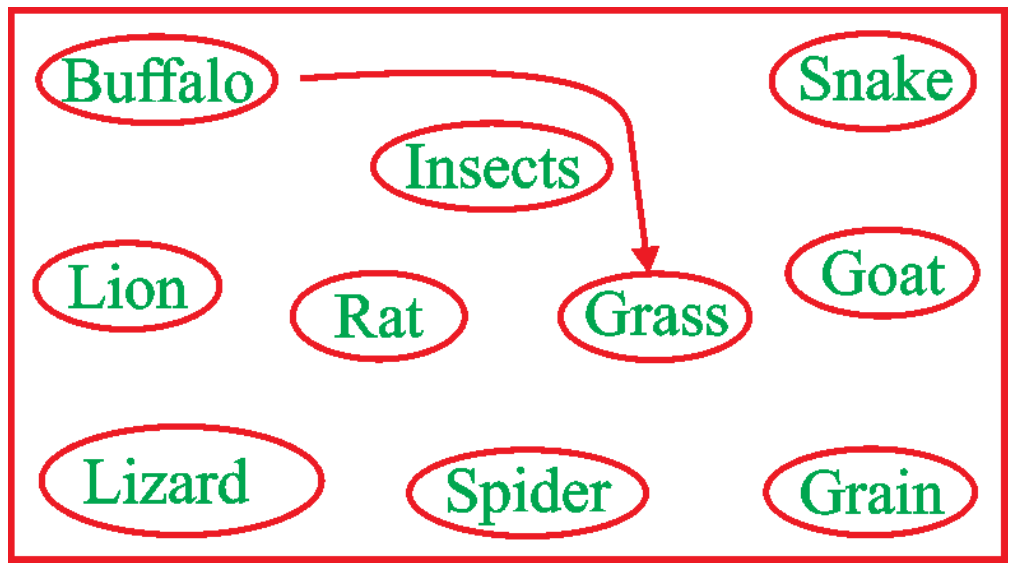
Connect the animal with the food it eats by an arrow using different colours in the figure given below. One is done for you.
Write two ways of water harvesting in Delhi. Discuss in brief.
Name the food each rich in:
  1. Dietary fibre.
  2. Sugar.
  3. Protein.
  4. Starch.
  5. Fat and oil.
Think some handicraft materials which are prepared by waste materials. Construct them with the help of your teacher and friends.