Question
What is Accounting Information System?

Answer

An Accounting Information System (AIS) is a system that identifies, collects, processes, summarises, generates and presents information about a business organisation to a wide variety of users. It provides relevant information by processing voluminous accounting data, which is beyond the human capabilities. It provides a glimpse of various organisational activities and maintains a detailed financial record. It acts as a common pool of information from which different departments such as, production department, sales and marketing department, HR department, etc. can fetch useful and relevant information. The information thus provided, helps the users to take their decisions rationally and accordingly formulate their plans and policies. Thus, it can be said that an efficient AIS enhances the effectiveness and efficacy of an organisation as a whole.
The below mentioned points highlight the important characteristics of AIS.
  1. It helps in handling the huge volume of accounting and financial transactions of an organisation.
  2. It helps in drafting future plans and accordingly setting the future objectives.
  3. It acts as a common pool for providing information to different departments besides accounts and finance departments.
  4. It helps in maintaining the accounting information as per the guidelines laid down by the Law.
  5. It helps in meeting the informational needs by generating reports for both external accounting users (investors, creditors, etc.) as well as for the internal accounting users (management, shareholders, etc.).

Need a full question paper?

Generate a complete, print-ready paper with questions like this in minutes — across 16+ boards, with answer keys.
Start Generating Free

Similar questions

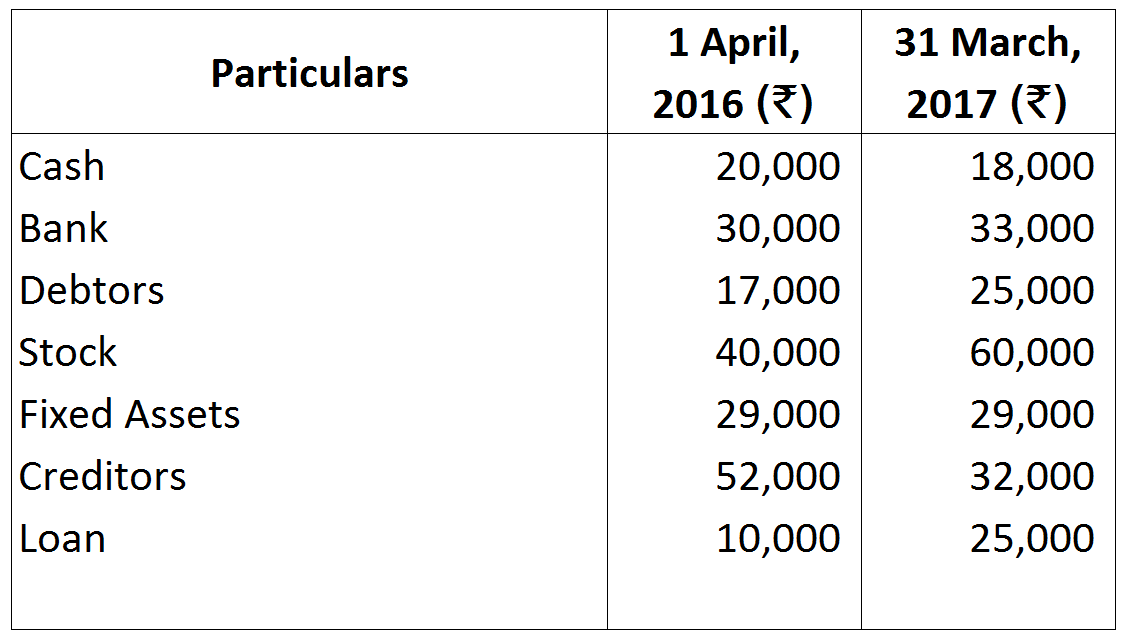
Mr. A does not keep proper records of his business. Following information is available from records kept by him:
Mr. A withdrew from the business ₹ 3,000 per month upto 30th September 2016 and thereafter ₹ 4,000 per month as drawings. ₹ 50,000 realised by the proprietor as maturity value of National Saving Certificates was invested in the business. Prepare a statement showing net profit (or net loss) for the year.
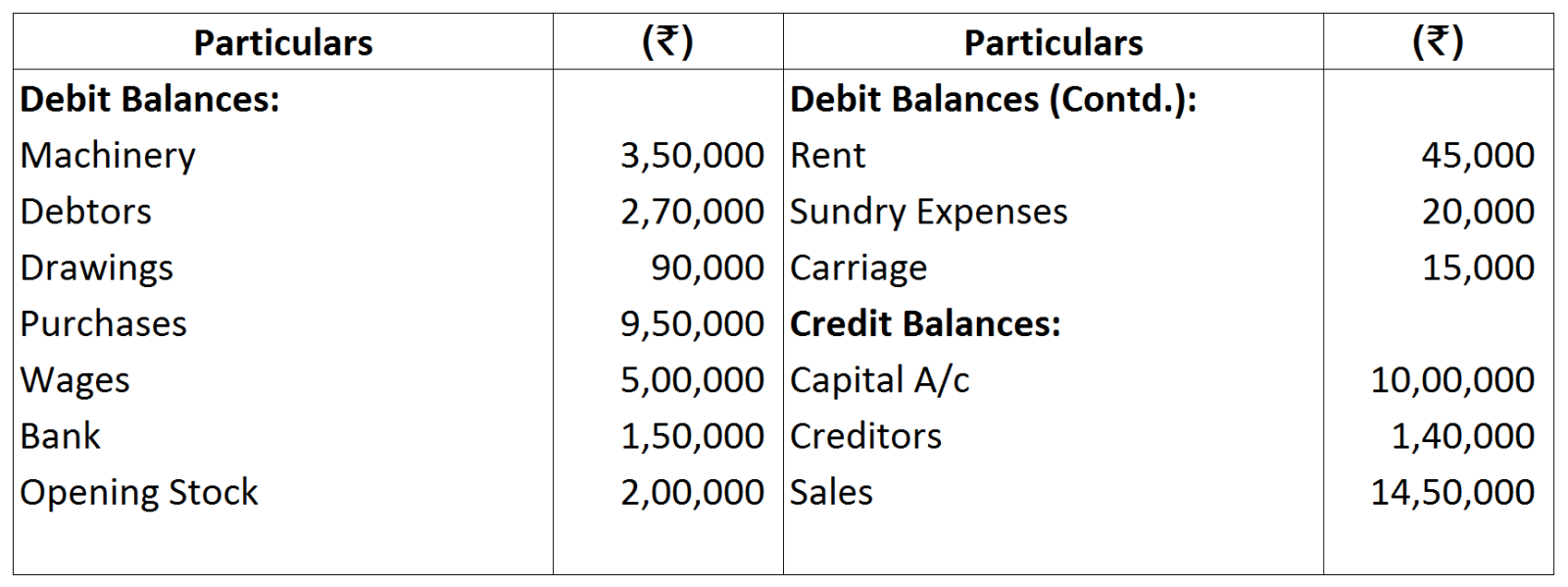
The following balances were extracted from the books of Mr. Din Dayal as at 31st March, 2019:

Prepare Trading and Profit & Loss Account for the year and a Balance Sheet as at 31st March, 2019, after taking into account the following:
  1. Stock was valued at ₹ 75,000 on 31st March, 2019. You are informed that a fire occurred on 28th March, 2019 in the godown and stock of the value of ₹ 10,000 was destroyed. Insurance Company admitted a claim of 75%.
  2. One-third of the commission received is in respect of work to be done next year.
  3. Create a provision of 5% for Doubtful Debts.
  4. 50% of Printing and Advertising is to be carried forward as a charge in the following year.
  5. ₹ 900 is due for interest on loan.
  6. Provide for Manager's Commission at 10% on Net Profit before charging such commission.
From the following balances, prepare Trading and Profit and Loss Account and Balance Sheet:
Closing Stock was valued at ₹ 30,000.
State the different elements of a computer system.
Prepare Bank Reconciliation Statement as on 31st March, 2019 from the following particulars:
 
 
(i)
Bank balance as per Pass Book.
10,000
(ii)
Cheque deposited into the Bank, but no entry was passed in the Cash Book.
500
(iii)
Cheque received and entered in the Cash Book but not sent to bank.
1,200
(iv)
Credit side of the Cash Book bank column cast short.
200
(v)
Insurance premium paid directly by the bank under the standing advice.
600
(vi)
Bank charges entered twice in the Cash Book.
20
(vii)
Cheque issued but not presented to the bank for payment.
500
(viii)
Cheque received entered twice in the Cash Book.
1,000
(ix)
Bill discounted dishonoured not recorded in the Cash Book.
5,000
(x)
Bank had wrongly allowed interest of ₹ 5,000, which was reversed by it on 5th April, 2019
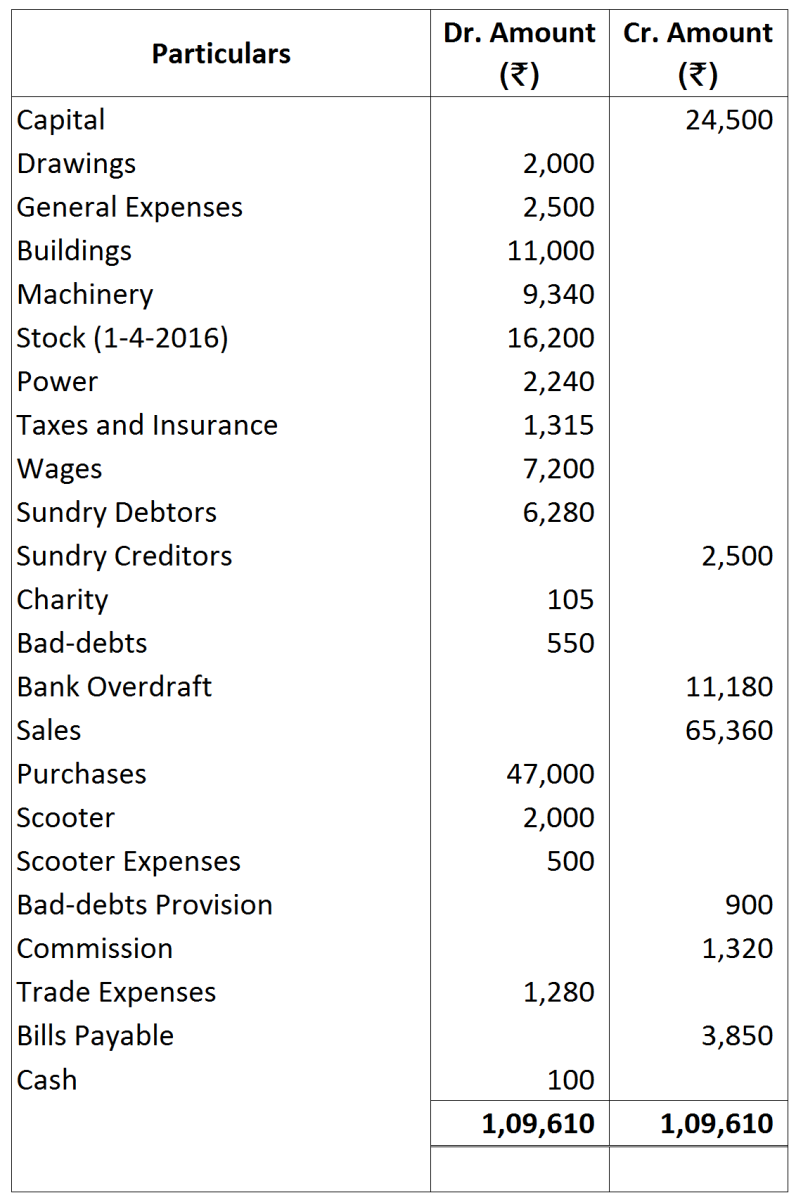
The following balances were extracted from the books of Shri Krishan Kumar as at 31st March, 2017:

Adjustments:
  1. Stock on 31st March, 2017 was valued at ₹ 23,500.
  2. $\frac{1}{5}\text{th}$ of general expenses and taxes & insurance to be charged to factory and the balance to the office.
  3. Write off a further Bad-debts of ₹ 160 and maintain the provision for Bad-debts at 5% on Debtors.
  4. Depreciate Machinery at 10% and Scooter by ₹ 240.
  5. Provide ₹ 700 for outstanding interest on Bank Overdraft.
  6. Prepaid Insurance is to the extent of ₹ 50.
  7. Provide for Manager's Commission at 10% on the Net Profit after charging such Commission.
Prepare final accounts for the year ended 31st March, 2017 after giving effect to the above adjustments.
Give any three points of distinction between Capital Expenditure and Revenue Expenditure.
What is the use of Data Base Management?
On 31st March, 2019, Bank Pass Book of Naresh & Co. showed an overdraft of ₹ 10,700. From the following particulars, prepare Bank Reconciliation Statement:
  1. Cheques issued before 31st March, 2019 but presented for payment after that date amounted to ₹ 900.
  2. Cheques paid into the bank but not collected and credited until 31st March, 2019 amounted to ₹ 2,200.
  3. Interest on overdraft amounting to ₹ 1,200 did not appear in the Cash Book.
  4. ₹ 5,000 being interest on investments collected by the bank and credited in the Pass Book were not shown in the Cash Book.
  5. Bank charges of ₹ 50 were not entered in the Cash Book.
  6. ₹ 800 in respect of dishonoured cheque were entered in the Pass Book but not in the Cash Book.
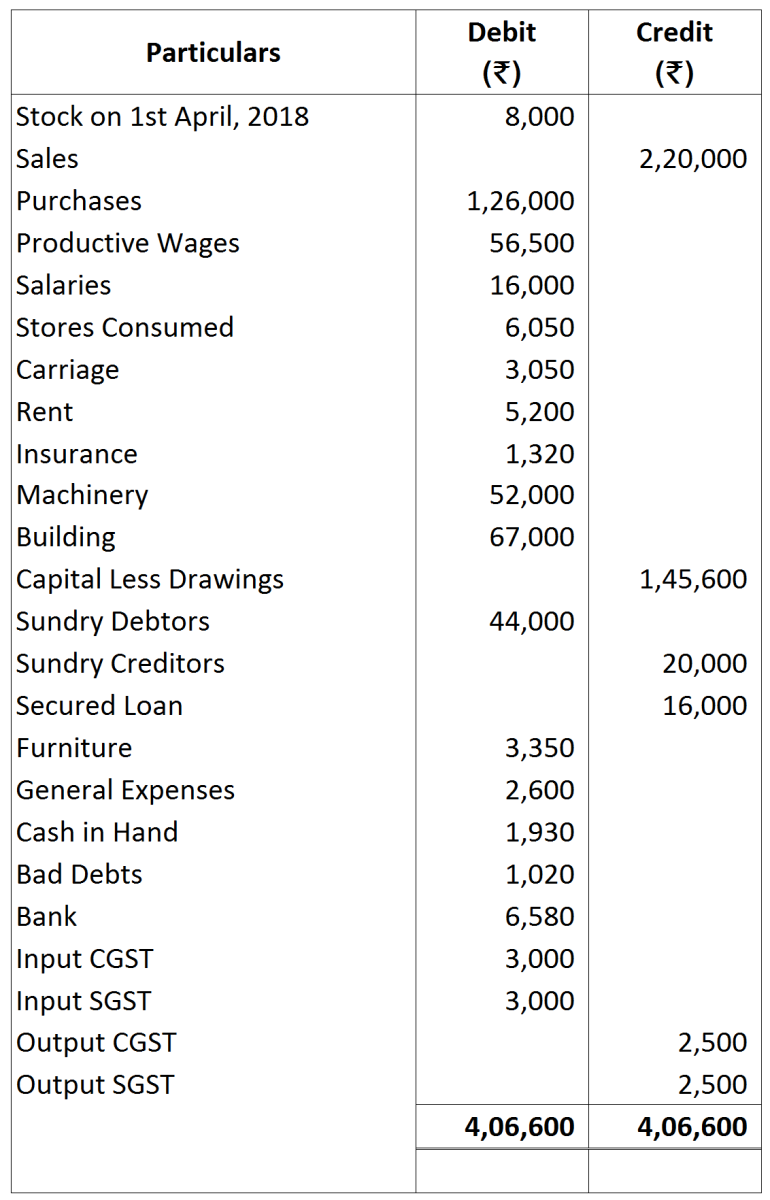
Following is the Trial Balance as on 31st March, 2019. Prepare Trading and Profit and Loss Account and Balance Sheet:

Stock on 31st March, 2019, ₹ 20,600.
You are to make adjustments in respect of the following:
  1. Depreciate Machinery at 10% p.a.
  2. Make a provision @ 5% for Doubtful Debts.
  3. Provide discount on debtors @ $2\frac{1}{2}\%$
  4. Rent includes Rent deposit of ₹ 400.
  5. Insurance Prepaid ₹ 120.