Question
What is an ionic bond? Give two suitable examples explain the difference between ionic and covalent bond.
| S. No. | Ionic bond | Covalent bond |
| i. | It is formed by transfer of electrons. | It is formed by sharing of electrons. |
| ii. | It is formed metal and non metals. e.g. 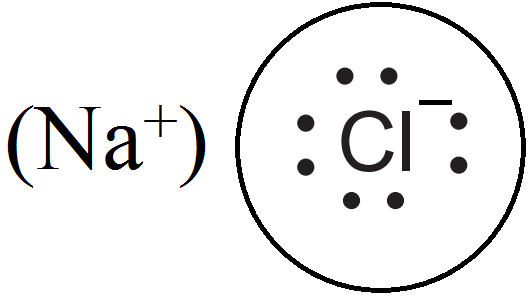 | It can be formed between two non metals also. e.g. 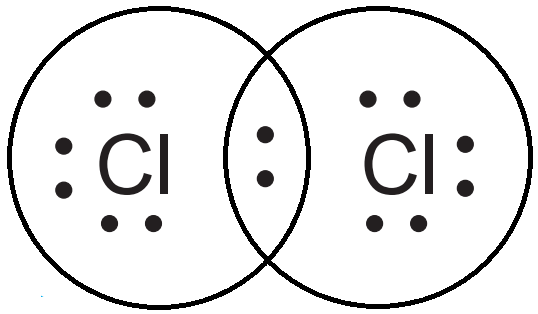 |
Generate a complete, print-ready paper with questions like this in minutes — across 16+ boards, with answer keys.
| Column I | Column II | ||
| i. | Equilibrium. | a. | $\Delta\text{G}>0, \text{ K}<1$ |
| ii. | Spontaneous reaction. | b. | $\Delta\text{G}=0$ |
| iii. | Non spontaneous reaction. | c. | $\Delta\text{G}^\ominus=0$ |
|
|
| d. | $\Delta\text{G}<0, \text{ K}>1$ |
$\text{E}^0_\frac{\text{Zn}^{2+}}{\text{Zn}}=-0.76\text{V}$
$\text{E}^0_\frac{\text{CO}^{2+}}{\text{Cu}}=-0.28\text{V}$
$\text{E}^0_\frac{\text{Ag}+}{\text{Ag}}=+0.80\text{V}$
$\text{CH}_3-\text{}*\text{CH}=\text{CH}_2?$