Question
What is called electrochemical equivalent (Z)?

Answer

The amount of substance deposited on the electrode when a current of one ampere is passed for one second (one coulomb charge) in solution of an electrolyte is called electro-chemical equivalent.

Need a full question paper?

Generate a complete, print-ready paper with questions like this in minutes — across 16+ boards, with answer keys.
Start Generating Free

Similar questions

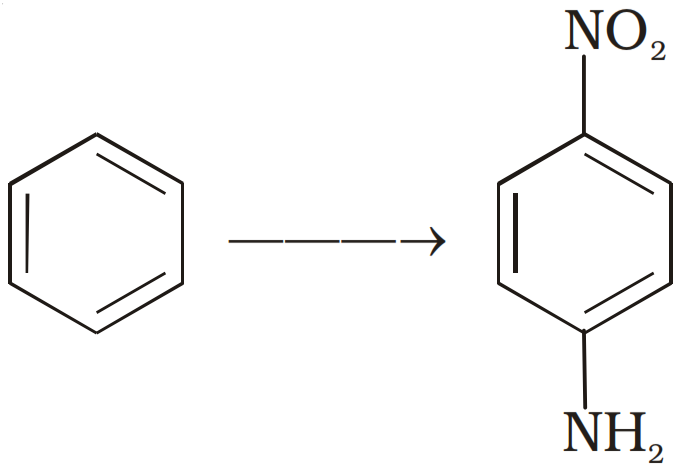
How will you carry out the following conversion?
Components of a binary mixture of two liquids A and B were being separated by distillation. After some time separation of components stopped and composition of vapour phase became same as that of liquid phase. Both the components started coming in the distillate. Explain why this happened.
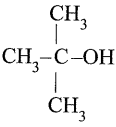
Write common name and IUPAC name of following alcohol compound.
Image
Find the oxidation number of Cu in the complex ion: $[Cu(NH_{3})_{4}]^{2+}$
List the reactions of glucose which cannot be explained by its open chain structure.
What happens when copper is reacted with HCl and $HNO _3$ ?
  1. Why are haloalkanes more reactive towards nucleophilic substitution reactions than haloarenes?
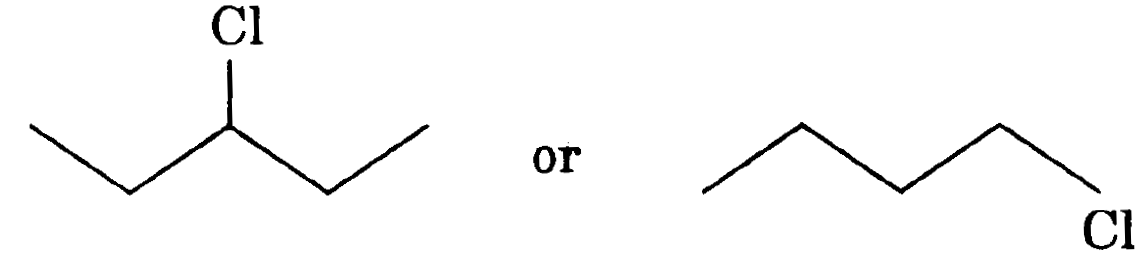
  2. Which one of the following two substances undergoes $S_N1$ reaction faster and why?
Draw the structures of polar isomers of $\left[ Co ( e )_3\right]^{3+}$
Which alkyl halide from the following pairs would you expect to react more rapidly by an $\ce{S_N2}$ mechanism? Explain your answer.
$\text{CH}_3\text{CH}_2\text{CH}_2\text{CH}_2\text{Br}\ \text{or}\ \text{CH}_3\text{CH}_2\text{CH}\text{CH}_3\\\ \ \ \ \ \ \ \ \ \ \ \ \ \ \ \ \ \ \ \ \ \ \ \ \ \ \ \ \ \ \ \ \ \ \ \ \ \ \ \ \ \ \ \ \ \ \ \ \ \ \ \ \ \ \ \ \mid\\\ \ \ \ \ \ \ \ \ \ \ \ \ \ \ \ \ \ \ \ \ \ \ \ \ \ \ \ \ \ \ \ \ \ \ \ \ \ \ \ \ \ \ \ \ \ \ \ \ \ \ \ \ \ \ \text{Br}$
Match the the compounds given in Column $I$ with the effects given in Column $II.$
  Column $I$   Column $II$
$(i)$ Chloramphenicol $(a)$ Malaria
$(ii)$ Thyroxine $(b)$ Anaesthetic
$(iii)$ Chloroquine $(c)$ Typhoid fever
$(iv)$ Chloroform $(d)$ Goiter
    $(e)$ Blood substituent