Question
What is colligative properties? Write colligative properties of solution.

Answer

→ "Colligative properties of solution depend on the number of solute particles and does not depend on the nature of solute."
→ There are 4 types of colligative properties.
(1) relative lowering of vapour pressure of the solvent
(2) depression of freezing point of the solvent
(3) elevation of boiling point of the solvent and
(4) osmotic pressure of the solution

Need a full question paper?

Generate a complete, print-ready paper with questions like this in minutes — across 16+ boards, with answer keys.

Start Generating Free

Similar questions

Write the name of the cell which is generally used in inverters. Write the reactions taking place at the anode and the cathode of this cell.
Give plausible explanation :
During the preparation of esters from a carboxylic acid and an alcohol in the presence of an acid catalyst, the water or the ester should be removed as soon as it is formed.
How the benzaldehyde and acetaldehyde are differentiated?
Given the standard electrode potentials,
$\begin{array}{l} K ^{+} / K =-2.93 V, Ag ^{+} / Ag =0.80 V \\ Hg ^{2+} / Hg =0.79 V \\ Mg ^{2+} / Mg =-2.37 V, Cr ^{3+} / Cr =-0.74 V\end{array}$
Arrange these metals in their increasing order of reducing power.
Write down use of $KMnO_4$

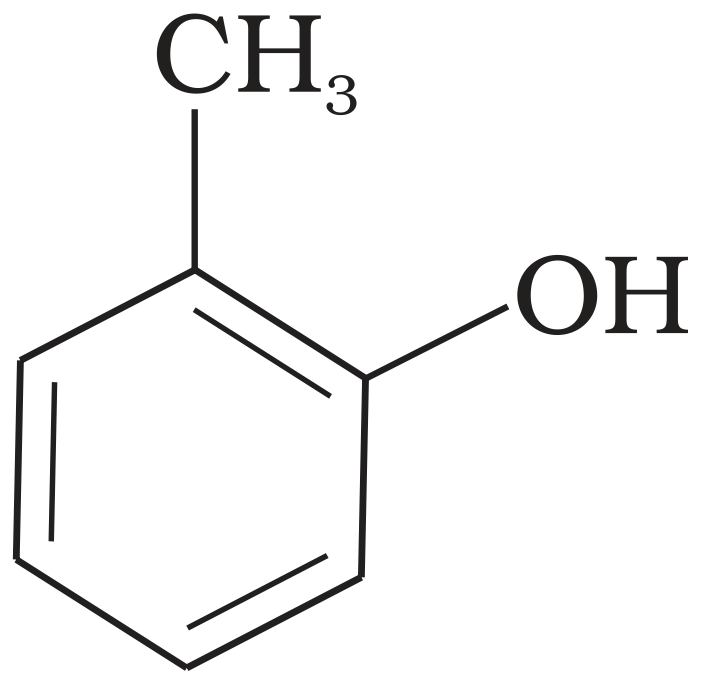
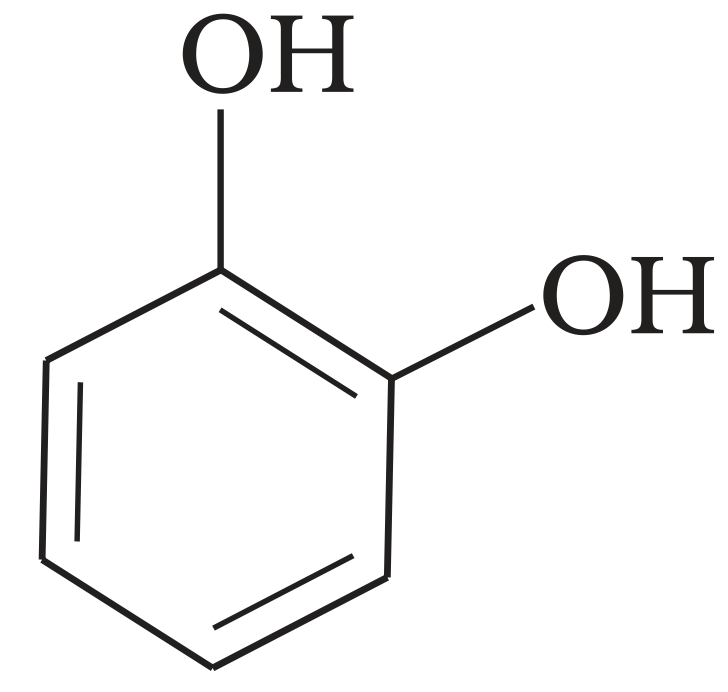
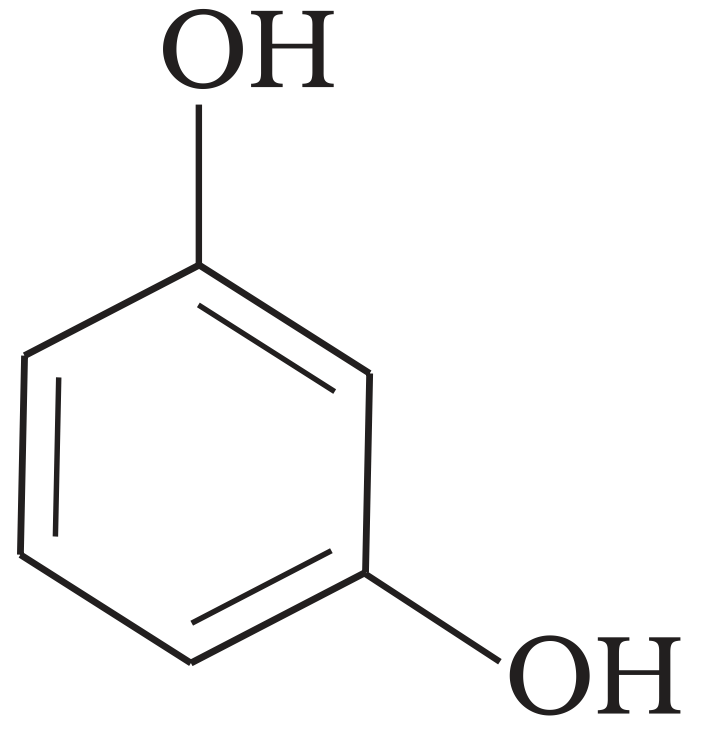
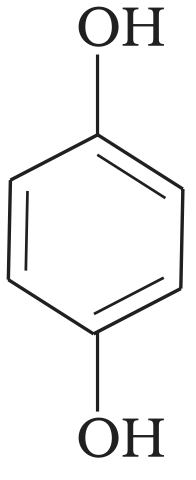
Match the structures of the compounds given in Column I with the name of the compounds given in Column II.
  Column I   Column II
(i) (a) Hydroquinone
(ii) (b) Phenetole
(iii) (c) Catechol
(iv) (d) o-Cresol
(v) (e) Quinone
(vi) (f) Resorcinol
    (g) Anisole.
During nuclear explosion, one of the products is $^{90}Sr$ with half$-$life of $28.1$ years. If $1\mu g$ of $^{90}Sr$ was absorbed in the bones of a newly born baby instead of calcium, how much of it will remain after $10$ years and $60$ years if it is not lost metabolically.
What are glycogens? How it is different from starch?
An organic compound $(A) \ ($molecular formula $\ce{C_8H_{16}O_2)}$ was hydrolysed with dilute sulphuric acid to give a carboxylic acid $(B)$ and an alcohol $(C)$. Oxidation of $(C)$ with chromic acid produced $(B). (C)$ on dehydration gives but $-1-$ ene. Write equations for the reactions involved.
  1. State the $\text{IUPAC}$ name of the following compound:
  1. Complete the following chemical equation:
$\ce{CH_3CH_2CH=CH_2 + HBr} \xrightarrow{\text{peroxide}}.........$