Question
What is Concentration of Solution?
Write down different Types of Units of Concentration?

Answer

→ "The amount of solute present in per unit volume of solution is known as Concentration."
→ There are 9 Types of Unit of Concentration:
(1) %/W/W (Mass Percentage)
(2) % V/V (Volume Percentage)
(3)% W/V (Mass by Volume Percentage)
(4) ppm (Parts Per million)
(5) Mole-Fraction (X)
(6) Molarity (M)
(7) Molality (m)
(8) Normality (N)
(9) Formality (F)

Need a full question paper?

Generate a complete, print-ready paper with questions like this in minutes — across 16+ boards, with answer keys.
Start Generating Free

Similar questions

0.05 moles of ethanoic acid is dissolved in $2 5 0 ~ g m$ benzene. Calculate molality of solution.
Define the term : Mass percentage.
What advantage do the fuel cells have over primary and secondary batteries?
How is the solubility of a sparingly soluble salt determined by measuring conductivity?
Note: In the following questions a statement of assertion followed by a statement of reason is given. Choose the correct answer out of the following choices.
  1. Both assertion and reason are true and the reason is the correct explanation of assertion.
  2. Both assertion and reason are true and the reason is not the correct explanation of assertion.
  3. Assertion is true but the reason is false.
  4. Both assertion and reason are false.
  5. Assertion is false but reason is true.
Assertion: Mercury cell does not give steady potential.
Reason: In the cell reaction, ions are not involved in solution.
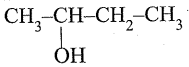
Write common name and IUPAC name of following alcohol compound.
Image
A solution of $Ni(NO_3)_2$ is electrolysed between platinum electrodes using a current of $5$ amperes for $20$ minutes. What mass of $Ni$ is deposited at the cathode?
Although phenoxide ion has more number of resonating structures than carboxylate ion, carboxylic acid is a stronger acid than phenol. Why?
Write the reagents used in the following reactions:
  1. $\text{C}_{6}\text{H}_{5}-\text{CO}-\text{CH}_{3}\xrightarrow{\text{ }\ \ \ \ \ \ {?}\ \\ \ \ \ \ \ }\text{C}_{6}\text{H}_{5}-\text{CH}_{2}-\text{CH}_{3}$
  2. $\text{CH}_{3}-\text{COOH}\xrightarrow{\text{ }\ \ \ \ \ \ {?}\ \\ \ \ \ \ \ }\text{CH}_{3}-\text{COCl}$
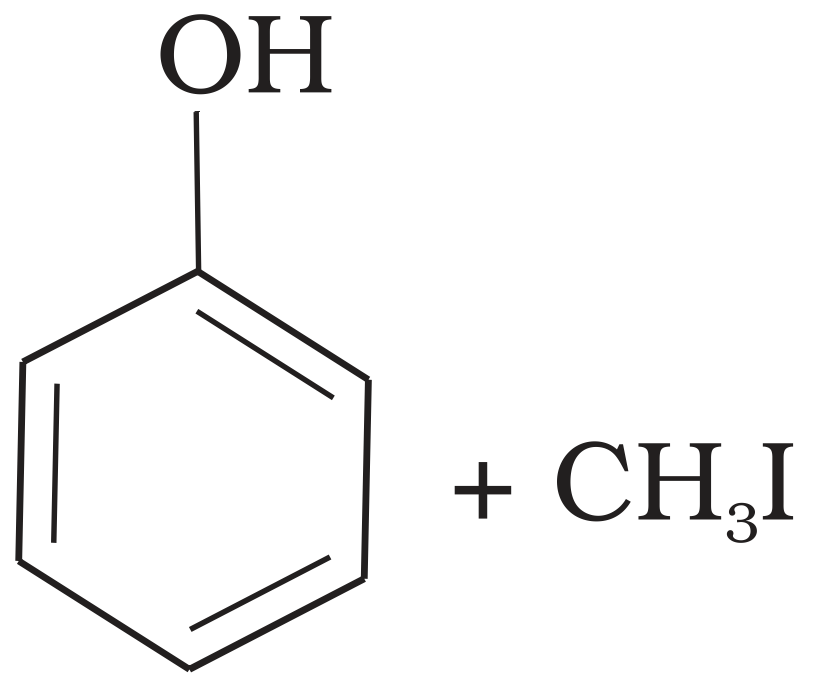
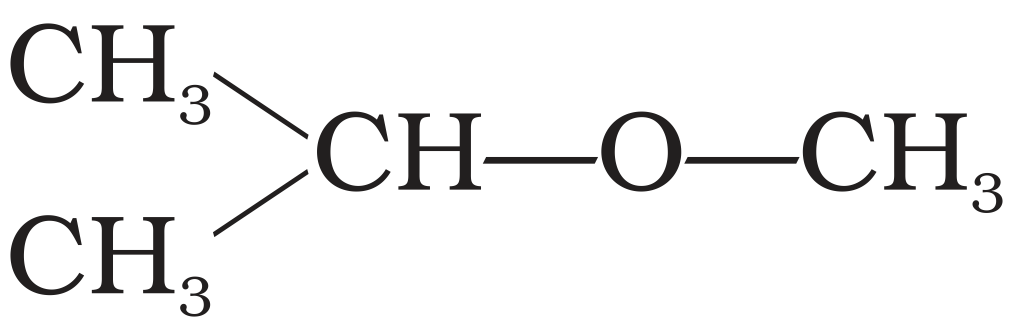
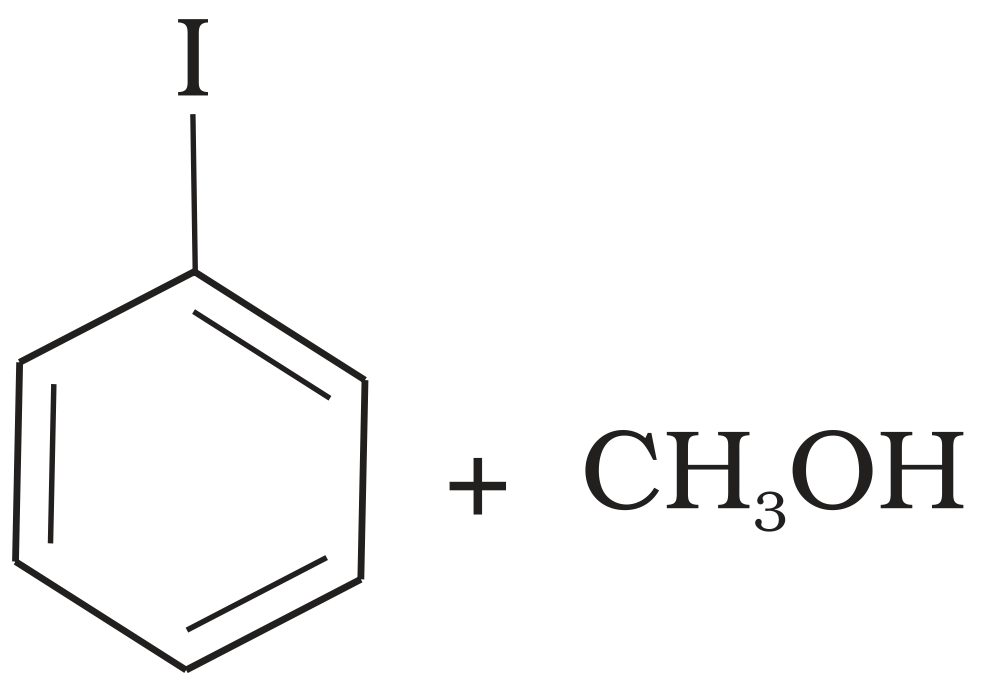
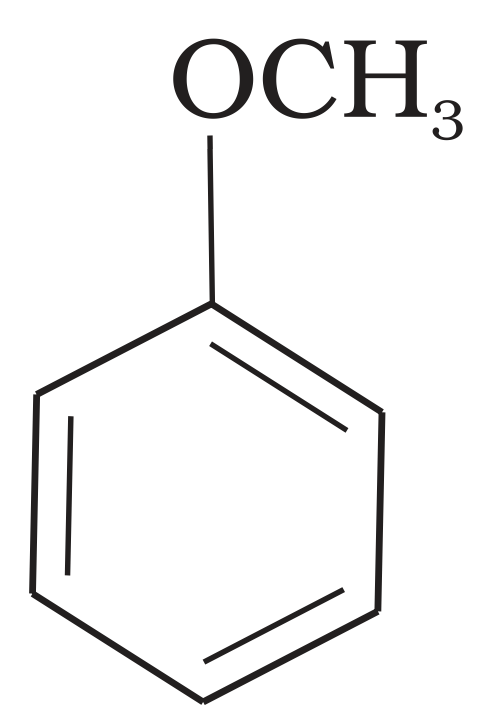
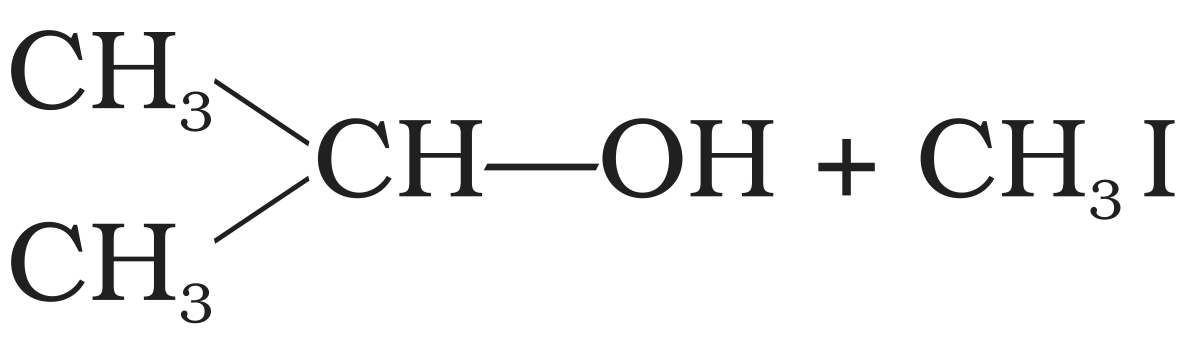
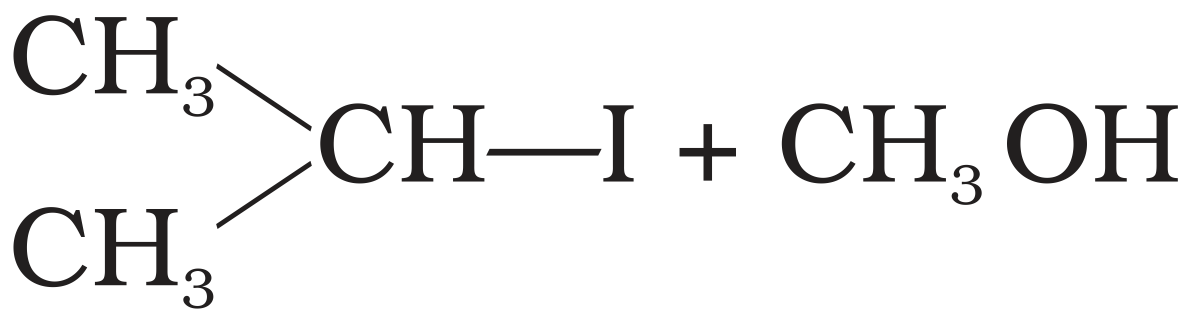
Match the starting materials given in Column $I$ with the products formed by these $($Column $II)$ in the reaction with $II.$
 
Column $I$
 
Column $II$
$(i)$ $CH_3-o-CH_3$ $(a)$
$(ii)$
$(b)$
$\ \ \ \ \ \ \ \ \ \ \ \ \ \text{CH}_3 \\ \ \ \ \ \ \ \ \ \ \ \ \ \ \ | \\ \text{CH}_3-\text{C}-\text{I}+\text{CH}_3\text{OH} \\ \ \ \ \ \ \ \ \ \ \ \ \ \ \ | \\ \ \ \ \ \ \ \ \ \ \ \ \ \ \text{CH}_3$
$(iii)$
$\ \ \ \ \ \ \ \ \ \ \ \ \ \text{CH}_3 \\ \ \ \ \ \ \ \ \ \ \ \ \ \ \ | \\ \text{H}_3\text{C}-\text{C}-\text{O}-\text{CH}_3 \\ \ \ \ \ \ \ \ \ \ \ \ \ \ \ | \\ \ \ \ \ \ \ \ \ \ \ \ \ \ \text{CH}_3$
$(c)$
$(iv)$
$(d)$ $CH_3-OH + CH_3-I$
 
 
$(e)$
 
 
$(f)$
 
 
$(g)$
$\ \ \ \ \ \ \ \ \ \ \ \ \ \text{CH}_3 \\ \ \ \ \ \ \ \ \ \ \ \ \ \ \ | \\ \text{CH}_3-\text{C}-\text{OH}+\text{CH}_3\text{I} \\ \ \ \ \ \ \ \ \ \ \ \ \ \ \ | \\ \ \ \ \ \ \ \ \ \ \ \ \ \ \text{CH}_3$