Question
What is horizontal analysis of financial statements?

Answer

Horizontal analysis: In such type of analysis, financial statements for a number of years are reviewed and analysed. Figures for two or more years are contained in such type of analysis and these figures are placed side-by-side to facilitate comparison. Such analysis indicates the increase or decrease in these itmes not in absolute figures but also in percentage form. Thus, it involves making comparisons and establishing relationship among related items of an enterprise for a number of years. When data about sales, cost of production, profits etc. are compared for two or more years ofa firm, they indicate the areas of strength and weakness of the enterprise. It also helps in knowing the trend of the business. Since such type of analysis is based on the data from year-to-year rather than only one year, it is also called, 'Dynamic Analysis'.

Need a full question paper?

Generate a complete, print-ready paper with questions like this in minutes — across 16+ boards, with answer keys.

Start Generating Free

Similar questions

Take a few imaginary figures and prepare a Common size statement or profit & Loss for two years.
A Ltd. invited applications for issuing 1,00,000 shares of ₹ 10 each at a premium of ₹ 1 per share. The amount was payable as follows:
On Application
:
₹ 3 per share
On Allotment
:
₹ 3 per share (including premium)
On First Call
:
₹ 3 per share
On Second and Final Call
:
Balance amount
Applications for 1,60,000 shares were received. Allotment was made on the following basis:
  1. To applicants for 90,000 shares: 40,000 shares
  2. To applicants for 50,000 shares: 40,000 shares
  3. To applicants for 20,000 shares: full shares
Excess money paid on application is to be adjusted against the amount due on allotment and calls.
Rishabh, a shareholder, who applied for 1,500 shares and belonged to category (ii), did not pay allotment, first and second and final call money.
Another shareholder, Sudha, who applied for 1,800 shares and belonged to category (i), did not pay the first and second and final call money.
All the shares of Rishabh and Sudha were forfeited and were subsequently re-issued at ₹ 7 per share fully paid.
Pass the necessary journal entries in the books of A Ltd. Open Calls-in Arrears Account and Calls-in-Advance Account wherever required.
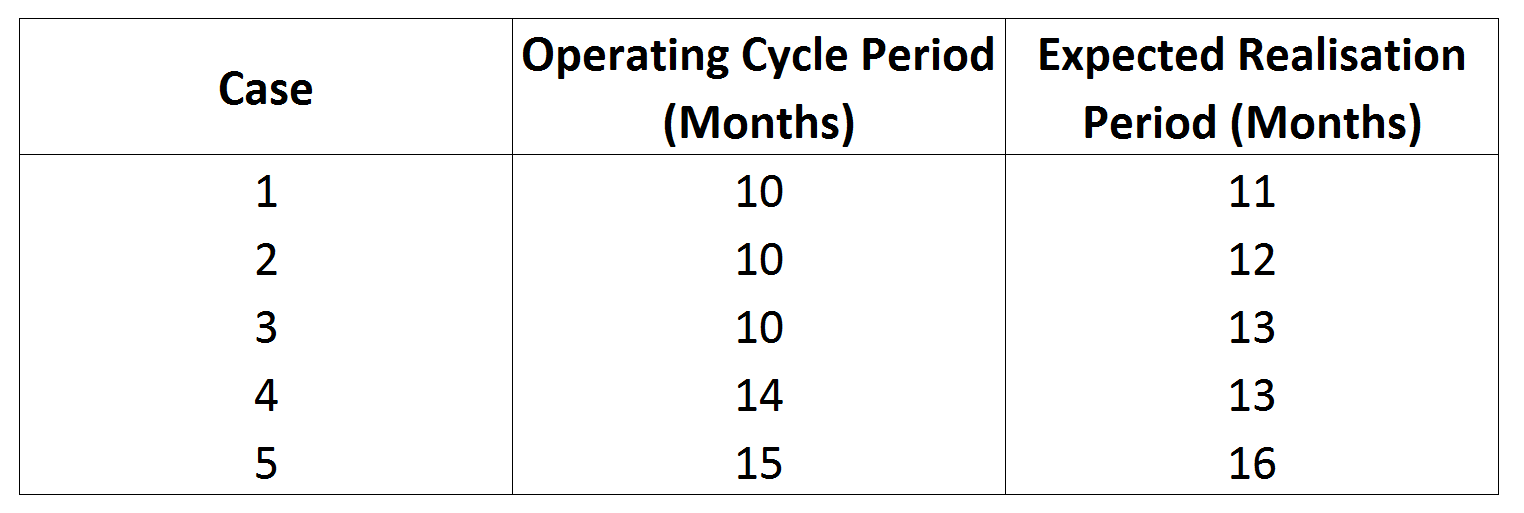
State giving reason whether Trade Payables are classified as Current Liabilities or Non-current Liabilities in the Balance Sheet of a company as per Schedule III of the Companies Act, 2013 in the following cases:
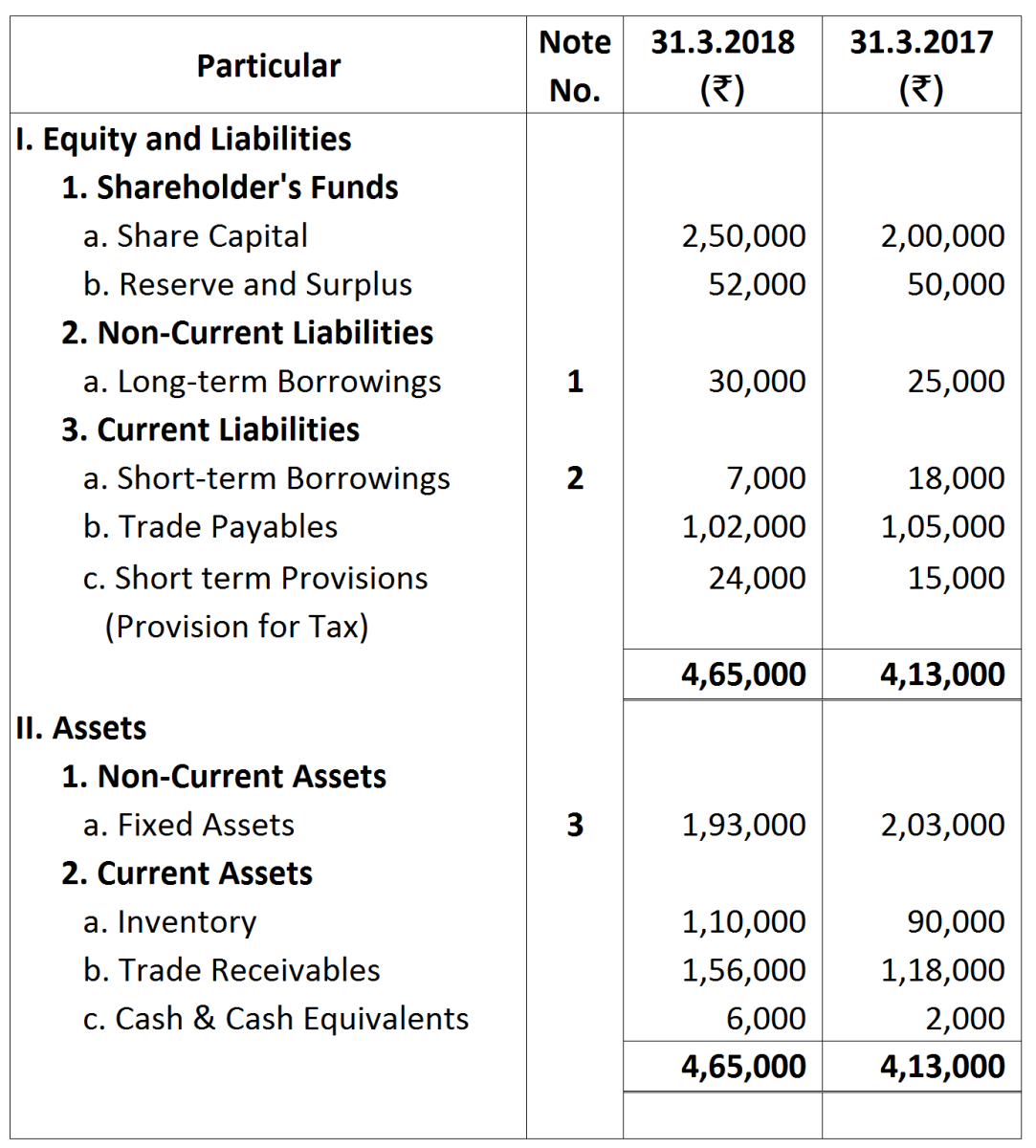
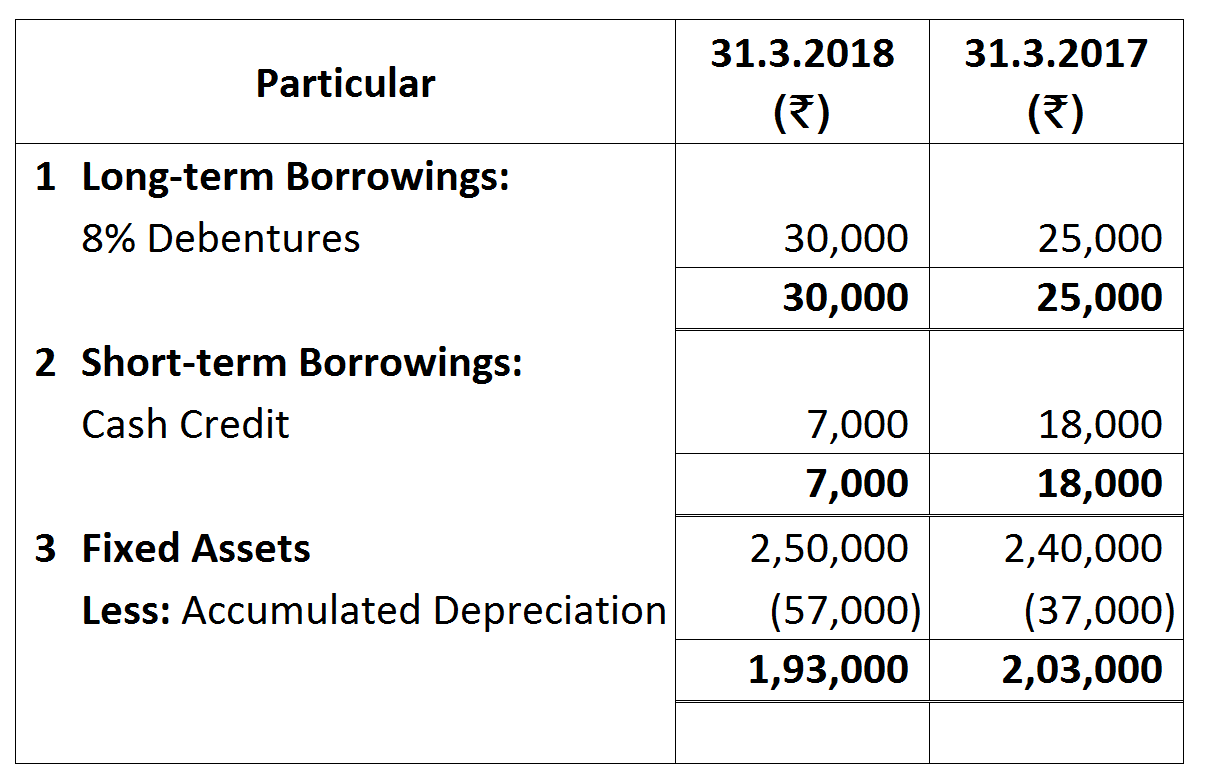
The following are the summarised Balance Sheets of X Ltd. as at 31st March, 2018 and 2017: Notes: Additional Information:
1.
Contingent Liability
31.3.2018
31.3.2017


Proposed Dividend
30,000
25,000
2.
Provision for tax made ₹ 30,000.
3.
Additional debentures amounting to ₹ 5,000 were issued on 1st Oct. 2017. Interest on debentures has been paid up-to date.
You are_required to prepare a statement of Cash-Flow.
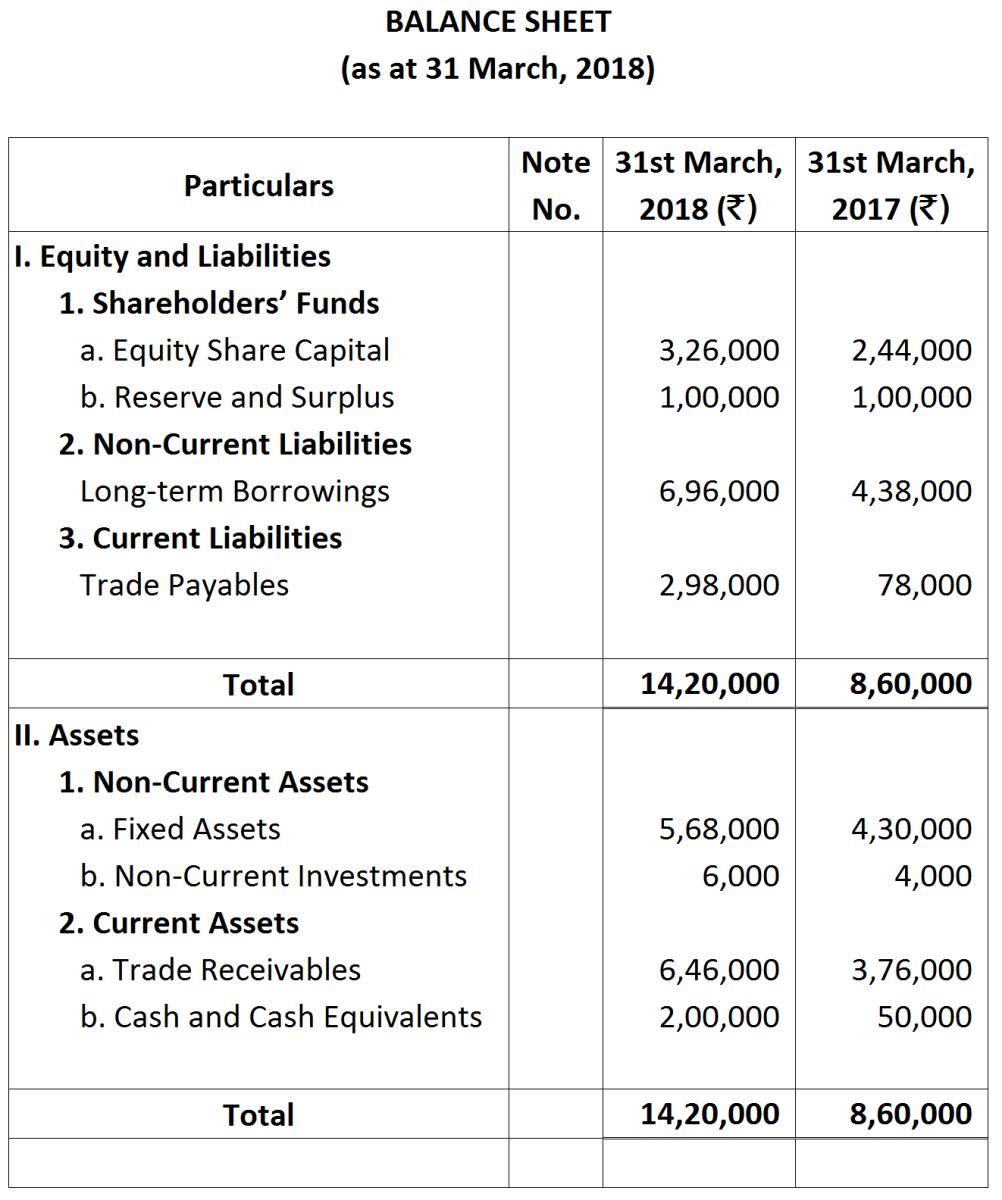
Balancesheet of blue bell Ltd. as at 31st march, 2018 is given below:
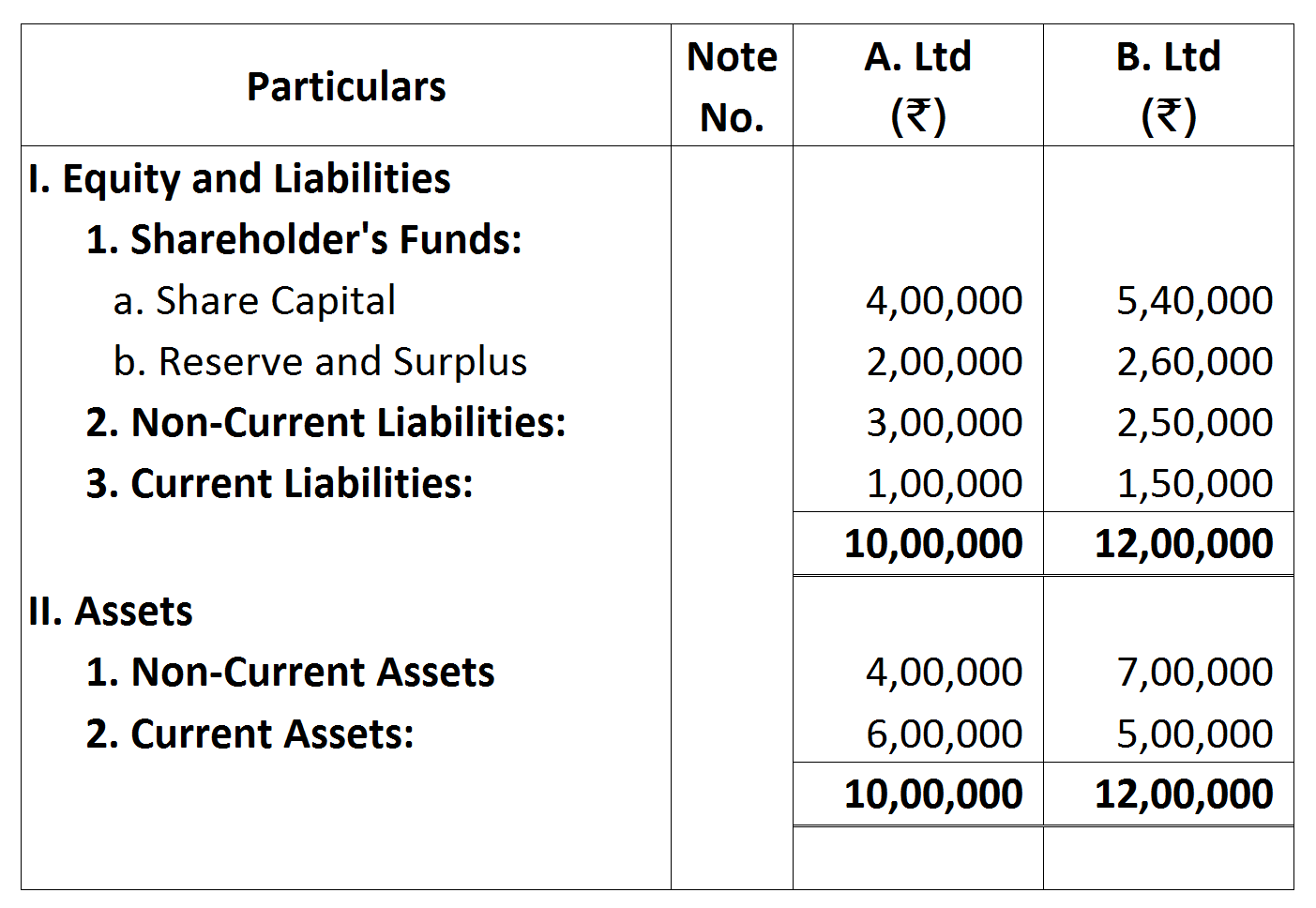
Prepare a common size Balance Sheet and comment on the financial position of A Ltd. and B Ltd. The Balance Sheets of A Ltd. and B Ltd. as at 31.3.2018 are given below:
From the following information, calculate Cash Flow from Operating Activities:
  1. A piece of machinery costing ₹ 50,000 on which depreciation of ₹ 20,000 had been charged was old for ₹ 10,000. Depreciation charged during the year was ₹ 18,000.
  2. Income Tax ₹ 23,000 was paid during the year.
  3. Interim Dividend paid during the year was ₹ 36,000.
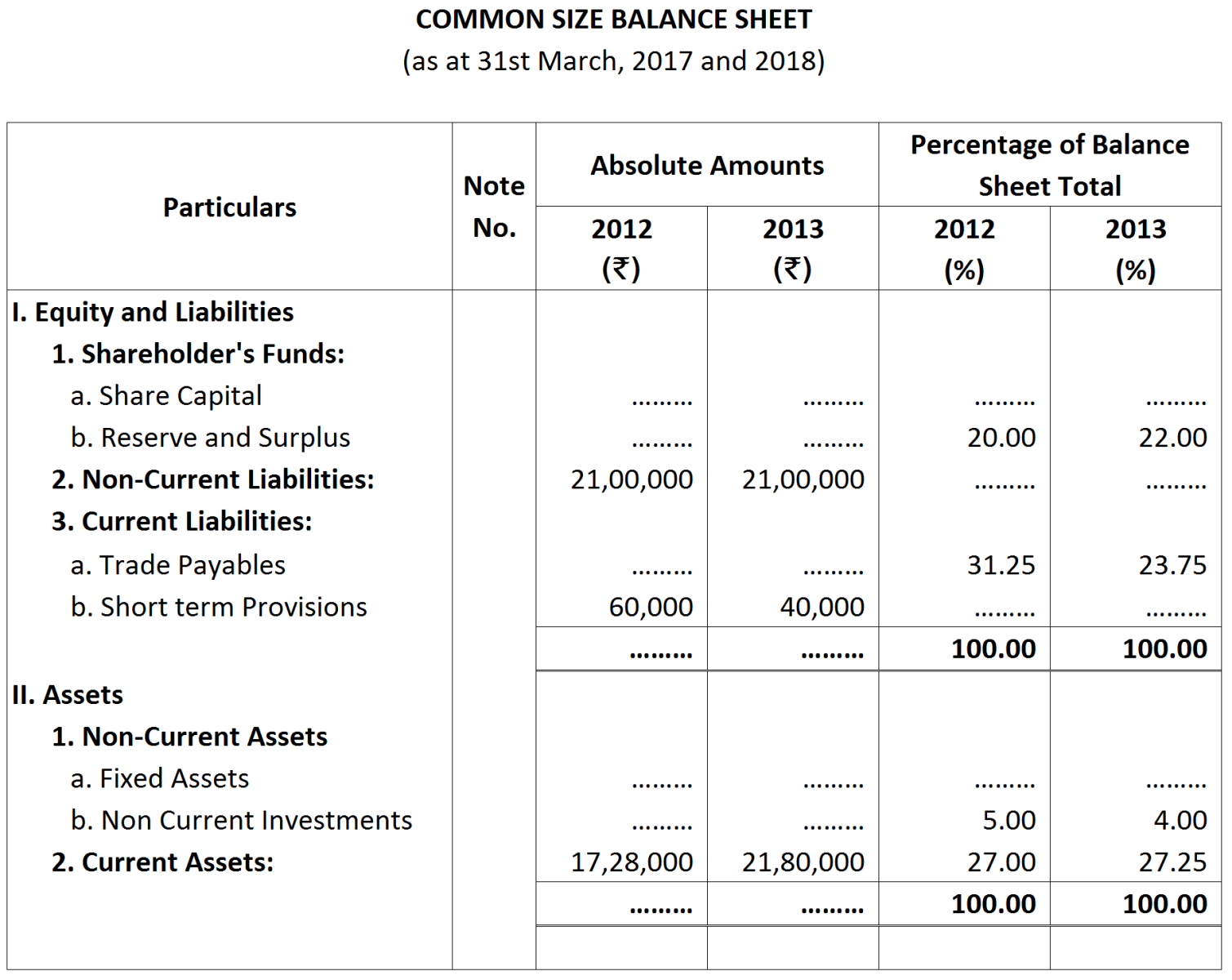
  1. you are required to fill in the missing figure in the following Commomn Size Balance Sheet:
  1. Also calculate the Debt Equity Ratio.
Calculate Trade Receivables Turnover Ratio in the following:
Case: Cost of Revenue from Operations or Cost of Goods Sold ₹ 4,50,000; Gross Profit on Sales 20%; Cash Sales 25% of Net Credit Sales, Opening Trade Receivables ₹ 90,000; Closing Trade Receivables ₹ 60,000.
State giving reason, whether the Current Ratio will improve or decline or will have no effect in each one of the following transactions if Current Ratio is (I) 2.5 : 1, (II) 1 : 1, (III) 0.75 : 1.
  1. Paid ₹ 50,000 to a Creditor.
  2. Sale of goods at a loss of 10%.
  3. Sale of a fixed asset for ₹ 1,00,000 (Book Value ₹ 1,20,000).
  4. Payment of outstanding salaries.
  5. Received ₹ 25,000 from a Debtor of ₹ 30,000 in full settlement of his account.
  6. Bills payable discharged on maturity.
  7. Bills Receivable drawn on debtor.
  8. Purchased goods on credit.
  9. Issued debentures to the vendors of machinery.