Question
What is meant by tertiary structure of proteins?

Answer

Tertiary structure of protein includes folding and twisting of secondary structure of proteins. It has compact and folded structure. It involves H-bonding, disulphide linkage, ionic or salt bridges and hydrophobic interactions.

Need a full question paper?

Generate a complete, print-ready paper with questions like this in minutes — across 16+ boards, with answer keys.

Start Generating Free

Similar questions

Briefly describe the following term giving one example:
Polyesters.
Draw the structural formulae of the following compounds:
  1. $H_4P_2O_{5.}$
  2. $XeF_{4.}$
Write a note on the reaction of alcohols with phosphrous trihalides.
For a reaction $\text{A + B}\xrightarrow{\ \ \ \ \ }\text{Products},$ the rate law is - $\text{Rate}=\text{k}[\text{A}][\text{B}]^\frac{3}{2}$ Can the reaction be an elementary reaction? Explain.
Using the valence bond approach, deduce the shape and magnetic behaviour of $[Cr(NH_3)_6]^{3+} [$Atomic number of $Cr = 24]$
The mixture of ethyl alcohol and cyclohexane shows positive deviation from Raoult's law. Why?

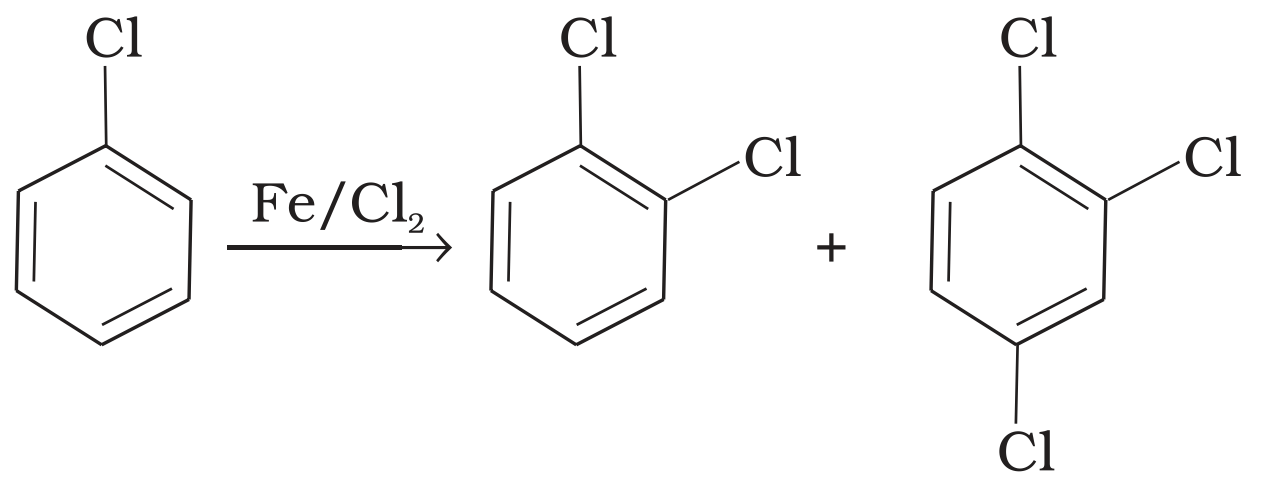
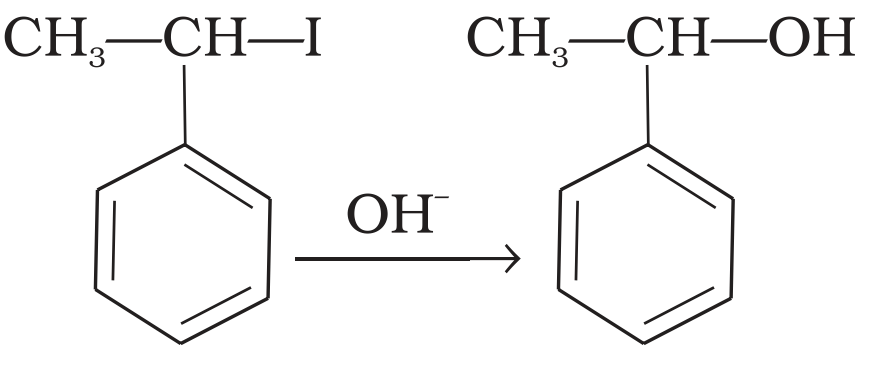
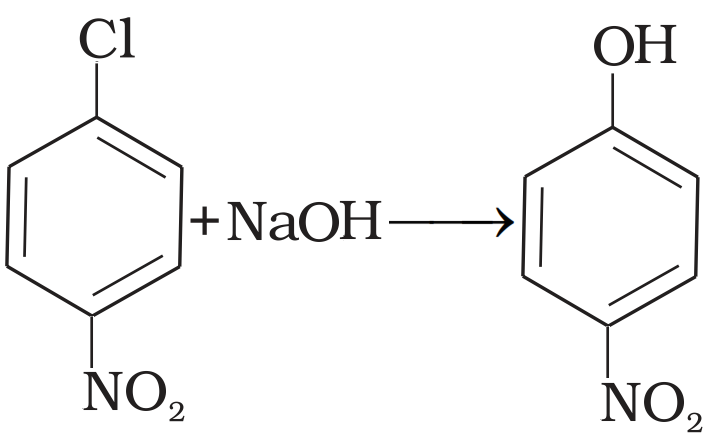
Match the reactions given in Column I with the names given in Column II.
  Column I   Column II
(i) (a) Nucleophilic aromatic substitution
(ii) $\text{CH}_3-\text{CH}==\text{CH}_2+\text{HBr}\xrightarrow{ \ \ \ \ \ }\text{CH}_3-\text{CH}-\text{CH}_3\ \ \ \ \ \ \ \ \ \ \ \ \ \ \ \ \ \ \ \ \ \ \ \ \ \ \ \ \ \ \ \ \ \ \ \ | \ \ \ \ \ \ \ \ \ \ \ \text{Br}$ (b) Electrophilic aromatic substitution
(iii) (c) Saytzeff elimination
(iv) (d) Electrophilic addition
(v) $\text{CH}_3\text{CH}_2\text{CH}\text{CH}_3\xrightarrow{\text{alc.KOH}}\text{CH}_3\text{CH}==\text{CH}\text{CH}_3\ \ \ \ \ \ \ |\ \ \ \ \ \ \ \ \ \ \ \ \ \ \ \ \text{Br}$ (e) Nucleophilic substitution $(S_N1)$
Preparation of alcohols from alkenes involves the electrophilic attack on alkene carbon atom. Explain its mechanism.
Explain the cleansing action of soaps.
Answer the following questions:
Amongst the isomeric dihalobenzenes which isomer has the highest melting point and why?