MCQ
What is moving coil galvanometer used for?
- AMeasurement of voltage only
- BMeasurement of resistance
- CMeasurement of small currents
- DMeasurement of electric field
Explanation:
Moving Coil Galvanometer is an instrument used for the detection and measurement of current.
It is sensitive instrument and can measure current even if it is only a few microamperes.
It was invented by Johann Schweigger in the 1800s.
Generate a complete, print-ready paper with questions like this in minutes — across 16+ boards, with answer keys.
In the circuit as shown in the figure the effective capacitance between A and B is
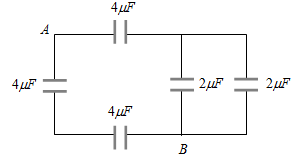
|
(a) 3 μF |
(b) 2 μF |
(c) 4 μF |
(d) 8 μF |
In the circuit shown here, E1 = E2 = E3 = 2 V and R1 = R2 = 4 ohms. The current flowing between points A and B through battery E2 is

|
(a) Zero |
(b) 2 amp from A to B |
|
(c) 2 amp from B to A |
(d) None of the above |
In photoelectric effect, the K.E. of electrons emitted from the metal surface depends upon
|
(a) Intensity of light |
(b) Frequency of incident light |
|
(c) Velocity of incident light |
(d) Both intensity and velocity of light |
Consider the following two statements:
A constant current i is passed through a resistor. Taking the temperature coefficient of resistance into account, indicate which of the plots shown in figure best represents the rate of production of thermal energy in the resistor

|
(a) a |
(b) b |
(c) c |
(d) d |