Question
What is Mutation? Describe the main points of mutation theory?

Answer

Hugo de Vries (1901) experiment on Evening Primrose (7'0 clock plant) revealed that some plants suddenly become completely different from their own species. Not only this, various traits are inherited and passed from one generation to the next and create new species. De Vries termed sudden hereditary changes inherited form one to next generation as mutation and propounded the theory of mutation. It has also been known, from modern research that mutation in living organisms is caused by changes in the arrangement, structure and sequence of chromosomes and genes located in germ cells of organisms.
Following are the facts of DeVries's mutation theory :
1. Naturally reproducing species or species develop mutations from time to time. Mutant organisms are different from parent life.
2. Mutations are hereditary and lead to the development of new species.
3. Mutation appear all of a sudden. They become operational immediately.
4. Mutations are the raw material of evolution.
5. They can occur in any direction, hence they can be both beneficial and harmful.
6. Natural selection has an effect on mutation. Useful mutations are selected by where as Lethal mutations are eliminated however useless and less harmful once can persist in the progeny.
7. Darwin named these sudden changes as sports.
8. Excessive specialization of organs is explained by these sports or the initial stage of development of organs can be explained by the theory of mutation because mutations are complete from the beginning.
Importance of Mutation : There is not the slightest doubt that mutations occur in nature and their role in development. Natural selection and isolation of were also essential for evolution.
Need a full question paper?

Generate a complete, print-ready paper with questions like this in minutes — across 16+ boards, with answer keys.

Start Generating Free

Similar questions

Taking a small pond as an example of an ecosystem, list the four components of this ecosystem. How do these components function as a unit in a small pond?
Write three important characteristics of population.
Describe the beneficial activities of bacteria. ###How can we say that bacteria are our friends? Explain.
A normal visioned woman, whose father is colour blind, marries a normal visioned man. What would be the probability of her (a) sons (b) daughters to be colour blind? Explain with the help of pedigree chart.
(a) Taking an example of a small pond, explain how the four components of an ecosystem function as a unit.
(b) Name the type of food chain that exists in a pond.
  1. Explain Polygenic inheritance and Multiple allelism with the help of suitable examples.
  2. "Phenylketonuria is a good example that explains Pleiotropy." Justify.
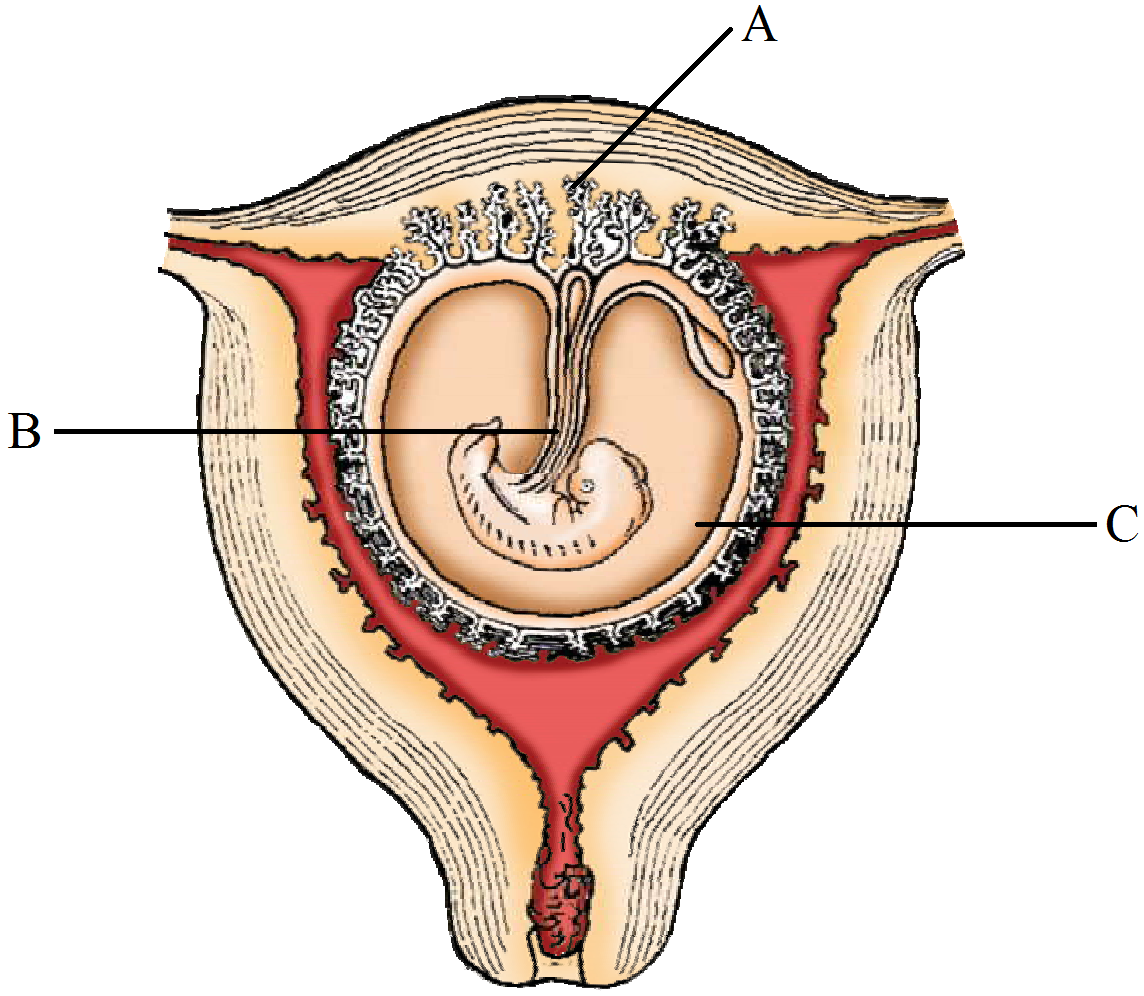
  1. Identify the parts labelled A, B and C in the diagram given.

  1. Draw a labelled diagram of a human blastocyst.
  2. What is parturition and is it induced at the end of pregnancy in a human female?
How do you express the meaning of words like race, breed, cultivars or variety?
Answer the following questions:
Describe the stages of oogenesis in human females.
Bioreactors are the inclusion carriers in any biotechnology based production process. The ultimate success of any biotechnological technique depends on the efficiency of the bioreactor due to large scale production and economy.
In the context of the above passage, answer the following questions :
(i) For optimization of a bioreactor system, list possible operating instructions (rules). Make a list of any four.
(ii) "Optimal growth and metabolic activities of cells." Mention the stages of growth mentioned in.
(iii) Is the bioproduct formed in the bioreactor completely ready for immediate use as desired? Write the appropriate reasons also to support your answer.