Question
What is placenta? Mention its role during pregnancy?

Answer

Followed by fertilization, placenta is developed which serve to provide nutrition and oxygen to developing embryo from the mother's blood. It is a disc embedded in the uterine wall and contains villi on the embryo's side of the tissue while blood spaces surrounding the villi are present on mother’s side. The embryo is connected to the placenta by umbilical cord, a tube like structure.Placenta serves to fulfill all nutritional requirements of developing embryo by supplying food and oxygen from mother’s blood to the embryo. Waste products of developing embryo are removed by transferring them into the mother's blood through the placenta. Functions of placenta are facilitated by villi that provide large surface areas for passage of nutrition and oxygen to embryo from mother through blood.

Need a full question paper?

Generate a complete, print-ready paper with questions like this in minutes — across 16+ boards, with answer keys.
Start Generating Free

Similar questions

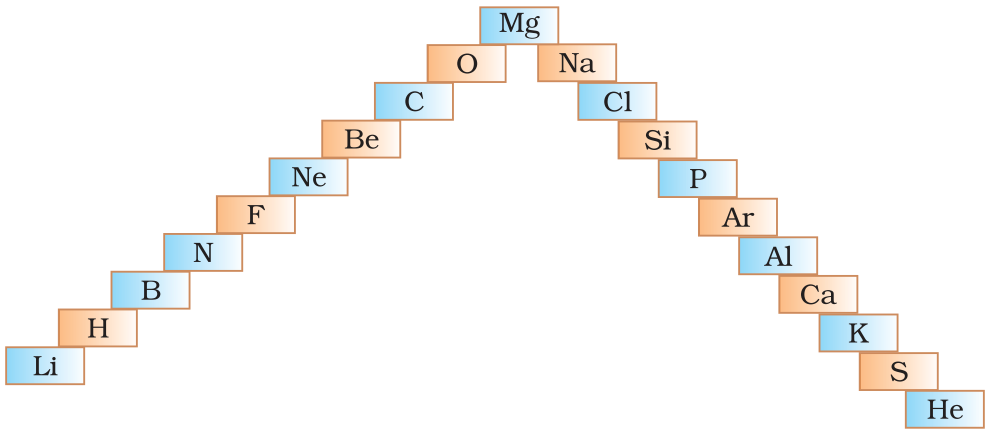
  1. In this ladder (Figure) symbols of elements are jumbled up. Rearrange these symbols of elements in the increasing order of their atomic number in the Periodic Table.
  1. Arrange them in the order of their group also.
When the solution of substance X is added to a solution of potassium iodide, then a yellow solid separates out from the solution:
  1. What do you think substance X is likely to be?
  2. Name the substance which the yellow solid consists of.
  3. Which characteristic of chemical reaction is illustrated by this example?
  4. Write a balanced chemical equation for the reaction which takes place. Mention the physical states of all the reactant and products involved in the chemical equation.
A, B and C are three common STDs. A and C are caused by bacteria whereas B is caused by a virus D. The virus D reduces the immunity of the infected person to such a low level that the person can die of even very mild diseases.
  1. What could A and C be?
  2. What is B?
  3. Name the virus D?
  4. How can A, B and C be caused?
  5. Out of A, B and C, which one does not have a definite cure as yet?
Differentiate between inherited and acquired characters. Give one example for each type.
Why is there a need for harnessing non-conventional sources of energy? How can energy be harnessed from the sea in different ways?
You are given three resistances of 1,2 and 3 ohms. Show by diagrams, how with the help of these resistances you can get:
  1. $6\Omega$
  2. $\frac{6}{11}\Omega$
  3. $1.5\Omega$
An element X belongs to group 2 and another element Y belongs to group 15 of the periodic table:
  1. What is the number of valence electrons in X?
  2. What is the valency of X?
  3. What is the number of valence electrons in Y?
  4. What is the valency of Y? Explain how you have arrived at your answers.
A metal which exists as a liquid at room temperature is obtained by heating its sulphide ore in the presence of air.
  1. Name the metal and write its chemical symbol.
  2. Write the name and formula of the sulphide ore.
  3. Give the equations of chemical reactions involved in the production of metal from its sulphide ore.
  4. Name a common device in which this metal is used.
  5. Can this metal displace copper from copper sulphate solution? Why?
When a human female reaches a certain age then vaginal bleeding occurs for a few days after regular time intervals.
  1. What is this process known as (i) in scientific terms, and (ii) in everyday language?
  2. At what approximate age this process starts in human females? When is the human female said to have attained at this stage?
  3. After how much time is this process repeated? For how many days does this process usually last?
  4. What does the onset of this process in human females signify?
  5. At which particular event in the life of a human female does this process stop temporarily but start again?
  6. At which approximate age of human female does this process stop permanently?
Define pollination. Explain the different types of pollination. List two agents of pollination? How does suitable pollination lead to fertilization?