Question
What is placenta? Mention its role during pregnancy?

Answer

Followed by fertilization, placenta is developed which serve to provide nutrition and oxygen to developing embryo from the mother's blood. It is a disc embedded in the uterine wall and contains villi on the embryo's side of the tissue while blood spaces surrounding the villi are present on mother’s side. The embryo is connected to the placenta by umbilical cord, a tube like structure.Placenta serves to fulfill all nutritional requirements of developing embryo by supplying food and oxygen from mother’s blood to the embryo. Waste products of developing embryo are removed by transferring them into the mother's blood through the placenta. Functions of placenta are facilitated by villi that provide large surface areas for passage of nutrition and oxygen to embryo from mother through blood.

Need a full question paper?

Generate a complete, print-ready paper with questions like this in minutes — across 16+ boards, with answer keys.
Start Generating Free

Similar questions

Three incandescent bulbs of 100W each are connected in series in an electric circuit. In another circuit another set of three bulbs of the same wattage are connected in parallel to the same source.
  1. Will the bulb in the two circuits glow with the same brightness? Justify your answer.
  2. Now let one bulb in both the circuits get fused. Will the rest of the bulbs continue to glow in each circuit? Give reason.
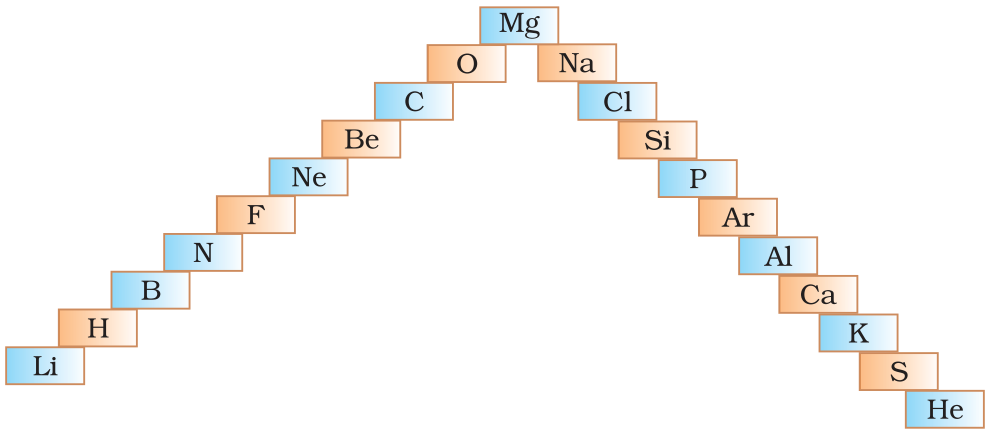
  1. In this ladder (Figure) symbols of elements are jumbled up. Rearrange these symbols of elements in the increasing order of their atomic number in the Periodic Table.
  1. Arrange them in the order of their group also.
While conducting experiments to study the effect of various stimuli on the plants, it was observed that the roots of a plant X grow and bend towards two stimuli A and B but bend away from a third stimulus C. The stem of the plant X, however, bends away from stimuli A and B but bends towards the stimulus C. The stimulus B is known to act on the roots due to too much weight of the earth. Keeping these points in mind, answer the following question:
  1. What could stimulus A be?
  2. Name the stimulus B.
  3. What could stimulus C be?
  4. The branches of a fallen tree in a forest grow straight up in response to two stimuli. What could be these two stimuli out of A, B and C? Also name these two stimuli.
  1. If the image formed by a mirror for all positions of the object placed in front of it is always diminished, erect and virtual, state the type of the mirror and also draw a ray diagram to justify your answer. Write one use such mirrors are put to and why.
  2. Define the radius of curvature of spherical mirrors. Find the nature and focal length of a spherical mirror whose radius of curvature is + 24 cm.
An object is placed (a) 20cm, (b) 4cm, in front of a concave mirror of focal length 12cm. Find the nature and position of the image formed in each case.
When water is added gradually to a white solid X, a hissing sound is heard and a lot of heat is produced forming a product Y. A suspension of Y in water is applied to the walls of a house during white washing. A clear solution of Y is also used for testing carbon dioxide gas in the laboratory.
  1. What could be solid X? Write its chemical formula.
  2. What could be product Y? Write its chemical formula.
  3. What is the common name of the solution of Y which is used for testing carbon dioxide gas?
  4. Write chemical equation of the reaction which takes place on adding water to slid X.
  5. Which characteristic of chemical reactions is illustrated by this example?
How can solar energy be harnessed? Mention any two limitations in using solar energy. How are these limitations overcome?
  1. List three common refractive defects of vision. Suggest the way of correcting these defects.
  2. About 45 lac people in the developing countries are suffering from corneal blindness. About 30 lac children below the age of 12 years suffering from this defect can be cured by replacing the defective cornea with the cornea of a donated eye. How and why can students of your age involve themselves to create awareness about this fact among people?
Gas A, which is the major cause of global warming, combines with hydrogen oxide B in nature in the presence of an environmental factor C and a green material D to form a six carbon organic compounds E and a gas F. The gas F is necessary for breathing.
  1. What is gas A?
  2. What is the common name of B?
  3. What do you think could be C?
  4. What is material D? Where is it found?
  5. Name the organic compound E.
  6. What is gas F? Name the natural process during which it is released.
State and explain the reaction, if any, of the following metals with a solution of copper sulphate:
  1. Gold.
  2. Copper.
  3. Zinc.
  4. Mercury.