Question
What is regular and irregular reflection?

Answer

Regular reflection: It is the reflection from a smooth surface such that the light rays are evenly parallel to each other and an image is formed. For example, reflection from the smooth surface of calm lake can produce an image in water. Irregular reflection: It is the diffused reflection from uneven surface such that the light rays are not parallel to each other and do not form an image. For example, reflection of light from the surface of a flowing stream does not form an image.

Need a full question paper?

Generate a complete, print-ready paper with questions like this in minutes — across 16+ boards, with answer keys.
Start Generating Free

Similar questions

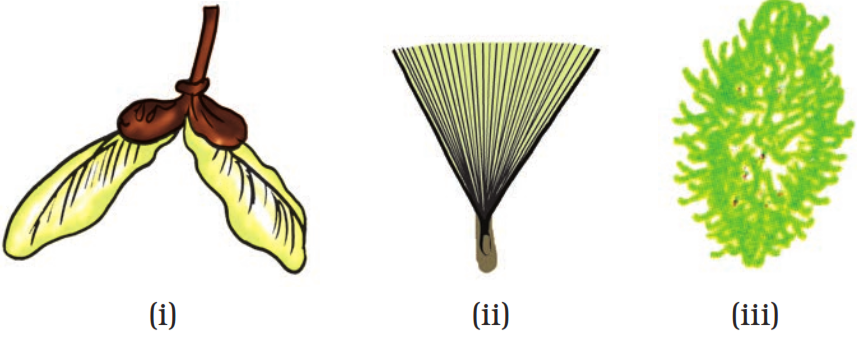
Group the seeds given in Figure $(i)$ to $(iii)$ according to their means of dispersion.
  1. Seed dispersed by wind.
  2. Seed dispersed by water.
  3. Seed dispersed by animal.
Paheli noticed water being pulled up by a motor pump to an overhead tank of a five storeyed building. She wondered how water moves up to great heights in the tall trees standing next to the building. Can you tell how?


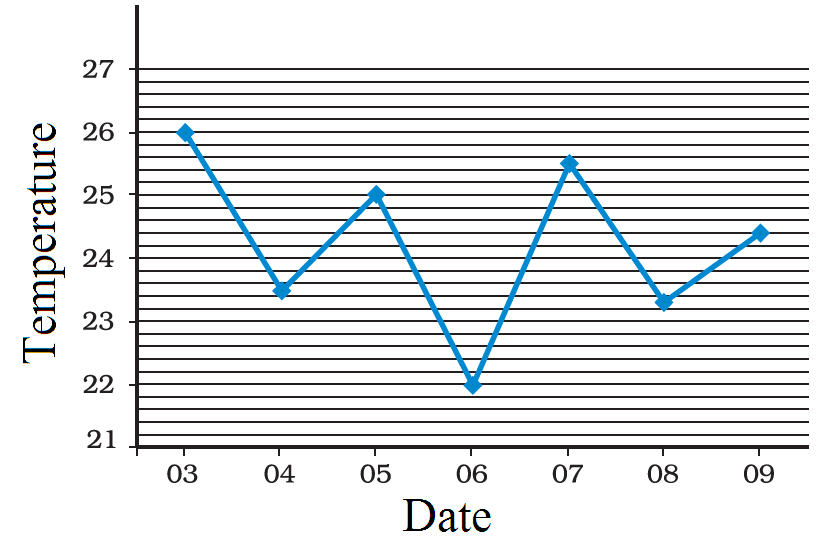
The following graph shows the change in temperature. Answer according to the reading of graph.
  1. Draw a table and fill the temperature change of each day.
  2. Which day show the highest temperature?
  3. Which day shows the minimum temperature?
List the similarities and differences between aerobic and anaerobic respiration.
State few characteristics of magnetic field lines.
If you see a friend addicted to harmful substances, what steps would you take to help?
Write the differences between physical and chemical changes.
Place a piece of bread in a moist and warm place for few days. Observe it after few days. What will you see?
  1. Name the organism that grows on the bread piece?
  2. What are the thread-like projections called?
  3. What is the knob like structure present on the top of thin stem called?
  4. Which type of reproduction does this organism shows?
  5. From where does the spors comes to the bread piece?
In addition to the formation of new products, what changes do the chemical changes accompany?
Match the organisms given in Column $I$ with their mode of nutrition given in Column $II.$
  Column I   Column II
$(a)$ Mango tree $(i)$ Insectivorous plant
$(b)$ Mushroom $(ii)$ Heterotroph
$(c)$ Pitcher plant $(iii)$ Autotroph
$(d)$ Cuscuta $(iv)$ Saprophyte
$(e)$ Elephant $(v)$ Parasitic