Question
What is "semi permeable membrane"?

Answer

A membrane that permits the flow of solvent molecules not the solute molecules is called semi permeable membrane. During osmosis and reverse osmosis, only solvent molecules move across the semi permeable membrane.

Need a full question paper?

Generate a complete, print-ready paper with questions like this in minutes — across 16+ boards, with answer keys.
Start Generating Free

Similar questions

Write the mechanism of the reaction of HI with methoxybenzene.
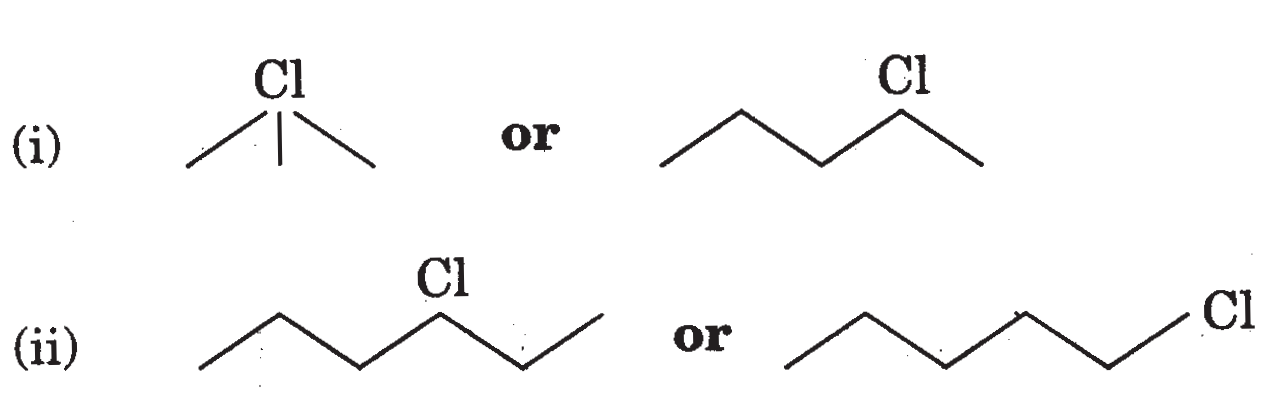
Which one in the following pairs undergoes SN1 substitution reaction faster and why?

If the solubility product of CuS is 6 × 10–16, calculate the maximum molarity of CuS in aqueous solution.
Explain reactivity of aldehyde and Ketones in nucleophilic addition reaction.
A first order reaction has a rate constant of 0.0051 min–1. If we begin with 0.10 M concentration of the reactant, what concentration of the reactant will be left after 3 hours?
Compare the chemistry of actinoids with that of the lanthanoids with special reference to:
Oxidation state
Write the name of the cell which is generally used in transistors. Write the reactions taking place at the anode and the cathode of this cell.
Give examples and suggest reasons for the following features of the transition metal chemistry:

The highest oxidation state is exhibited in oxoanions of a metal.

When 3-methylbutan-2-ol is treated with HBr, the following reaction takes place:

$\ \ \ \ \ \ \ \ \ \ \ \ \ \ \ \ \ \ \ \ \ \ \ \ \ \ \ \ \ \ \ \ \ \ \ \ \ \ \ \ \ \ \ \ \ \ \ \ \ \ \ \ \ \ \ \ \ \ \ \ \ \ \ \ \ \ \ \ \text{Br}\\\ \ \ \ \ \ \ \ \ \ \ \ \ \ \ \ \ \ \ \ \ \ \ \ \ \ \ \ \ \ \ \ \ \ \ \ \ \ \ \ \ \ \ \ \ \ \ \ \ \ \ \ \ \ \ \ \ \ \ \ \ \ \ \ \ \ \ \ \ |\\\text{CH}_3-\text{CH}-\text{CH}-\text{CH}_3\xrightarrow{\ \ \ \text{HBr} \ \ }\text{CH}_3-\text{C}-\text{CH}_2-\text{CH}_3\\\ \ \ \ \ \ \ \ \ \ \ \ \ \ |\ \ \ \ \ \ \ \ \ \ |\ \ \ \ \ \ \ \ \ \ \ \ \ \ \ \ \ \ \ \ \ \ \ \ \ \ \ \ \ \ \ \ \ \ \ \ \ \ \ \ \ \ \ |\\\ \ \ \ \ \ \ \ \ \ \ \ \ \text{CH}_3\ \ \ \ \text{OH}\ \ \ \ \ \ \ \ \ \ \ \ \ \ \ \ \ \ \ \ \ \ \ \ \ \ \ \ \ \ \ \ \ \ \ \ \ \ \text{CH}_3$

Give a mechanism for this reaction.

(Hint: The secondary carbocation formed in step II rearranges to a more stable tertiary carbocation by a hydride ion shift from 3rd carbon atom.)

For a reaction
$2\text{H}_2\text{O}_2\frac{\text{I}^-}{\text{alkaline medium}}2\text{H}_2\text{O}+\text{O}_2$
the proposed mechanism is as given below:
  1. $\text{H}_2\text{O}_2+\text{I}^{-}\xrightarrow{\ \ \ \ \ \ \ }\text{H}_2\text{O}+\text{IO}^{-}(\text{slow})$
  2. $\text{H}_2\text{O}_2+\text{IO}^{-}\xrightarrow{\ \ \ \ \ \ \ }\text{H}_2\text{O}+\text{I}^{-}+\text{O}_2(\text{fast})$
  1. Write rate law for the reaction.
  2. Write the overall order of reaction.
  3. Out of steps (1) and (2), which one is rate determining step?